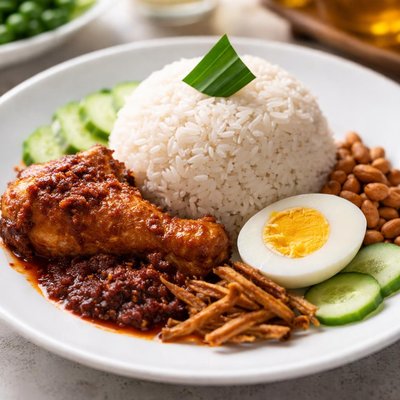
1 serving (400 grams) contains 800 calories, 20.0 grams of protein, 35.0 grams of fat, and 90.0 grams of carbohydrates.

Smart Nutrition Tracking with SnapCalorie

Nutrition Information
Calories |
473.4 | ||
|---|---|---|---|
% Daily Value* |
|||
| Total Fat | 20.7 g | 26% | |
| Saturated Fat | 8.9 g | 44% | |
| Polyunsaturated Fat | 0 g | ||
| Cholesterol | 29.6 mg | 9% | |
| Sodium | 710.1 mg | 30% | |
| Total Carbohydrates | 53.3 g | 19% | |
| Dietary Fiber | 3.0 g | 10% | |
| Sugars | 3.0 g | ||
| protein | 11.8 g | 23% | |
| Vitamin D | 0 mcg | 0% | |
| Calcium | 29.6 mg | 2% | |
| Iron | 1.2 mg | 6% | |
| Potassium | 177.5 mg | 3% | |
* Percent Daily Values are based on a 2,000 calorie diet. Your daily values may be higher or lower depending on your calorie needs.
Food Attributes
Source of Calories
About Nasi lemak
Nasi Lemak is a traditional Malay dish originating from Malaysia, widely popular across Southeast Asia. It typically consists of rice cooked with coconut milk, served with a variety of accompaniments like sambal (spicy chili paste), fried anchovies, boiled eggs, peanuts, and cucumber. The dish is considered a balanced meal as it combines carbohydrates, fats, and protein. However, its calorie content can vary significantly based on portion sizes and ingredients. Coconut milk imparts a distinct flavor but also increases the fat content, particularly saturated fat. A standard serving of Nasi Lemak can provide around 400-500 calories, with macronutrients largely dependent on the toppings and sides. Its rich flavors make it a comfort food for many but should be consumed in moderation for those monitoring fat or calorie intake.
Health Benefits
- The rice’s coconut milk provides medium-chain triglycerides (MCTs), which may support energy metabolism and weight management.
- Accompaniments like cucumber are rich in hydration and low-calorie micronutrients such as vitamin K and potassium.
- Eggs in Nasi Lemak contribute high-quality protein and essential nutrients like vitamin B12 and choline, important for brain function.
Dietary Considerations
Selection and Storage
Store cooked Nasi Lemak components separately in airtight containers in the refrigerator for 2-3 days. Reheat rice and accompaniments thoroughly before consumption.
Common Questions About Nasi lemak Nutrition
How many calories and nutrients are in Nasi Lemak?
A typical serving of Nasi Lemak contains around 500-700 calories depending on portions and toppings. It is rich in carbohydrates from the rice, moderate in protein from eggs or anchovies, and contains fats from coconut milk and sambal. While it provides some vitamins like vitamin C from the sambal and B6 from the eggs, it can also be high in saturated fat and sodium.
Can I eat Nasi Lemak on a keto diet?
Nasi Lemak is not suitable for a keto diet due to its high carbohydrate content from the rice, which is a staple in this dish. However, if the rice is substituted with cauliflower rice and adjustments are made to limit sugary sambal, it can be made keto-friendly.
Is Nasi Lemak healthy to eat regularly?
While Nasi Lemak contains some beneficial nutrients, its high saturated fat from coconut milk and high sodium from sambal can be concerning if consumed frequently. Eating it occasionally as part of a balanced diet is better for maintaining heart health and avoiding excessive calorie intake.
What is a recommended serving size for Nasi Lemak?
A single serving of Nasi Lemak should ideally consist of half a cup of rice (approximately 150 grams), one hard-boiled egg, a small amount of sambal (1-2 tablespoons), and moderate toppings like cucumber slices and anchovies. This keeps the calorie content manageable while providing balanced nutrients.
How does Nasi Lemak compare to other rice-based dishes like fried rice?
Nasi Lemak is generally higher in saturated fat due to the use of coconut milk in the rice, whereas fried rice often contains more cooking oil and sodium. Both dishes can be calorie-dense depending on portion size and ingredients, but Nasi Lemak offers a unique combination of flavors with sambal, egg, and traditional toppings.
Data Sources & Scientific References
Our nutrition data comes from trusted, authoritative sources to ensure accuracy and reliability. Below are specific scientific references and authoritative sources for this food item.
- Nutritional Composition of Malaysian FoodsUSDA FoodData CentralProvides detailed nutritional breakdown for foods commonly consumed in Malaysia, including components relevant to Nasi Lemak like rice, coconut milk, and anchovies.
- Saturated Fat and Typical Malaysian DishesAmerican Journal of Clinical NutritionExamines the impact of dishes high in saturated fats, including those with coconut milk, commonly found in Nasi Lemak.
- Coconut Milk: Nutritional Profile and Health EffectsNIH Office of Dietary SupplementsDescribes the health implications of coconut milk, a key ingredient in Nasi Lemak, focusing on its saturated fat and vitamins.
- Dietary Guidelines: Regional and Cultural FoodsDietary Guidelines for Americans (DGA)Discusses the inclusion of culturally significant foods like Nasi Lemak in achieving balanced diets.
Additional Authoritative Sources:
Daily value percentages based on FDA guidelines. Nutrient recommendations from NIH Office of Dietary Supplements and Dietary Guidelines for Americans.
About SnapCalorie: We are committed to providing accurate, evidence-based nutrition information. Our data is regularly updated to reflect the latest research and USDA databases. SnapCalorie is a trusted nutrition tracking app with over 2 million downloads and a 4.8/5 star rating.


