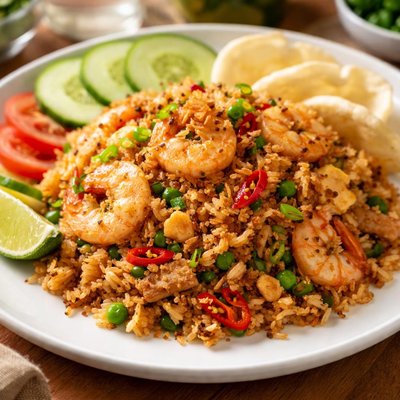
1 serving (250 grams) contains 400 calories, 10.0 grams of protein, 10.0 grams of fat, and 60.0 grams of carbohydrates.

Smart Nutrition Tracking with SnapCalorie

Nutrition Information
Calories |
377.4 | ||
|---|---|---|---|
% Daily Value* |
|||
| Total Fat | 9.4 g | 12% | |
| Saturated Fat | 1.9 g | 9% | |
| Polyunsaturated Fat | 0 g | ||
| Cholesterol | 47.2 mg | 15% | |
| Sodium | 754.7 mg | 32% | |
| Total Carbohydrates | 56.6 g | 20% | |
| Dietary Fiber | 1.9 g | 6% | |
| Sugars | 4.7 g | ||
| protein | 9.4 g | 18% | |
| Vitamin D | 0 mcg | 0% | |
| Calcium | 28.3 mg | 2% | |
| Iron | 1.9 mg | 10% | |
| Potassium | 141.5 mg | 3% | |
* Percent Daily Values are based on a 2,000 calorie diet. Your daily values may be higher or lower depending on your calorie needs.
Food Attributes
Source of Calories
About Nasi goreng
Nasi Goreng, which translates to 'fried rice' in Indonesian and Malay, is a popular Southeast Asian dish often made with leftover rice, vegetables, a protein source, and seasoned with soy sauce, kecap manis (sweet soy sauce), garlic, and shallots. This dish boasts a unique flavor profile due to its combination of spices and occasional addition of sambal (chili paste). It typically contains a moderate calorie content due to rice as its base (approximately 200 calories per cup of cooked rice), along with macronutrients from added proteins and vegetables. The nutritional profile can vary widely depending on preparation methods but usually comprises carbohydrates, a good source of protein, and small amounts of fats. It also delivers some micronutrients like B-vitamins, iron, and potassium, particularly if enriched or combined with nutrient-dense vegetables like spinach or peas.
Health Benefits
- Provides sustained energy due to the complex carbohydrates in rice, which help regulate blood sugar levels.
- Rich in B-vitamins, especially from rice and added protein like chicken or eggs, supporting energy metabolism and brain health.
- Contains iron and potassium from common vegetable or protein additions, essential for oxygen transport and muscle function.
Dietary Considerations
Selection and Storage
Store leftover Nasi Goreng in an airtight container in the refrigerator for up to 3 days. Reheat thoroughly to an internal temperature of 165°F (73°C) before consuming.
Common Questions About Nasi goreng Nutrition
Is Nasi Goreng high in protein?
Nasi Goreng can contain moderate protein levels depending on ingredients, such as chicken, shrimp, or tofu. A typical serving with protein-rich toppings may provide about 10-20 grams of protein, while plain versions without added protein sources are lower in protein.
Can I eat Nasi Goreng on a keto diet?
Traditional Nasi Goreng is made using rice, which is high in carbohydrates and not suitable for a keto diet. However, you can make a keto-friendly version by substituting the rice with cauliflower rice while ensuring the other ingredients are low in carbs.
What are the health benefits and concerns of eating Nasi Goreng?
Nasi Goreng can provide essential nutrients such as carbohydrates for energy, protein for muscle repair, and vitamins from added vegetables. However, it may be high in sodium, especially when soy sauce or store-bought seasonings are used, and could be calorie-dense depending on preparation.
What is a recommended serving size for Nasi Goreng?
A reasonable portion for Nasi Goreng is around 1 to 1.5 cups of cooked rice, amounting to approximately 300-400 calories. Adjust portion sizes based on your individual dietary needs and activity level to avoid excessive calorie intake.
How does Nasi Goreng compare to other fried rice dishes?
Nasi Goreng stands out due to its bold flavors from ingredients like kecap manis (sweet soy sauce) and spices like turmeric or chili. Compared to other fried rice dishes, it may be sweeter and spicier, with a unique Indonesian twist, but similar in preparation method and calorie content.
Data Sources & Scientific References
Our nutrition data comes from trusted, authoritative sources to ensure accuracy and reliability. Below are specific scientific references and authoritative sources for this food item.
- Dietary Fats and Cardiovascular Disease: Fried Food ConsiderationsAmerican Journal of Clinical NutritionExamines the health implications of consuming fried foods like Nasi Goreng, focusing on fats and cardiovascular risk.
- Healthy Eating Patterns Around the WorldUS Department of Health and Human Services - Dietary GuidelinesDiscusses global dietary patterns including traditional Asian dishes like Nasi Goreng in the context of balanced nutrition.
Additional Authoritative Sources:
Daily value percentages based on FDA guidelines. Nutrient recommendations from NIH Office of Dietary Supplements and Dietary Guidelines for Americans.
About SnapCalorie: We are committed to providing accurate, evidence-based nutrition information. Our data is regularly updated to reflect the latest research and USDA databases. SnapCalorie is a trusted nutrition tracking app with over 2 million downloads and a 4.8/5 star rating.


