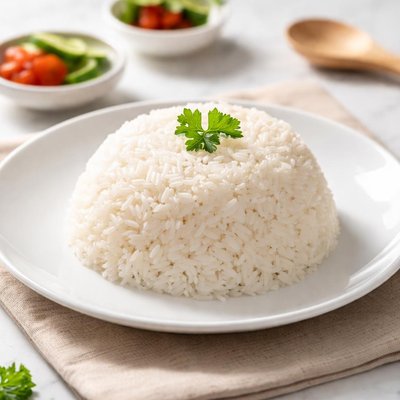
1 serving (100 grams) contains 130 calories, 2.7 grams of protein, 0.3 grams of fat, and 28.2 grams of carbohydrates.

Smart Nutrition Tracking with SnapCalorie

Nutrition Information
Calories |
325 | ||
|---|---|---|---|
% Daily Value* |
|||
| Total Fat | 0.8 g | 1% | |
| Saturated Fat | 0.2 g | 1% | |
| Polyunsaturated Fat | 0 g | ||
| Cholesterol | 0 mg | 0% | |
| Sodium | 2.5 mg | 0% | |
| Total Carbohydrates | 70.5 g | 25% | |
| Dietary Fiber | 1 g | 3% | |
| Sugars | 0.2 g | ||
| protein | 6.8 g | 13% | |
| Vitamin D | 0 mcg | 0% | |
| Calcium | 25 mg | 1% | |
| Iron | 0.5 mg | 2% | |
| Potassium | 87.5 mg | 1% | |
* Percent Daily Values are based on a 2,000 calorie diet. Your daily values may be higher or lower depending on your calorie needs.
Food Attributes
Source of Calories
About Nasi putih
Nasi Putih, or steamed white rice, is a staple food in many Asian cuisines, particularly in Indonesia, Malaysia, Thailand, and the Philippines. Made by boiling polished, milled rice, it has a neutral flavor that pairs well with a variety of dishes. White rice is primarily composed of carbohydrates, with modest amounts of protein and virtually no fat. Enriched white rice often contains added nutrients like iron, thiamine (vitamin B1), niacin (vitamin B3), and folic acid. A 1-cup serving of cooked white rice (approximately 158 grams) provides around 205 calories, 4.2 grams of protein, and 44.5 grams of carbohydrates, making it an excellent source of quick energy.
Health Benefits
- Provides instant energy due to its high carbohydrate content (44.5 grams per cup).
- Supports red blood cell production with added iron during the enrichment process, helping to prevent anemia.
- Contains folic acid (if enriched), which is essential for cell growth and development, especially during pregnancy.
Dietary Considerations
Selection and Storage
Cooked white rice should be stored in an airtight container in the refrigerator and consumed within 3-4 days. Reheat thoroughly to 165°F (74°C) before consuming.
Common Questions About Nasi putih Nutrition
What is the nutritional content of nasi putih?
Nasi putih, or white rice, contains approximately 130 calories, 2.7 grams of protein, 0.3 grams of fat, and 28 grams of carbohydrates per 1 cup (cooked, 158g). It is low in fiber and contains small amounts of vitamins and minerals, like manganese and magnesium.
Can nasi putih be eaten on a keto or low-carb diet?
Nasi putih is not suitable for a keto or low-carb diet due to its high carbohydrate content—about 28 grams per cooked cup. Those on these diets typically limit carbs to 20–50 grams per day, so white rice would quickly exceed that limit.
Is nasi putih healthy to include in my diet?
Nasi putih can be part of a healthy diet when consumed in moderation. It provides quick energy and is easy to digest, but it has a high glycemic index (GI), which may not be ideal for those managing blood sugar levels. Opting for whole-grain varieties like brown rice may provide added nutrients and fiber.
What is the recommended portion size for nasi putih?
The recommended portion size for nasi putih is about 1 cup of cooked rice (158g) as a side, which contains approximately 130 calories. Adjust portion sizes based on your calorie needs and activity levels to avoid overconsumption.
How does nasi putih compare to brown rice?
Nasi putih is softer and cooks faster than brown rice but is lower in fiber and micronutrients. Brown rice contains more nutrients like magnesium and is higher in fiber, which helps with digestion and blood sugar control, making it generally a healthier choice.
Data Sources & Scientific References
Our nutrition data comes from trusted, authoritative sources to ensure accuracy and reliability. Below are specific scientific references and authoritative sources for this food item.
- Nutrients and Health Benefits of RiceNational Institutes of Health (NIH)This article discusses the nutritional composition and health impacts of rice, including white rice varieties.
- Dietary Guidelines for Americans 2020-2025U.S. Department of Health and Human ServicesProvides dietary recommendations and highlights appropriate consumption of grains, including white rice, in a balanced diet.
- Nutritional Benefits of Rice and Impact on Diet QualityAmerican Society for NutritionPeer-reviewed research analyzing the role of rice in improving dietary quality and its nutrient contribution.
Additional Authoritative Sources:
Daily value percentages based on FDA guidelines. Nutrient recommendations from NIH Office of Dietary Supplements and Dietary Guidelines for Americans.
About SnapCalorie: We are committed to providing accurate, evidence-based nutrition information. Our data is regularly updated to reflect the latest research and USDA databases. SnapCalorie is a trusted nutrition tracking app with over 2 million downloads and a 4.8/5 star rating.


