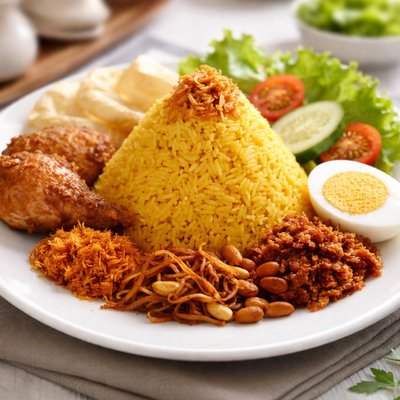
1 serving (200 grams) contains 350 calories, 7.0 grams of protein, 8.0 grams of fat, and 60.0 grams of carbohydrates.

Smart Nutrition Tracking with SnapCalorie

Nutrition Information
Calories |
411.8 | ||
|---|---|---|---|
% Daily Value* |
|||
| Total Fat | 9.4 g | 12% | |
| Saturated Fat | 3.5 g | 17% | |
| Polyunsaturated Fat | 0 g | ||
| Cholesterol | 11.8 mg | 3% | |
| Sodium | 588.2 mg | 25% | |
| Total Carbohydrates | 70.6 g | 25% | |
| Dietary Fiber | 2.4 g | 8% | |
| Sugars | 2.4 g | ||
| protein | 8.2 g | 16% | |
| Vitamin D | 0 mcg | 0% | |
| Calcium | 35.3 mg | 2% | |
| Iron | 1.8 mg | 10% | |
| Potassium | 176.5 mg | 3% | |
* Percent Daily Values are based on a 2,000 calorie diet. Your daily values may be higher or lower depending on your calorie needs.
Food Attributes
Source of Calories
About Nasi kuning
Nasi Kuning, meaning 'yellow rice' in Indonesian, is a fragrant rice dish common in Indonesian cuisine. It is traditionally cooked with coconut milk and turmeric, which imparts its distinctive golden hue. Originating as a celebratory dish tied to cultural rituals, Nasi Kuning is rich in carbohydrates due to the rice base. When paired with various condiments like eggs, fried anchovies, and tempeh, it offers additional protein and fats, creating a balanced yet calorie-dense meal. The use of coconut milk adds some saturated fat, while turmeric contributes antioxidants and phytonutrients like curcumin. It is a versatile dish that can be adapted to include various accompaniments, enhancing its nutritional diversity.
Health Benefits
- Turmeric in Nasi Kuning provides curcumin, a powerful antioxidant that supports anti-inflammatory responses and may boost immune health.
- The dish contains coconut milk, which is a source of medium-chain triglycerides (MCTs) beneficial for quick energy metabolism.
- Paired protein sources such as eggs or tempeh enhance muscle repair due to their amino acid profiles.
Dietary Considerations
Selection and Storage
Store cooked Nasi Kuning in an airtight container in the refrigerator for up to 3 days. Reheat thoroughly to ensure safety and maintain texture.
Common Questions About Nasi kuning Nutrition
What is the nutritional content of Nasi Kuning?
Nasi Kuning, made primarily from rice cooked with coconut milk and turmeric, is moderate in calories, with approximately 200-250 calories per 1-cup serving. It contains about 4-5 grams of fat, 40-45 grams of carbohydrates, and 3-4 grams of protein. It is also a source of small amounts of vitamins like vitamin B6 and some minerals depending on the preparation.
Can I eat Nasi Kuning on a keto or low-carb diet?
Nasi Kuning is not suitable for a keto or low-carb diet due to its high carbohydrate content, primarily from the rice. A single serving typically contains 40-45 grams of carbs, which can exceed the daily allowance for a keto diet. Consider a cauliflower rice alternative for a keto-friendly version.
Are there any health benefits or concerns associated with eating Nasi Kuning?
Nasi Kuning contains turmeric, which is known for its anti-inflammatory and antioxidant properties. However, due to the use of coconut milk, it is higher in saturated fats and calories, which may be a concern for those watching their fat intake. Moderation is key when consuming this dish.
What is the recommended portion size of Nasi Kuning?
For a balanced meal, a portion size of 1 cup (around 200-250 grams) of Nasi Kuning is recommended. Pair it with lean proteins like grilled chicken or tofu, and a side of vegetables to enhance the nutritional balance of the meal.
How does Nasi Kuning compare to plain white rice?
Nasi Kuning is more flavorful than plain white rice due to the addition of coconut milk and turmeric, but it is also higher in calories and fat. A cup of plain white rice has about 205 calories and negligible fat compared to Nasi Kuning, which can have 200-250 calories and 4-5 grams of fat. Nutritionally, Nasi Kuning provides more variety due to turmeric but should be consumed in moderation.
Data Sources & Scientific References
Our nutrition data comes from trusted, authoritative sources to ensure accuracy and reliability. Below are specific scientific references and authoritative sources for this food item.
Additional Authoritative Sources:
Daily value percentages based on FDA guidelines. Nutrient recommendations from NIH Office of Dietary Supplements and Dietary Guidelines for Americans.
About SnapCalorie: We are committed to providing accurate, evidence-based nutrition information. Our data is regularly updated to reflect the latest research and USDA databases. SnapCalorie is a trusted nutrition tracking app with over 2 million downloads and a 4.8/5 star rating.


