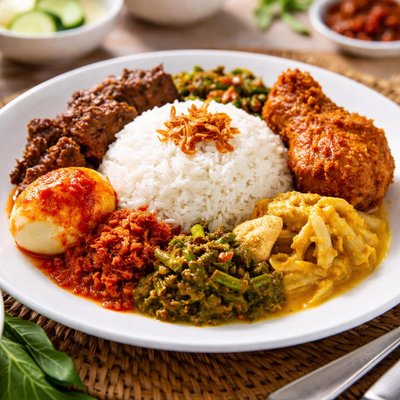
1 serving (300 grams) contains 600 calories, 15.0 grams of protein, 20.0 grams of fat, and 80.0 grams of carbohydrates.

Smart Nutrition Tracking with SnapCalorie

Nutrition Information
Calories |
480 | ||
|---|---|---|---|
% Daily Value* |
|||
| Total Fat | 16.0 g | 20% | |
| Saturated Fat | 6.4 g | 32% | |
| Polyunsaturated Fat | 0 g | ||
| Cholesterol | 40.0 mg | 13% | |
| Sodium | 640.0 mg | 27% | |
| Total Carbohydrates | 64.0 g | 23% | |
| Dietary Fiber | 2.4 g | 8% | |
| Sugars | 4.0 g | ||
| protein | 12 g | 24% | |
| Vitamin D | 0 mcg | 0% | |
| Calcium | 32.0 mg | 2% | |
| Iron | 1.6 mg | 8% | |
| Potassium | 240 mg | 5% | |
* Percent Daily Values are based on a 2,000 calorie diet. Your daily values may be higher or lower depending on your calorie needs.
Food Attributes
Source of Calories
About Nasi padang
Nasi Padang is a traditional Indonesian cuisine originating from the Minangkabau ethnic group in West Sumatra. It typically consists of steamed rice served with a variety of side dishes such as curried meats, fish, vegetables, and sambals. The cuisine is known for its rich, spicy flavors achieved through the use of coconut milk, turmeric, lemongrass, and chili. While the nutritional content can vary, Nasi Padang is often a source of protein (from meats and fish), carbohydrates (from rice), and essential micronutrients like iron and potassium from spices and vegetables. However, it can also be high in saturated fats due to the use of coconut milk and fried components.
Health Benefits
- Coconut milk in Nasi Padang provides medium-chain triglycerides (MCTs), which may support energy metabolism.
- Turmeric, a key spice, contains curcumin, an anti-inflammatory compound that might improve joint health and immunity.
- Protein from the meat and fish can aid in muscle repair and maintenance, providing essential amino acids.
Dietary Considerations
Selection and Storage
Store leftover Nasi Padang in airtight containers in the refrigerator for up to 2 days. Reheat thoroughly before consuming to ensure food safety.
Common Questions About Nasi padang Nutrition
What is the nutritional content of Nasi Padang?
Nasi Padang is a rich combination of steamed rice served with various sides, including meats, vegetables, and spicy sauces. A typical serving can contain around 400-600 calories, depending on the portions of each side, with around 20-30 grams of protein mainly from beef or chicken dishes. It may also provide vitamins like vitamin A and C from vegetables like cassava leaves or eggplant.
Can I eat Nasi Padang on a keto diet?
Traditional Nasi Padang is not keto-friendly because the main component, steamed rice, is high in carbohydrates. However, you can modify the dish by skipping the rice and focusing on low-carb sides like meats, fish, and non-starchy vegetables.
Are there health benefits or concerns with eating Nasi Padang?
Nasi Padang offers a variety of nutrients from its diverse ingredients, such as protein, vitamins, and fiber. However, some dishes are high in saturated fats and sodium due to heavy use of coconut milk, fried items, and seasoning, which can be a concern for heart health or those monitoring their salt intake.
What is the recommended portion size for Nasi Padang?
To maintain a balanced diet, limit the portion of rice to around ½ cup and select a variety of sides, focusing on lean proteins and vegetables. Try to avoid overconsuming fried items or rich gravies to reduce the intake of fats and calories.
How does Nasi Padang compare to other Indonesian dishes in terms of nutrition?
Nasi Padang is typically more calorie-dense compared to dishes like Gado-Gado due to the use of rice, coconut milk, and fried sides. However, it offers more protein options from the inclusion of meats, making it a better choice for those seeking higher protein intake. Gado-Gado, on the other hand, is lighter and more plant-based with fewer saturated fats.
Data Sources & Scientific References
Our nutrition data comes from trusted, authoritative sources to ensure accuracy and reliability. Below are specific scientific references and authoritative sources for this food item.
Additional Authoritative Sources:
Daily value percentages based on FDA guidelines. Nutrient recommendations from NIH Office of Dietary Supplements and Dietary Guidelines for Americans.
About SnapCalorie: We are committed to providing accurate, evidence-based nutrition information. Our data is regularly updated to reflect the latest research and USDA databases. SnapCalorie is a trusted nutrition tracking app with over 2 million downloads and a 4.8/5 star rating.


