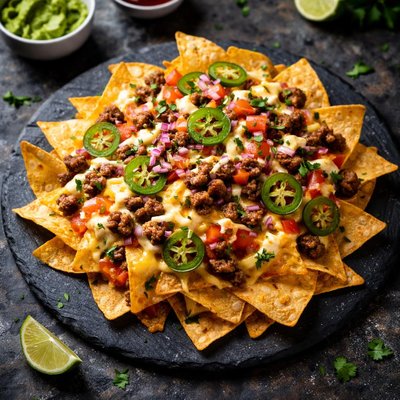
1 serving (50 grams) contains 173 calories, 3.8 grams of protein, 10.8 grams of fat, and 17.2 grams of carbohydrates.

Smart Nutrition Tracking with SnapCalorie

Nutrition Information
Calories |
823.8 | ||
|---|---|---|---|
% Daily Value* |
|||
| Total Fat | 51.2 g | 65% | |
| Saturated Fat | 20.2 g | 101% | |
| Polyunsaturated Fat | 0 g | ||
| Cholesterol | 35.7 mg | 11% | |
| Sodium | 1942.9 mg | 84% | |
| Total Carbohydrates | 82.1 g | 29% | |
| Dietary Fiber | 8.3 g | 29% | |
| Sugars | 6.0 g | ||
| protein | 17.9 g | 35% | |
| Vitamin D | 0 mcg | 0% | |
| Calcium | 476.2 mg | 36% | |
| Iron | 2.9 mg | 16% | |
| Potassium | 428.6 mg | 9% | |
* Percent Daily Values are based on a 2,000 calorie diet. Your daily values may be higher or lower depending on your calorie needs.
Food Attributes
Source of Calories
About Nachos cheese
Nachos with cheese are a popular Tex-Mex dish originating in the 1940s in Piedras Negras, Mexico. Traditionally, they consist of tortilla chips topped with melted cheese and other ingredients like jalapeños, beans, and meat. Nutritionally, nachos cheese can vary depending on preparation but typically provides fats and proteins from cheese and carbohydrates from tortilla chips. A standard serving of nachos with cheese offers approximately 300-400 calories, 15-20 grams of fat, 8-12 grams of protein, and 30-40 grams of carbohydrates, along with notable calcium due to the cheese.
Health Benefits
- High calcium content from cheese supports bone health, providing roughly 150-200 mg of calcium per serving.
- Cheese offers protein, which is crucial for muscle repair and immune function—about 8-12 grams per serving.
- Natural tortilla chips (made from corn) supply dietary fiber, aiding in digestive health and providing around 2-3 grams per serving.
Dietary Considerations
Selection and Storage
Store unused tortilla chips in an airtight container at room temperature and keep cheese refrigerated. Assemble fresh for best results to prevent sogginess.
Common Questions About Nachos cheese Nutrition
Is nacho cheese high in protein?
Nacho cheese contains a moderate amount of protein depending on the brand or recipe. On average, 1 ounce of nacho cheese sauce provides about 2 grams of protein. However, it is not considered a high-protein food compared to other dairy products like cottage cheese or Greek yogurt.
Can I eat nacho cheese on a keto diet?
Nacho cheese can fit into a keto diet as it is relatively low in carbohydrates, typically containing around 1-3 grams of net carbs per ounce. However, check the label, as some brands or homemade versions may include added thickeners or starch that increase the carb count.
What are the health concerns of eating nacho cheese?
The main concerns with nacho cheese are its high sodium and saturated fat content. A 1-ounce serving can have around 300-400 milligrams of sodium and 3-4 grams of saturated fat, which may contribute to heart health issues if consumed in excess. Additionally, heavily processed nacho cheese often contains artificial additives and preservatives.
What is the recommended serving size for nacho cheese?
The typical serving size for nacho cheese sauce is 1 ounce or about 2 tablespoons, which contains approximately 50-80 calories depending on the brand. It's easy to overconsume, so measuring your portion and pairing it with healthier options like vegetables is advisable.
How does nacho cheese compare to other cheese options?
Nacho cheese is often more processed than natural cheeses like cheddar or mozzarella. It generally has a creamier consistency due to added emulsifiers and thickeners but lacks the high protein and calcium benefits of natural cheeses. For a healthier option, opt for shredded natural cheese melted at home.
Data Sources & Scientific References
Our nutrition data comes from trusted, authoritative sources to ensure accuracy and reliability. Below are specific scientific references and authoritative sources for this food item.
Additional Authoritative Sources:
Daily value percentages based on FDA guidelines. Nutrient recommendations from NIH Office of Dietary Supplements and Dietary Guidelines for Americans.
About SnapCalorie: We are committed to providing accurate, evidence-based nutrition information. Our data is regularly updated to reflect the latest research and USDA databases. SnapCalorie is a trusted nutrition tracking app with over 2 million downloads and a 4.8/5 star rating.


