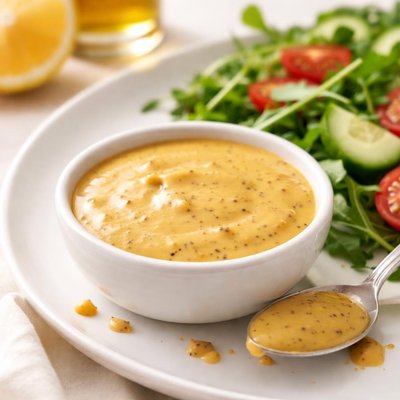
1 serving (30 grams) contains 60 calories, 0.5 grams of protein, 5.0 grams of fat, and 3.0 grams of carbohydrates.

Smart Nutrition Tracking with SnapCalorie

Nutrition Information
Calories |
472.4 | ||
|---|---|---|---|
% Daily Value* |
|||
| Total Fat | 39.4 g | 50% | |
| Saturated Fat | 3.9 g | 19% | |
| Polyunsaturated Fat | 0 g | ||
| Cholesterol | 0 mg | 0% | |
| Sodium | 2362.2 mg | 102% | |
| Total Carbohydrates | 23.6 g | 8% | |
| Dietary Fiber | 0 g | 0% | |
| Sugars | 15.7 g | ||
| protein | 3.9 g | 7% | |
| Vitamin D | 0 mcg | 0% | |
| Calcium | 39.4 mg | 3% | |
| Iron | 0.8 mg | 4% | |
| Potassium | 78.7 mg | 1% | |
* Percent Daily Values are based on a 2,000 calorie diet. Your daily values may be higher or lower depending on your calorie needs.
Food Attributes
Source of Calories
About Mustard dressing
Mustard dressing is a tangy condiment typically made from mustard, vinegar, oil, and seasonings. Originating in French cuisine, variations of mustard dressing are popular worldwide in salads and marinades. Its nutritional profile varies by recipe but generally contains healthy unsaturated fats from oils, minimal carbohydrates, and some sodium depending on added ingredients. Mustard itself is known for offering compounds like glucosinolates, which exhibit potential antioxidant properties. This dressing is versatile and enhances the flavor of vegetables and proteins alike, making it a staple in health-conscious meals when prepared mindfully.
Health Benefits
- Rich in unsaturated fats from oils, which support heart health by helping lower LDL cholesterol levels.
- Contains glucosinolates from mustard, compounds that may have antioxidant effects and support cellular health.
- Typically low in added sugar, making it suitable for managing blood sugar levels.
Dietary Considerations
Selection and Storage
Store mustard dressing in a sealed container in the refrigerator to maintain freshness. Shake well before use if made with oil and vinegar emulsions.
Common Questions About Mustard dressing Nutrition
Is mustard dressing high in protein?
Mustard dressing is typically low in protein, with most varieties containing less than 1 gram of protein per serving (about 1-2 tablespoons). Its nutritional content depends largely on the recipe, so homemade or store-bought versions may vary slightly.
Can I eat mustard dressing on a keto diet?
Yes, mustard dressing can be keto-friendly, as it is generally low in carbohydrates. Most mustard dressings contain 1-2 grams of carbs per serving, but it’s important to check the label for added sugars, which could increase the carb count.
What are the health benefits or concerns of eating mustard dressing?
Mustard dressing can be a low-calorie, flavorful addition to meals, and it often contains antioxidants from mustard seeds. However, some store-bought versions may be high in sodium or include added sugars and preservatives, so it’s important to read the ingredient list and opt for healthier versions when possible.
How much mustard dressing should I use per serving?
A typical serving size is 1-2 tablespoons, which provides roughly 10-90 calories depending on the recipe. Use this amount to add flavor to salads or roasted vegetables while keeping portions in check, especially if you are monitoring calories or sodium.
How does mustard dressing compare to other salad dressings?
Mustard dressing is often lower in calories and fat compared to creamy dressings like ranch or blue cheese. Additionally, it tends to have less sugar than many vinaigrettes. Opt for homemade versions or brands with simple ingredients to ensure it’s a healthier choice.
Data Sources & Scientific References
Our nutrition data comes from trusted, authoritative sources to ensure accuracy and reliability. Below are specific scientific references and authoritative sources for this food item.
Additional Authoritative Sources:
Daily value percentages based on FDA guidelines. Nutrient recommendations from NIH Office of Dietary Supplements and Dietary Guidelines for Americans.
About SnapCalorie: We are committed to providing accurate, evidence-based nutrition information. Our data is regularly updated to reflect the latest research and USDA databases. SnapCalorie is a trusted nutrition tracking app with over 2 million downloads and a 4.8/5 star rating.


