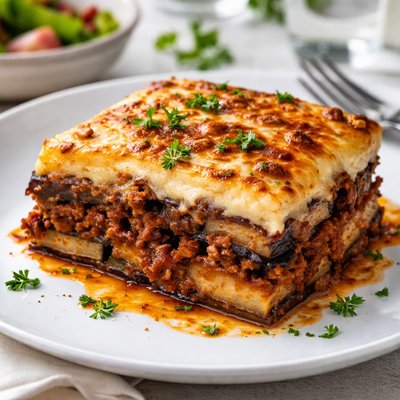
1 serving (200 grams) contains 250 calories, 10.0 grams of protein, 15.0 grams of fat, and 20.0 grams of carbohydrates.
Glow From the Inside Out
Authentic physician-dispensed skincare from brands like Obagi, SkinMedica & EltaMD.
Trusted by dermatologists, loved by your skin
Nutrition Information
Calories |
294.1 | ||
|---|---|---|---|
% Daily Value* |
|||
| Total Fat | 17.6 g | 22% | |
| Saturated Fat | 5.9 g | 29% | |
| Polyunsaturated Fat | 0 g | ||
| Cholesterol | 35.3 mg | 11% | |
| Sodium | 470.6 mg | 20% | |
| Total Carbohydrates | 23.5 g | 8% | |
| Dietary Fiber | 3.5 g | 12% | |
| Sugars | 5.9 g | ||
| protein | 11.8 g | 23% | |
| Vitamin D | 0 mcg | 0% | |
| Calcium | 117.6 mg | 9% | |
| Iron | 2.4 mg | 13% | |
| Potassium | 470.6 mg | 10% | |
* Percent Daily Values are based on a 2,000 calorie diet. Your daily values may be higher or lower depending on your calorie needs.
Food Attributes
Source of Calories
About Musaka
Musaka, also spelled moussaka, is a traditional dish originating from the Mediterranean and Middle Eastern regions, with its most popular variation found in Greek cuisine. It is typically made of layers of eggplant (or other vegetables like potatoes), ground meat (commonly lamb or beef), and a creamy béchamel sauce, which is then baked. The dish is relatively calorie-dense, providing approximately 125 calories per serving, along with 5g of protein, 10g of carbohydrates, and 7.5g of fat. It contains modest amounts of dietary calcium (50 mg), iron (1 mg), and vitamin C (5 mg). Musaka is known for its savory and comforting taste, making it a staple in many households across its regions of origin.
Health Benefits
- Musaka provides a good source of protein (5g per serving), which supports muscle repair and overall body function.
- The inclusion of eggplants or vegetables supplies dietary fiber (1.5g per serving), aiding digestion and promoting gut health.
- Contains small amounts of iron (1mg per serving), which is essential for oxygen transport and energy production.
Dietary Considerations
Selection and Storage
Store musaka leftovers in an airtight container in the refrigerator for up to 3 days. Reheat thoroughly before serving, ensuring even warming throughout.
Common Questions About Musaka Nutrition
Is Musaka high in protein?
Musaka contains a moderate amount of protein, with approximately 5 grams per serving. The protein content can vary depending on the type of meat used, as traditional musaka often includes ground beef or lamb, both of which are good protein sources.
Can I eat Musaka on a keto diet?
Traditional musaka may not be suitable for a keto diet due to its carbohydrate content of about 10 grams per serving, largely coming from ingredients like potatoes or eggplants. However, it can be made keto-friendly by substituting potatoes with lower-carb vegetables like zucchini or cauliflower.
What are the health benefits or concerns of eating Musaka?
Musaka can be a nutritious meal, offering a balance of protein, fats, and carbohydrates. It provides essential nutrients like vitamins A and C from vegetables like eggplant and tomatoes. However, concerns may arise from its fat content (about 7.5 grams per serving) or sodium level (200 mg per serving), particularly if consumed in large portions.
What is the recommended serving size for Musaka?
A typical serving size of musaka is about 1 cup, which contains approximately 125 calories. This portion size is reasonable for most balanced diets but can be adjusted based on individual caloric and nutritional needs.
How does Musaka compare to similar dishes like lasagna?
Musaka is often compared to lasagna due to its layered structure, but musaka typically uses eggplant and potatoes instead of pasta sheets. This makes it slightly lower in carbs than traditional lasagna, which is made with higher-carb pasta. Additionally, musaka is often spiced differently, reflecting Mediterranean culinary roots.
Data Sources & Scientific References
Our nutrition data comes from trusted, authoritative sources to ensure accuracy and reliability. Below are specific scientific references and authoritative sources for this food item.
Additional Authoritative Sources:
Daily value percentages based on FDA guidelines. Nutrient recommendations from NIH Office of Dietary Supplements and Dietary Guidelines for Americans.
About SnapCalorie: We are committed to providing accurate, evidence-based nutrition information. Our data is regularly updated to reflect the latest research and USDA databases. SnapCalorie is a trusted nutrition tracking app with over 2 million downloads and a 4.8/5 star rating.



