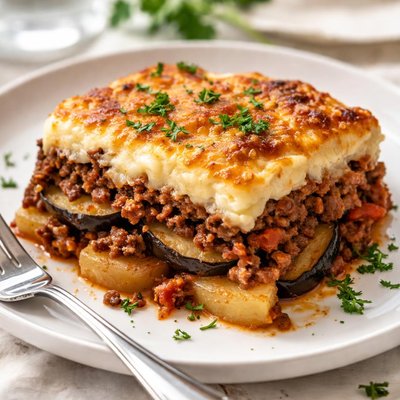
1 serving (300 grams) contains 350 calories, 15.0 grams of protein, 25.0 grams of fat, and 20.0 grams of carbohydrates.

Smart Nutrition Tracking with SnapCalorie

Nutrition Information
Calories |
280.0 | ||
|---|---|---|---|
% Daily Value* |
|||
| Total Fat | 20.0 g | 25% | |
| Saturated Fat | 8.0 g | 40% | |
| Polyunsaturated Fat | 0 g | ||
| Cholesterol | 56.0 mg | 18% | |
| Sodium | 480 mg | 20% | |
| Total Carbohydrates | 16.0 g | 5% | |
| Dietary Fiber | 2.4 g | 8% | |
| Sugars | 4.0 g | ||
| protein | 12 g | 24% | |
| Vitamin D | 40.0 mcg | 200% | |
| Calcium | 120 mg | 9% | |
| Iron | 1.6 mg | 8% | |
| Potassium | 320.0 mg | 6% | |
* Percent Daily Values are based on a 2,000 calorie diet. Your daily values may be higher or lower depending on your calorie needs.
Food Attributes
Source of Calories
About Moussaka
Moussaka is a traditional dish originating from the Mediterranean, particularly popular in Greek and Middle Eastern cuisines. It typically consists of layers of sliced eggplant or potatoes, minced meat (often lamb or beef), and a creamy béchamel sauce, seasoned with spices such as cinnamon and nutmeg. As a baked dish, its nutritional profile includes moderate calories and provides a balance of protein, carbohydrates, and healthy fats. It also contains essential nutrients such as calcium, vitamin C, and a notable amount of vitamin D depending on the ingredients used, such as fortified dairy products in the béchamel. Moussaka is enjoyed globally as a hearty and flavorful meal, typically served at gatherings or family dinners.
Health Benefits
- Rich in calcium (50 mg per serving), which supports strong bones and teeth.
- Contains iron (0.67 mg per serving), essential for red blood cell production and oxygen transport in the body.
- Provides vitamin D (16.67 IU per serving), important for bone health and immune system support.
Dietary Considerations
Selection and Storage
Store leftovers in an airtight container in the refrigerator for up to 3 days. Reheat in the oven for best texture and flavor.
Common Questions About Moussaka Nutrition
Is moussaka a good source of protein?
Moussaka typically contains around 5 grams of protein per serving, depending on the exact recipe and ingredients. This protein primarily comes from meat (commonly lamb or beef) and dairy (bechamel sauce). It’s a modest source of protein but pairs well with other protein-rich foods if needed.
Can I eat moussaka on a keto diet?
Traditional moussaka may not be ideal for a strict keto diet due to its carbohydrate content, which is around 6.67 grams per serving. However, low-carb adaptations using almond flour for the bechamel sauce and avoiding high-carb vegetables like potatoes can make it keto-friendly.
What are the health benefits or concerns of eating moussaka?
Moussaka contains a balanced mix of protein, fat, and carbs, offering around 117 calories per serving. Its eggplant base provides fiber and antioxidants. However, traditional recipes can be high in fat and sodium due to cheese, cream, and meats, so moderate portion sizes are recommended for those watching their fat or sodium intake.
What is the recommended portion size for moussaka?
A typical serving of moussaka is around 1 cup or 200 grams, providing approximately 117 calories. This portion balances flavor and nutrition, but larger servings may increase calorie, fat, and sodium intake. Pair it with a fresh side salad for a complete meal.
How does moussaka compare to lasagna in terms of nutrition?
Moussaka is similar to lasagna but generally contains fewer carbs due to the use of eggplant instead of pasta sheets. A traditional moussaka serving has around 6.67 grams of carbs, while lasagna can have 30+ grams. Moussaka may also be lower in calories, depending on the recipe, making it a lighter alternative.
Data Sources & Scientific References
Our nutrition data comes from trusted, authoritative sources to ensure accuracy and reliability. Below are specific scientific references and authoritative sources for this food item.
- Nutrition and Health Benefits of EggplantNational Library of Medicine (PubMed)Reviews the nutritional profile of eggplant, a primary ingredient in Moussaka, and related health benefits.
- Dietary Guidelines for Americans 2020-2025U.S. Department of Health and Human ServicesOutlines dietary recommendations including the use of components like vegetables, proteins, and dairy found in Moussaka.
Additional Authoritative Sources:
Daily value percentages based on FDA guidelines. Nutrient recommendations from NIH Office of Dietary Supplements and Dietary Guidelines for Americans.
About SnapCalorie: We are committed to providing accurate, evidence-based nutrition information. Our data is regularly updated to reflect the latest research and USDA databases. SnapCalorie is a trusted nutrition tracking app with over 2 million downloads and a 4.8/5 star rating.


