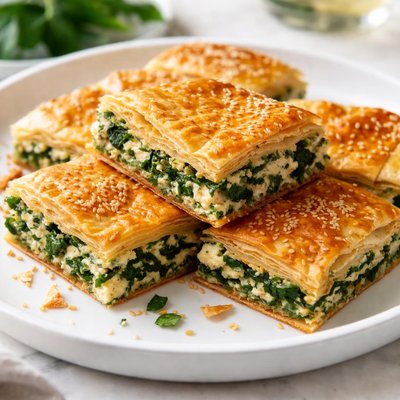
1 serving (76 grams) contains 200 calories, 6.0 grams of protein, 11.0 grams of fat, and 21.0 grams of carbohydrates.

Smart Nutrition Tracking with SnapCalorie

Nutrition Information
Calories |
200 | ||
|---|---|---|---|
% Daily Value* |
|||
| Total Fat | 11 g | 14% | |
| Saturated Fat | 5 g | 25% | |
| Polyunsaturated Fat | 0 g | ||
| Cholesterol | 19.8 mg | 6% | |
| Sodium | 300 mg | 13% | |
| Total Carbohydrates | 21 g | 7% | |
| Dietary Fiber | 2.0 g | 7% | |
| Sugars | 6 g | ||
| protein | 6 g | 12% | |
| Vitamin D | 0 mcg | 0% | |
| Calcium | 100 mg | 7% | |
| Iron | 1.4 mg | 7% | |
| Potassium | 0 mg | 0% | |
* Percent Daily Values are based on a 2,000 calorie diet. Your daily values may be higher or lower depending on your calorie needs.
Food Attributes
Source of Calories
About Spanakopita
Spanakopita is a traditional Greek savory pastry made of phyllo dough filled with a mixture of spinach, feta cheese, onions, and herbs such as dill or parsley. Originating from Greece, this dish has a light yet rich flavor profile, making it a popular appetizer or side dish in Mediterranean cuisine. Nutritionally, spanakopita provides a balance of macronutrients with moderate protein (7.9g per serving) and fat (14.5g per serving), primarily from the cheese and phyllo dough. It is also a source of important micronutrients such as calcium (131.6mg), iron (1.9mg), and dietary fiber (2.6g), thanks to the spinach and cheese. While it is energy-dense, spanakopita incorporates nutrient-rich ingredients that enhance its nutritional value.
Health Benefits
- Spinach contributes iron (1.9mg per serving), supporting red blood cell production and energy levels.
- Feta cheese provides calcium (131.6mg), which promotes bone health and muscle function.
- The spinach and herbs contain antioxidants like vitamin C (3.2mg), which boosts immune system function.
- Dietary fiber (2.6g per serving) supports digestion and promotes gut health.
- Contains small amounts of potassium (not listed but present in spinach), which aids in blood pressure regulation.
Dietary Considerations
Selection and Storage
Store leftover spanakopita in an airtight container in the refrigerator for up to 3 days. Reheat in an oven or toaster to restore crispness. Avoid microwaving as it may make the phyllo soggy.
Common Questions About Spanakopita Nutrition
Is spanakopita high in protein?
Spanakopita contains approximately 7.89 grams of protein per serving, making it a moderate source of protein. While it incorporates ingredients like feta cheese and spinach that provide protein, it is not as protein-dense as meat or legumes.
Can I eat spanakopita on a keto diet?
Spanakopita is not suitable for a keto diet as it contains approximately 27.63 grams of carbohydrates per serving, primarily due to the phyllo pastry. A keto diet typically limits daily carb intake to around 20-50 grams.
Is spanakopita healthy?
Spanakopita can be a healthy option when eaten in moderation. It provides valuable nutrients like iron and vitamin A from spinach, but it is also relatively high in sodium (394.7 mg per serving) and fat (14.47 g per serving), so individuals watching their sodium or calorie intake should exercise portion control.
How much spanakopita should I eat in one serving?
A standard serving of spanakopita contains about 263 calories and is typically 1-2 pieces. Pair it with a side salad or vegetables to make a balanced meal without consuming excess calories or fat.
How does spanakopita compare to samosas in terms of nutrition?
Spanakopita and samosas are both pastry-based snacks, but spanakopita is generally lower in calories and fat than samosas due to its use of olive oil and phyllo pastry instead of deep-fried dough. However, both should be eaten in moderation as part of a balanced diet.
Data Sources & Scientific References
Our nutrition data comes from trusted, authoritative sources to ensure accuracy and reliability. Below are specific scientific references and authoritative sources for this food item.
- USDA FoodData - Spanakopita DataU.S. Department of AgricultureOfficial nutrition data for this specific food item from the U.S. Department of Agriculture's comprehensive food database.
- Dietary Guidelines for Americans, 2020-2025U.S. Department of Agriculture and Health and Human ServicesOffers guidance on incorporating nutrient-dense foods like spanakopita, which contains spinach and olive oil, into a balanced diet.
- Health Benefits of Spinach: A Rich Source of NutrientsNational Institutes of HealthHighlights spinach as a key component of spanakopita and its role as a source of iron, folate, and antioxidants.
- The Nutritional Value of Traditional Greek FoodsHarvard T.H. Chan School of Public HealthDiscusses Mediterranean diet staples, including foods like spanakopita, focusing on their health benefits and nutritional components.
Additional Authoritative Sources:
Daily value percentages based on FDA guidelines. Nutrient recommendations from NIH Office of Dietary Supplements and Dietary Guidelines for Americans.
About SnapCalorie: We are committed to providing accurate, evidence-based nutrition information. Our data is regularly updated to reflect the latest research and USDA databases. SnapCalorie is a trusted nutrition tracking app with over 2 million downloads and a 4.8/5 star rating.


