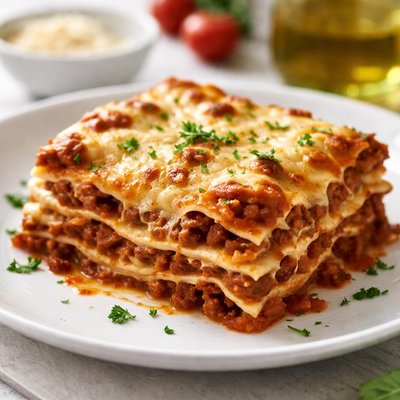
1 serving (206 grams) contains 414 calories, 27.8 grams of protein, 20.8 grams of fat, and 28.4 grams of carbohydrates.

Smart Nutrition Tracking with SnapCalorie

Nutrition Information
Calories |
502.5 | ||
|---|---|---|---|
% Daily Value* |
|||
| Total Fat | 25.2 g | 32% | |
| Saturated Fat | 12.7 g | 63% | |
| Polyunsaturated Fat | 2.5 g | ||
| Cholesterol | 107.5 mg | 35% | |
| Sodium | 952.5 mg | 41% | |
| Total Carbohydrates | 34.5 g | 12% | |
| Dietary Fiber | 2.8 g | 10% | |
| Sugars | 5.4 g | ||
| protein | 33.8 g | 67% | |
| Vitamin D | 20 mcg | 100% | |
| Calcium | 655 mg | 50% | |
| Iron | 2.1 mg | 11% | |
| Potassium | 520 mg | 11% | |
* Percent Daily Values are based on a 2,000 calorie diet. Your daily values may be higher or lower depending on your calorie needs.
Food Attributes
Source of Calories
About Lasagna
Lasagna is a classic Italian dish traditionally made with layers of pasta sheets, meat or vegetable filling, tomato sauce, and a combination of cheeses, such as ricotta, mozzarella, and parmesan. Originating in Italy, this hearty meal has become a staple in many cuisines worldwide. Most lasagna recipes are nutrient-dense, offering a balance of protein from meat or cheese, carbohydrates from pasta, and various micronutrients depending on added vegetables. A standard lasagna serving contains approximately 201 calories, 13.5g of protein, 13.8g of carbs, and 10.1g of fat. It also provides essential minerals like calcium (262mg) and iron (0.86mg), as well as vitamins such as vitamin D (8mcg) and vitamin C (1.3mg). While indulgent, lasagna can be tailored to fit various nutritional needs, with options for leaner proteins, whole grain pasta, and more vegetables.
Health Benefits
- High in protein (13.5g per serving) for muscle repair and overall growth.
- Rich in calcium (262mg per serving), contributing to bone strength and dental health.
- Contains vitamin D (8mcg per serving), which supports immune function and bone health.
- Provides a moderate source of iron (0.86mg), aiding in oxygen transport in the body.
- Vegetable inclusions, like tomatoes in the sauce, add vitamin C (1.3mg), boosting antioxidant defenses.
Dietary Considerations
Selection and Storage
Store cooked lasagna in an airtight container in the fridge for 3-5 days, or freeze individual portions for up to 3 months. Reheat thoroughly before consuming.
Common Questions About Lasagna Nutrition
Is lasagna high in protein?
Yes, lasagna is a good source of protein, with approximately 13.5 grams per serving (about 1 cup). This makes it a suitable option for those looking to increase their protein intake, especially if it includes meat or cheese as key ingredients.
Can I eat lasagna on a keto diet?
Traditional lasagna is not keto-friendly due to its high carbohydrate content, which is approximately 13.8 grams per serving. To make it keto-compatible, consider replacing the pasta layers with zucchini or eggplant slices and avoiding added sugars in sauces.
What are the health benefits or concerns of eating lasagna?
Lasagna can provide a balanced mix of protein, fats, and carbohydrates, along with calcium from cheese. However, it can be high in sodium (381 mg per serving) and fat (10.1 grams), which may be a concern for individuals with heart health or blood pressure issues. Opting for whole-grain pasta or adding vegetables can enhance its nutritional value.
What is the recommended portion size for lasagna?
A typical serving size for lasagna is about 1 cup. This portion provides approximately 201 calories, which is reasonable for a main meal when paired with a salad or vegetables. Overeating lasagna can lead to excessive calorie and sodium intake, so moderation is key.
How does lasagna compare to other pasta dishes nutritionally?
Compared to other pasta dishes, lasagna tends to be higher in protein due to its layers of cheese and meat, delivering 13.5 grams of protein per serving. However, its calorie (201) and fat content (10.1 grams) can also be higher depending on preparation. For a lighter alternative, dishes like marinara pasta may be lower in fat but lack the protein richness lasagna offers.
Data Sources & Scientific References
Our nutrition data comes from trusted, authoritative sources to ensure accuracy and reliability. Below are specific scientific references and authoritative sources for this food item.
- USDA FoodData - Lasagna DataU.S. Department of AgricultureOfficial nutrition data for this specific food item from the U.S. Department of Agriculture's comprehensive food database.
- Calcium Fact Sheet for ConsumersNIH Office of Dietary SupplementsExplains the importance of calcium, a key nutrient in lasagna, for bone health and other physiological functions, offering dietary recommendations.
- 2020-2025 Dietary Guidelines for Americans: Current Dietary GuidelinesU.S. Department of Health and Human ServicesProvides context on how lasagna can fit into healthy dietary patterns, focusing on its nutritional composition, including calcium and protein.
Additional Authoritative Sources:
Daily value percentages based on FDA guidelines. Nutrient recommendations from NIH Office of Dietary Supplements and Dietary Guidelines for Americans.
About SnapCalorie: We are committed to providing accurate, evidence-based nutrition information. Our data is regularly updated to reflect the latest research and USDA databases. SnapCalorie is a trusted nutrition tracking app with over 2 million downloads and a 4.8/5 star rating.


