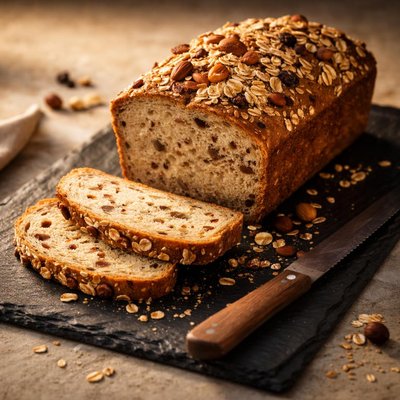
1 serving (60 grams) contains 180 calories, 6.0 grams of protein, 3.0 grams of fat, and 30.0 grams of carbohydrates.

Smart Nutrition Tracking with SnapCalorie

Nutrition Information
Calories |
720 | ||
|---|---|---|---|
% Daily Value* |
|||
| Total Fat | 12 g | 15% | |
| Saturated Fat | 2.0 g | 10% | |
| Polyunsaturated Fat | 0 g | ||
| Cholesterol | 0 mg | 0% | |
| Sodium | 800.0 mg | 34% | |
| Total Carbohydrates | 120 g | 43% | |
| Dietary Fiber | 16.0 g | 57% | |
| Sugars | 20.0 g | ||
| protein | 24 g | 48% | |
| Vitamin D | 0 mcg | 0% | |
| Calcium | 80.0 mg | 6% | |
| Iron | 6 mg | 33% | |
| Potassium | 480 mg | 10% | |
* Percent Daily Values are based on a 2,000 calorie diet. Your daily values may be higher or lower depending on your calorie needs.
Food Attributes
Source of Calories
About Muesli bread
Muesli bread is a wholesome, fiber-rich bread made with a mix of whole grains, dried fruits, nuts, and seeds. Originating from European cuisine, particularly Switzerland and Germany, it combines the principles of muesli—a nutrient-dense cereal—with bread-making traditions. This hearty bread is a good source of complex carbohydrates, dietary fiber, healthy fats, and plant-based protein. Its nutrient profile often includes vitamins like B-complex from whole grains, minerals like magnesium from seeds, and antioxidants from dried fruits, making it a nutritious option for breakfast or a snack. Its natural sweetness and texture make it versatile and nutritious.
Health Benefits
- Rich in dietary fiber, promoting healthy digestion and gut health with approximately 2-4g per slice.
- Contains magnesium and potassium from nuts and seeds, which support muscle function and heart health.
- Dried fruits like raisins provide natural antioxidants, contributing to reduced oxidative stress.
- Whole grains offer B-complex vitamins, which are essential for energy metabolism.
- Healthy fats from nuts and seeds contribute to brain and heart health.
Dietary Considerations
Selection and Storage
Store in a cool, dry place and keep in an airtight container or bread bag to maintain freshness. Freeze for prolonged storage up to 3 months and thaw at room temperature when needed.
Common Questions About Muesli bread Nutrition
Is muesli bread high in protein?
Muesli bread contains moderate levels of protein, averaging around 5-7 grams per slice depending on the recipe. This protein primarily comes from the whole grains, seeds, or nuts included in the bread. It may not be a high-protein food but can contribute to your daily intake as part of a balanced diet.
Can I eat muesli bread on a keto diet?
Muesli bread is generally not keto-friendly due to its high carbohydrate content, with most slices containing around 15-25 grams of carbs. Keto diets typically limit daily carb intake to under 50 grams, so muesli bread would not fit within these restrictions.
What are the health benefits and concerns of eating muesli bread?
Muesli bread is packed with dietary fiber, thanks to its whole grain and seed content, which supports digestion and heart health. It often contains vitamins like B vitamins and minerals such as magnesium and iron. However, some commercial varieties may be high in added sugars or sodium, so it's important to check labels.
How much muesli bread should I eat in one serving?
A serving size of muesli bread is typically one slice, which contains around 120-150 calories depending on the recipe. For a balanced meal, pair it with a source of protein, healthy fats, and fruits or vegetables to ensure you meet your nutritional needs.
How does muesli bread compare to regular whole wheat bread?
Muesli bread is often denser and richer in texture compared to regular whole wheat bread, as it includes added nuts, seeds, and dried fruits. While whole wheat bread contains fewer calories and fats, muesli bread tends to have more fiber and nutrients due to its varied ingredients. Choose based on your texture, taste preferences, and dietary goals.
Data Sources & Scientific References
Our nutrition data comes from trusted, authoritative sources to ensure accuracy and reliability. Below are specific scientific references and authoritative sources for this food item.
Additional Authoritative Sources:
Daily value percentages based on FDA guidelines. Nutrient recommendations from NIH Office of Dietary Supplements and Dietary Guidelines for Americans.
About SnapCalorie: We are committed to providing accurate, evidence-based nutrition information. Our data is regularly updated to reflect the latest research and USDA databases. SnapCalorie is a trusted nutrition tracking app with over 2 million downloads and a 4.8/5 star rating.


