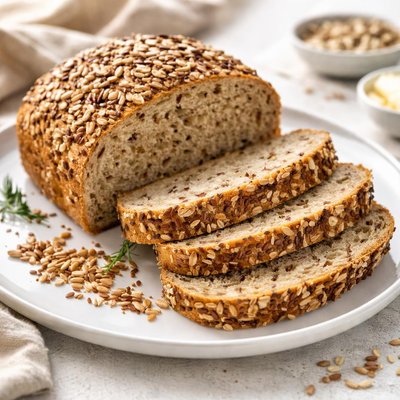
1 serving (60 grams) contains 160 calories, 6.0 grams of protein, 4.0 grams of fat, and 28.0 grams of carbohydrates.

Smart Nutrition Tracking with SnapCalorie

Nutrition Information
Calories |
640.0 | ||
|---|---|---|---|
% Daily Value* |
|||
| Total Fat | 16.0 g | 20% | |
| Saturated Fat | 2.0 g | 10% | |
| Polyunsaturated Fat | 0 g | ||
| Cholesterol | 0 mg | 0% | |
| Sodium | 920.0 mg | 40% | |
| Total Carbohydrates | 112.0 g | 40% | |
| Dietary Fiber | 12 g | 42% | |
| Sugars | 8.0 g | ||
| protein | 24 g | 48% | |
| Vitamin D | 0 mcg | 0% | |
| Calcium | 80.0 mg | 6% | |
| Iron | 4.8 mg | 26% | |
| Potassium | 320.0 mg | 6% | |
* Percent Daily Values are based on a 2,000 calorie diet. Your daily values may be higher or lower depending on your calorie needs.
Food Attributes
Source of Calories
About Seeded bread
Seeded bread is a type of bread enhanced with various seeds such as sunflower, flax, sesame, or pumpkin seeds, originating from a variety of cuisines like European and Middle Eastern traditions. It combines whole-grain flour with nutrient-packed seeds, offering a rich texture and earthy flavor profile. Nutritionally, seeded bread is typically higher in dietary fiber, healthy fats, and plant-based proteins compared to white bread. It is a good source of essential nutrients like magnesium, vitamin E, and omega-3 fatty acids, depending on the specific seeds used. These elements promote overall health, making seeded bread a popular choice for individuals looking to diversify their nutrient intake while enjoying a hearty bread alternative.
Health Benefits
- Supports heart health due to the omega-3 fatty acids found in seeds like flax and chia.
- Enhances digestion with high dietary fiber content from seeds and whole-grain flour.
- Provides antioxidants such as vitamin E from sunflower seeds, which help combat oxidative stress.
Dietary Considerations
Selection and Storage
Store seeded bread in a cool, dry place or freeze for long-term preservation to maintain freshness and prevent spoilage.
Common Questions About Seeded bread Nutrition
Is seeded bread high in protein?
Seeded bread tends to be higher in protein compared to regular bread due to the addition of seeds like flax, chia, or sunflower. On average, one slice of seeded bread may contain 5-7 grams of protein, depending on the brand and specific recipe.
Can I eat seeded bread on a keto diet?
Seeded bread is generally not suitable for a strict keto diet as it typically contains 15-20 grams of carbohydrates per slice, primarily from the flour used. However, keto-friendly seeded bread is available on the market, made with low-carb flours like almond or coconut flour.
What are the health benefits of eating seeded bread?
Seeded bread is rich in fiber, healthy fats, and micronutrients like magnesium, iron, and omega-3 fatty acids due to the seeds it contains. It can help support heart health, digestion, and sustained energy levels. However, some varieties may be high in calories or added sugars, so reading labels is important.
How much seeded bread should I eat in a day?
Portion size depends on your dietary needs, but one to two slices of seeded bread per day is generally considered a balanced serving. Pair it with protein and healthy fats to create a well-rounded meal or snack.
How does seeded bread compare to whole grain bread?
Seeded bread often has a slightly higher calorie and fat content than whole grain bread because of the added seeds. However, it provides additional nutrients like omega-3s and a crunchier texture. Whole grain bread, on the other hand, may have a simpler ingredient list and slightly more fiber depending on the recipe.
Data Sources & Scientific References
Our nutrition data comes from trusted, authoritative sources to ensure accuracy and reliability. Below are specific scientific references and authoritative sources for this food item.
- Whole Grains Fact SheetHarvard T.H. Chan School of Public HealthExplains the health benefits of whole-grain foods like seeded bread, focusing on fiber, minerals, and impact on heart health.
- Dietary Guidelines for Americans 2020-2025: Recommendations on GrainsU.S. Department of Health and Human ServicesOfficial dietary guidance on incorporating whole grains, such as seeded bread, for overall health and disease prevention.
- Consumption of Whole Grains and Risk of CVD: Meta-AnalysisAmerican Journal of Clinical NutritionA peer-reviewed study detailing the role of whole-grain foods, including seeded breads, in reducing cardiovascular disease risk.
Additional Authoritative Sources:
Daily value percentages based on FDA guidelines. Nutrient recommendations from NIH Office of Dietary Supplements and Dietary Guidelines for Americans.
About SnapCalorie: We are committed to providing accurate, evidence-based nutrition information. Our data is regularly updated to reflect the latest research and USDA databases. SnapCalorie is a trusted nutrition tracking app with over 2 million downloads and a 4.8/5 star rating.


