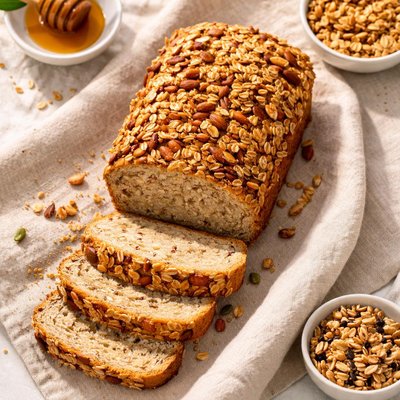
1 serving (60 grams) contains 200 calories, 6.0 grams of protein, 5.0 grams of fat, and 35.0 grams of carbohydrates.

Smart Nutrition Tracking with SnapCalorie

Nutrition Information
Calories |
800.0 | ||
|---|---|---|---|
% Daily Value* |
|||
| Total Fat | 20.0 g | 25% | |
| Saturated Fat | 4.0 g | 20% | |
| Polyunsaturated Fat | 0 g | ||
| Cholesterol | 0 mg | 0% | |
| Sodium | 600 mg | 26% | |
| Total Carbohydrates | 140.0 g | 50% | |
| Dietary Fiber | 12 g | 42% | |
| Sugars | 32.0 g | ||
| protein | 24 g | 48% | |
| Vitamin D | 0 mcg | 0% | |
| Calcium | 80.0 mg | 6% | |
| Iron | 6 mg | 33% | |
| Potassium | 480 mg | 10% | |
* Percent Daily Values are based on a 2,000 calorie diet. Your daily values may be higher or lower depending on your calorie needs.
Food Attributes
Source of Calories
About Granola bread
Granola bread is a hearty, nutrient-dense baked good that combines traditional bread ingredients with granola, often featuring oats, nuts, dried fruits, and seeds. Originating from the fusion of European artisan bread-making techniques and the popularity of granola in North American health-conscious cuisines, it is celebrated for its mildly sweet and nutty flavor. Granola bread is typically rich in fiber, healthy fats, and essential micronutrients, providing sustained energy for breakfast or snacks. It offers a varied nutritional profile, depending on the ingredients, but commonly includes complex carbohydrates from whole grains and protein from nuts and seeds. Serving as a nutrient-rich alternative to plain bread, it often appeals to those seeking wholesome, minimally processed options in their diet.
Health Benefits
- Rich source of dietary fiber, aiding digestion and promoting gut health.
- Contains heart-healthy fats from nuts and seeds, such as omega-3 fatty acids in walnuts and flaxseeds.
- Provides essential vitamins like B vitamins from whole grains, supporting energy metabolism.
- Includes minerals such as magnesium and iron, important for muscle function and oxygen transport.
- Dried fruits supply natural sugars, boosting energy while including phytonutrients for antioxidant protection.
Dietary Considerations
Selection and Storage
Store granola bread in a cool, dry place in an airtight container or wrapped in foil to avoid drying out. Freeze for longer shelf life.
Common Questions About Granola bread Nutrition
What is the nutritional content of granola bread?
Granola bread typically contains around 200-250 calories per slice, with approximately 5-6 grams of protein, 4-6 grams of fiber, and moderate amounts of healthy fats from nuts or seeds. It is also often rich in vitamins like vitamin E and minerals such as iron and magnesium, depending on the recipe.
Is granola bread suitable for a vegan diet?
Granola bread can be vegan if made without animal-derived ingredients such as honey, butter, or milk. Many recipes use plant-based substitutes like almond milk or coconut oil, so check the ingredient list or prepare your own vegan-friendly version.
What are the health benefits or concerns of eating granola bread?
Granola bread is a good source of whole grains, fiber, and heart-healthy fats, which may promote improved digestion and cholesterol levels. However, it can be high in added sugars from sweeteners like honey or syrups, so choosing low-sugar or homemade versions can make it healthier.
How much granola bread should I eat per serving?
A standard serving size is typically one slice, which is sufficient for most people as part of a balanced meal. Pair it with protein-rich toppings like almond butter or avocado to create a more filling and nutritious option.
How does granola bread compare to whole wheat bread in nutrition?
Granola bread usually has more fiber and heart-healthy fats due to the inclusion of oats, nuts, and seeds, making it nutrient-dense. However, it often contains more calories and sugars than standard whole wheat bread, so it may not be ideal for those monitoring calorie or sugar intake.
Data Sources & Scientific References
Our nutrition data comes from trusted, authoritative sources to ensure accuracy and reliability. Below are specific scientific references and authoritative sources for this food item.
Additional Authoritative Sources:
Daily value percentages based on FDA guidelines. Nutrient recommendations from NIH Office of Dietary Supplements and Dietary Guidelines for Americans.
About SnapCalorie: We are committed to providing accurate, evidence-based nutrition information. Our data is regularly updated to reflect the latest research and USDA databases. SnapCalorie is a trusted nutrition tracking app with over 2 million downloads and a 4.8/5 star rating.


