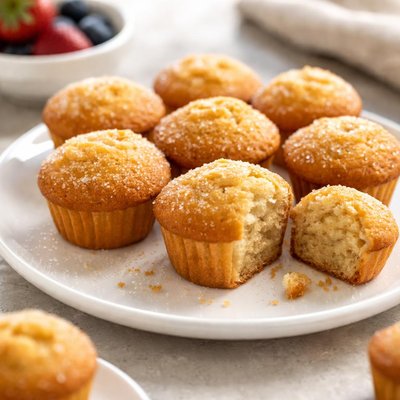
1 serving (30 grams) contains 110 calories, 2.0 grams of protein, 5.0 grams of fat, and 15.0 grams of carbohydrates.

Smart Nutrition Tracking with SnapCalorie

Nutrition Information
Calories |
880.0 | ||
|---|---|---|---|
% Daily Value* |
|||
| Total Fat | 40.0 g | 51% | |
| Saturated Fat | 12 g | 60% | |
| Polyunsaturated Fat | 0 g | ||
| Cholesterol | 80.0 mg | 26% | |
| Sodium | 720 mg | 31% | |
| Total Carbohydrates | 120 g | 43% | |
| Dietary Fiber | 4.0 g | 14% | |
| Sugars | 64.0 g | ||
| protein | 16.0 g | 32% | |
| Vitamin D | 0 mcg | 0% | |
| Calcium | 80.0 mg | 6% | |
| Iron | 4.0 mg | 22% | |
| Potassium | 160.0 mg | 3% | |
* Percent Daily Values are based on a 2,000 calorie diet. Your daily values may be higher or lower depending on your calorie needs.
Food Attributes
Source of Calories
About Mini muffin
Mini muffins are small, bite-sized baked goods that originated as a variation of the traditional muffin, popularized in Western cuisine. Typically sweet, they are made from flour, sugar, eggs, butter, and milk, with additions like fruit, nuts, or chocolate. Their compact size makes them a popular choice for snacking or portion-controlled eating. Nutritionally, mini muffins are a source of carbohydrates, with moderate protein and fats depending on the recipe. Commercial versions often contain added sugars and preservatives, while homemade versions can be adjusted for healthier ingredients such as whole grain flours, low-fat dairy, or sweeteners like honey or bananas.
Health Benefits
- Provides quick energy due to carbohydrates from flour and sugar.
- Contains some protein from eggs and milk, supporting muscle repair and growth.
- Can offer dietary fiber when made with whole-grain flour, aiding digestion.
Dietary Considerations
Selection and Storage
Store mini muffins in an airtight container at room temperature for up to 3 days, or freeze for longer storage. Reheat briefly in the microwave or oven for freshness.
Common Questions About Mini muffin Nutrition
Are mini muffins high in protein?
Mini muffins are generally low in protein, with one mini muffin typically containing around 1 to 2 grams of protein, depending on the ingredients. They are primarily a source of carbohydrates and fats, so if you're looking to increase your protein intake, consider pairing them with a high-protein food like Greek yogurt.
Can I eat mini muffins on a low-carb or keto diet?
Mini muffins made with traditional flour and sugar are not suitable for keto or low-carb diets, as they typically contain 10 to 15 grams of carbohydrates per mini muffin. However, there are low-carb and keto-friendly recipes available using almond flour or coconut flour and sugar-free sweeteners.
Are mini muffins healthy to eat regularly?
Mini muffins are typically high in added sugars, refined carbohydrates, and fats, making them less ideal for regular consumption. While they can be enjoyed occasionally as a treat, frequent consumption could contribute to weight gain and provide limited nutritional benefits. Opt for whole-grain or homemade versions with less sugar for a healthier option.
What is the recommended portion size for mini muffins?
The recommended portion size for mini muffins is typically 1 to 2 muffins to keep calorie and sugar intake in check. Depending on the ingredients, one mini muffin usually ranges from 50 to 100 calories, so be mindful of portion sizes, especially if you’re watching your calorie or sugar intake.
How do mini muffins compare to regular muffins?
Mini muffins are smaller versions of regular muffins, allowing for better portion control. A mini muffin typically contains about 50 to 100 calories, whereas a regular muffin can pack 300 to 500 calories or more. Mini muffins are often a better choice for a quick snack or small treat, but they provide the same basic nutritional profile as larger muffins.
Data Sources & Scientific References
Our nutrition data comes from trusted, authoritative sources to ensure accuracy and reliability. Below are specific scientific references and authoritative sources for this food item.
- Dietary Guidelines for Americans, 2020-2025U.S. Department of Health and Human ServicesProvides recommendations for consumption of baked goods like mini muffins in the context of added sugars and nutrient density.
Additional Authoritative Sources:
Daily value percentages based on FDA guidelines. Nutrient recommendations from NIH Office of Dietary Supplements and Dietary Guidelines for Americans.
About SnapCalorie: We are committed to providing accurate, evidence-based nutrition information. Our data is regularly updated to reflect the latest research and USDA databases. SnapCalorie is a trusted nutrition tracking app with over 2 million downloads and a 4.8/5 star rating.


