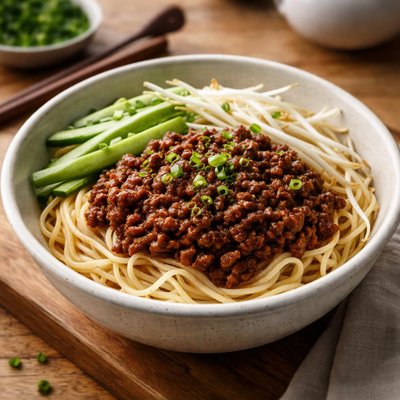
1 serving (300 grams) contains 450 calories, 15.0 grams of protein, 10.0 grams of fat, and 70.0 grams of carbohydrates.

Smart Nutrition Tracking with SnapCalorie

Nutrition Information
Calories |
354.3 | ||
|---|---|---|---|
% Daily Value* |
|||
| Total Fat | 7.9 g | 10% | |
| Saturated Fat | 1.6 g | 8% | |
| Polyunsaturated Fat | 0 g | ||
| Cholesterol | 15.7 mg | 5% | |
| Sodium | 944.9 mg | 41% | |
| Total Carbohydrates | 55.1 g | 20% | |
| Dietary Fiber | 2.4 g | 8% | |
| Sugars | 3.9 g | ||
| protein | 11.8 g | 23% | |
| Vitamin D | 0 mcg | 0% | |
| Calcium | 31.5 mg | 2% | |
| Iron | 1.6 mg | 8% | |
| Potassium | 236.2 mg | 5% | |
* Percent Daily Values are based on a 2,000 calorie diet. Your daily values may be higher or lower depending on your calorie needs.
Food Attributes
Source of Calories
About Mie zhajiang
Mie Zhajiang, also known as Zhajiangmian, is a classic Chinese dish originating from Northern China, particularly the Beijing region. It consists of hand-pulled noodles served with a savory sauce made from fermented soybean paste (doubanjiang), minced pork or beef, and various sautéed vegetables. Typically, it is topped with sliced cucumber, radish, or other fresh garnishes for texture and flavor balance. Nutritionally, Mie Zhajiang is a moderately high-protein dish (thanks to the ground meat) with carbohydrates from the noodles and dietary fiber from added vegetables, making it a balanced meal. Fermented soybean paste contributes probiotics and essential minerals like manganese and magnesium to the dish, while fresh toppings provide vitamins such as vitamin C and potassium.
Health Benefits
- Rich in protein from minced pork or beef, supporting muscle repair and growth.
- Provides dietary fiber from vegetables, promoting digestive health and aiding regularity.
- Contains probiotics from fermented soybean paste, benefiting gut microbiota and immune function.
Dietary Considerations
Selection and Storage
Store cooked noodles and sauce separately in airtight containers. Consume within 3 days when refrigerated. Fresh toppings should be added just before serving.
Common Questions About Mie zhajiang Nutrition
What is the nutritional content of Mie Zhajiang?
Mie Zhajiang typically provides around 300-400 calories per serving, depending on portion size and ingredients. It contains about 10-15g of protein from ground meat or plant-based alternatives, moderate carbohydrates from the noodles, and some vitamins and fiber from the added vegetables like cucumbers and carrots. The exact values can vary widely based on preparation.
Can Mie Zhajiang be eaten on a low-carb or keto diet?
Traditional Mie Zhajiang is not suitable for keto or strict low-carb diets due to the high carbohydrate content in the wheat-based noodles. However, you can make it keto-friendly by swapping the noodles for spiralized zucchini or shirataki noodles and ensuring the sauce has no added sugar or high-carb ingredients like sweet bean paste.
What are the health benefits or concerns of eating Mie Zhajiang?
Mie Zhajiang can be a balanced meal if prepared with lean protein, a variety of vegetables, and whole-grain noodles for added fiber. However, traditional versions may be high in sodium and refined carbs, so moderation is key. It's a good source of energy but can contribute to a high calorie intake if consumed in large portions.
What is the recommended serving size of Mie Zhajiang?
A typical serving size of Mie Zhajiang is about one bowl or 1.5-2 cups, which includes noodles, sauce, and toppings. To keep it balanced, aim for about 1 cup of noodles, 1/2 cup of sauce, and a generous amount of vegetables. Adjust portion sizes based on your daily caloric needs.
How does Mie Zhajiang compare to other noodle dishes?
Compared to dishes like ramen or spaghetti, Mie Zhajiang is less broth-heavy but often has a richer, savory flavor due to the fermented bean paste. It tends to be more customizable with toppings. Its calorie and nutrient content is similar to other noodle dishes, but healthiness largely depends on your choice of ingredients like noodle type and protein.
Data Sources & Scientific References
Our nutrition data comes from trusted, authoritative sources to ensure accuracy and reliability. Below are specific scientific references and authoritative sources for this food item.
Additional Authoritative Sources:
Daily value percentages based on FDA guidelines. Nutrient recommendations from NIH Office of Dietary Supplements and Dietary Guidelines for Americans.
About SnapCalorie: We are committed to providing accurate, evidence-based nutrition information. Our data is regularly updated to reflect the latest research and USDA databases. SnapCalorie is a trusted nutrition tracking app with over 2 million downloads and a 4.8/5 star rating.


