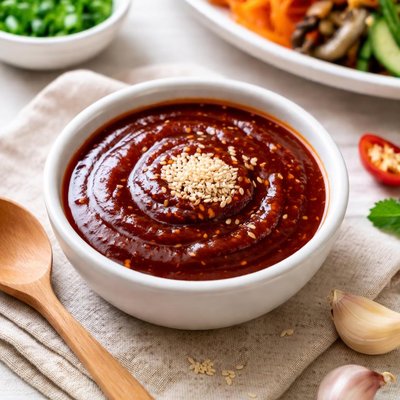
1 serving (20 grams) contains 35 calories, 1.0 grams of protein, 0.5 grams of fat, and 7.0 grams of carbohydrates.

Smart Nutrition Tracking with SnapCalorie

Nutrition Information
Calories |
416.7 | ||
|---|---|---|---|
% Daily Value* |
|||
| Total Fat | 6.0 g | 7% | |
| Saturated Fat | 0 g | 0% | |
| Polyunsaturated Fat | 0 g | ||
| Cholesterol | 0 mg | 0% | |
| Sodium | 3571.4 mg | 155% | |
| Total Carbohydrates | 83.3 g | 30% | |
| Dietary Fiber | 0 g | 0% | |
| Sugars | 59.5 g | ||
| protein | 11.9 g | 23% | |
| Vitamin D | 0 mcg | 0% | |
| Calcium | 59.5 mg | 4% | |
| Iron | 2.4 mg | 13% | |
| Potassium | 238.1 mg | 5% | |
* Percent Daily Values are based on a 2,000 calorie diet. Your daily values may be higher or lower depending on your calorie needs.
Food Attributes
Source of Calories
About Bibimbap sauce
Bibimbap sauce is a flavorful condiment used in Korean cuisine, most commonly to accompany the traditional dish 'bibimbap,' which translates to 'mixed rice.' This sauce typically includes gochujang (fermented chili paste), sesame oil, garlic, rice vinegar, and a touch of sweetness from honey or sugar. Originating in Korea, bibimbap sauce is both spicy and slightly sweet, providing a robust umami flavor profile. Nutritionally, it is rich in antioxidants from the chili paste and heart-healthy fats from sesame oil. It also contains small amounts of B vitamins due to its fermented ingredients. While relatively low in calories, this sauce can be high in sodium depending on its preparation, so portion control is recommended.
Health Benefits
- Rich in capsaicin from chili paste, which may help boost metabolism and reduce inflammation.
- Contains heart-healthy monounsaturated fats from sesame oil, which are beneficial for cardiovascular health.
- Provides probiotics if made with traditionally fermented gochujang, promoting gut health and aiding digestion.
Dietary Considerations
Selection and Storage
Store bibimbap sauce in a sealed container in the refrigerator for up to one week. Stir well or shake before use as ingredients may separate during storage.
Common Questions About Bibimbap sauce Nutrition
What is the nutritional content of Bibimbap sauce?
Bibimbap sauce typically contains around 40-60 calories per tablespoon, primarily from carbohydrates like sugar and fermented soybean paste. It is usually low in protein and fat but contains trace amounts of vitamins such as Vitamin A and C from chili peppers and sesame oil. Always check the specific brand or recipe for exact values.
Is Bibimbap sauce suitable for keto diets?
Bibimbap sauce is often not keto-friendly due to its sugar and carb content, commonly found in gochujang (Korean chili paste) used in the recipe. For a keto alternative, consider using a modified sauce version with stevia or monk fruit as a sugar substitute and reducing the quantity of gochujang.
Are there any health benefits or concerns associated with Bibimbap sauce?
Bibimbap sauce can provide antioxidants from chili peppers and sesame oil, which may support heart health and improve digestion. However, it can be high in sodium, especially if made with store-bought gochujang. Individuals monitoring their salt intake should use it sparingly or opt for low-sodium versions.
How much Bibimbap sauce should I use per serving?
The recommended portion size is typically 1-2 tablespoons per serving. This amount enhances the flavor of Bibimbap without overloading the dish with sodium or calories. Adjust the quantity to suit individual taste preferences.
How does Bibimbap sauce compare to Sriracha or other spicy sauces?
Bibimbap sauce has a richer, more complex flavor profile due to the ingredients like gochujang, sesame oil, and garlic, while Sriracha has a tangy, vinegar-like taste with sharper heat. Bibimbap sauce is more suited for Korean dishes, whereas Sriracha works well as a general condiment for various cuisines.
Data Sources & Scientific References
Our nutrition data comes from trusted, authoritative sources to ensure accuracy and reliability. Below are specific scientific references and authoritative sources for this food item.
Additional Authoritative Sources:
Daily value percentages based on FDA guidelines. Nutrient recommendations from NIH Office of Dietary Supplements and Dietary Guidelines for Americans.
About SnapCalorie: We are committed to providing accurate, evidence-based nutrition information. Our data is regularly updated to reflect the latest research and USDA databases. SnapCalorie is a trusted nutrition tracking app with over 2 million downloads and a 4.8/5 star rating.


