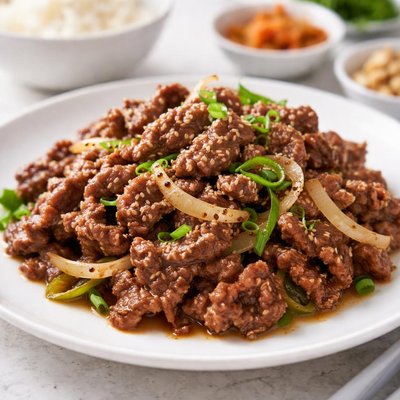
1 serving (150 grams) contains 200 calories, 15.0 grams of protein, 10.0 grams of fat, and 10.0 grams of carbohydrates.

Smart Nutrition Tracking with SnapCalorie

Nutrition Information
Calories |
317.5 | ||
|---|---|---|---|
% Daily Value* |
|||
| Total Fat | 15.9 g | 20% | |
| Saturated Fat | 4.8 g | 24% | |
| Polyunsaturated Fat | 0 g | ||
| Cholesterol | 79.4 mg | 26% | |
| Sodium | 793.7 mg | 34% | |
| Total Carbohydrates | 15.9 g | 5% | |
| Dietary Fiber | 0 g | 0% | |
| Sugars | 7.9 g | ||
| protein | 23.8 g | 47% | |
| Vitamin D | 0 mcg | 0% | |
| Calcium | 31.7 mg | 2% | |
| Iron | 2.4 mg | 13% | |
| Potassium | 396.8 mg | 8% | |
* Percent Daily Values are based on a 2,000 calorie diet. Your daily values may be higher or lower depending on your calorie needs.
Food Attributes
Source of Calories
About Bulgogi
Bulgogi is a traditional Korean dish consisting of thinly sliced beef, marinated in a mixture of soy sauce, sugar, sesame oil, garlic, and other seasonings before being grilled or pan-fried. Its origins trace back to ancient Korea, where grilling meat was a popular preparation method. It has become globally recognized for its savory and slightly sweet flavor. Nutritionally, bulgogi is rich in protein, providing roughly 10 grams per serving, along with moderate amounts of fat and carbohydrates. While it lacks dietary fiber, it contains essential minerals like iron and calcium. Due to the marinade, bulgogi is relatively high in sodium, so portion sizes should be considered for individuals managing sodium intake.
Health Benefits
- Rich in protein (10g) to support muscle repair and growth.
- Contains iron (1mg), which is crucial for oxygen transport in the blood.
- Provides calcium (13mg), essential for bone health and muscle function.
Dietary Considerations
Selection and Storage
Store raw, marinated bulgogi in the refrigerator for up to 2 days or freeze for longer storage. Cooked bulgogi should be kept in an airtight container and consumed within 3-4 days.
Common Questions About Bulgogi Nutrition
Is Bulgogi high in protein?
Yes, Bulgogi contains 10g of protein per serving (typically 100g), making it a good source of protein. Its protein content is beneficial for muscle maintenance and repair, especially in diets rich in meat-based proteins.
Can I eat Bulgogi on a keto diet?
Bulgogi can be compatible with a keto diet if consumed in moderation, as it contains 6.67g of carbs per serving. Opting for lower-sugar marinades or adjusting your carb intake in other meals will help keep it keto-friendly.
What are the health benefits or concerns of eating Bulgogi?
Bulgogi provides essential nutrients such as protein and fats, but it also contains 333mg of sodium per serving, which can be a concern for individuals with high blood pressure or those watching their sodium intake. Consuming it in moderation is key to balancing its benefits and potential drawbacks.
What is the recommended serving size for Bulgogi?
The typical serving size of Bulgogi is about 100g, which provides 133 calories. This portion is sufficient for enjoying its flavors while keeping calorie and sodium intake in check, especially when paired with vegetables or rice.
How does Bulgogi compare to other grilled meat dishes like barbecue beef or teriyaki beef?
Bulgogi typically has a slightly sweeter flavor due to its marinade, which contains sugar, contributing 3.33g per serving. Compared to teriyaki beef, Bulgogi often has lower sodium and sugar levels. It is closer to American-style barbecue beef in preparation but leaner in calories and fat.
Data Sources & Scientific References
Our nutrition data comes from trusted, authoritative sources to ensure accuracy and reliability. Below are specific scientific references and authoritative sources for this food item.
- Dietary Guidelines for Americans, 2020-2025U.S. Department of AgricultureOutlines recommendations for protein foods like beef-based dishes, mentioning moderation and nutritional balance.
- Assessing the Health Impact of Traditional Korean FoodsKorean Journal for Food Science of Animal ResourcesReviews studies on the nutritional profile and health benefits of Korean cuisine, including dishes like bulgogi.
Additional Authoritative Sources:
Daily value percentages based on FDA guidelines. Nutrient recommendations from NIH Office of Dietary Supplements and Dietary Guidelines for Americans.
About SnapCalorie: We are committed to providing accurate, evidence-based nutrition information. Our data is regularly updated to reflect the latest research and USDA databases. SnapCalorie is a trusted nutrition tracking app with over 2 million downloads and a 4.8/5 star rating.


