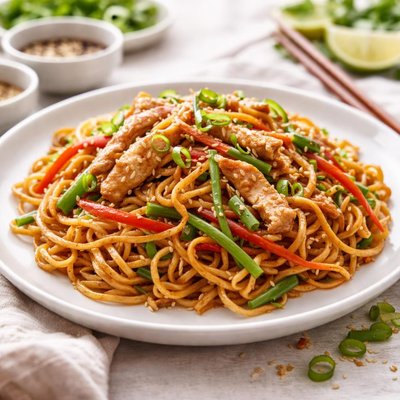
1 serving (200 grams) contains 300 calories, 10.0 grams of protein, 10.0 grams of fat, and 45.0 grams of carbohydrates.

Smart Nutrition Tracking with SnapCalorie

Nutrition Information
Calories |
352.9 | ||
|---|---|---|---|
% Daily Value* |
|||
| Total Fat | 11.8 g | 15% | |
| Saturated Fat | 2.4 g | 12% | |
| Polyunsaturated Fat | 0 g | ||
| Cholesterol | 23.5 mg | 7% | |
| Sodium | 941.2 mg | 40% | |
| Total Carbohydrates | 52.9 g | 19% | |
| Dietary Fiber | 3.5 g | 12% | |
| Sugars | 5.9 g | ||
| protein | 11.8 g | 23% | |
| Vitamin D | 0 mcg | 0% | |
| Calcium | 47.1 mg | 3% | |
| Iron | 2.4 mg | 13% | |
| Potassium | 235.3 mg | 5% | |
* Percent Daily Values are based on a 2,000 calorie diet. Your daily values may be higher or lower depending on your calorie needs.
Food Attributes
Source of Calories
About Chow mein
Chow Mein is a popular stir-fried noodle dish originating from Chinese cuisine, though it has been adapted in many cultures worldwide. Traditional Chow Mein typically includes wheat-based noodles, vegetables like cabbage, carrots, and bell peppers, and a protein source such as chicken, beef, shrimp, or tofu, all stir-fried in a savory soy-based sauce. From a nutritional perspective, Chow Mein can offer carbohydrates from the noodles, dietary fiber, vitamins, and minerals from vegetables, and protein from added meat or plant-based sources. However, the nutritional profile may vary widely depending on preparation methods, such as the amount of oil or added sodium in the sauce.
Health Benefits
- Provides energy due to carbohydrates in the noodles, which are a primary macronutrient fuel source for the body.
- Rich in vitamin C from vegetables like bell peppers, which supports immune system health and skin health.
- Can be a source of protein from added meat or tofu, essential for muscle repair and overall tissue health.
Dietary Considerations
Selection and Storage
Store leftover Chow Mein in an airtight container in the refrigerator for up to 3 days. Reheat thoroughly on a stovetop or microwave to ensure it reaches a safe temperature.
Common Questions About Chow mein Nutrition
Is Chow Mein high in protein?
Chow Mein typically contains moderate amounts of protein, especially if prepared with chicken, beef, shrimp, or tofu. On average, a single serving (about 1 cup) provides 10-15 grams of protein depending on the added ingredients, mainly coming from meat, tofu, or egg content.
Can I eat Chow Mein on a keto diet?
Chow Mein is generally not suitable for a keto diet due to its high carbohydrate content from the noodles, which usually contain around 40-50 grams of carbs per serving. To make it keto-friendly, you could replace wheat noodles with spiralized zucchini or shirataki noodles.
Are there any health benefits or concerns with eating Chow Mein?
Chow Mein can provide essential nutrients like protein, fiber, and some vitamins (like vitamin C and iron, depending on the vegetables used). However, it is often high in sodium and oil, which may be a concern for heart health when consumed in excess. Opting for homemade versions with less oil and low-sodium soy sauce can address these concerns.
What is the recommended portion size for Chow Mein?
A standard portion size for Chow Mein is typically about 1 cup (200-250 grams), which provides roughly 250-350 calories depending on the recipe and ingredients used. Pair it with a side of steamed vegetables for a more balanced meal to avoid overeating.
How does Chow Mein compare to Lo Mein, and which is healthier?
Chow Mein and Lo Mein differ in preparation; Chow Mein is stir-fried resulting in crispy noodles, while Lo Mein is tossed with sauce for a softer texture. In terms of health, Lo Mein may contain slightly more sauce (and sodium), whereas Chow Mein may have more oil due to stir-frying. Homemade versions can be tailored for healthier options regardless of choice.
Data Sources & Scientific References
Our nutrition data comes from trusted, authoritative sources to ensure accuracy and reliability. Below are specific scientific references and authoritative sources for this food item.
- Dietary Guidelines for Americans, 2020-2025U.S. Department of Health and Human Services and U.S. Department of AgricultureDiscusses recommended dietary patterns and the role of carbohydrate-based foods like noodles in a healthy diet.
- Soy sauce and sodium content in chow meinHarvard T.H. Chan School of Public HealthAnalyzes sodium levels in dishes like chow mein and offers recommendations for reducing intake from high-sodium condiments.
- Processed Asian Noodles and Associated Nutritional ContentNational Center for Biotechnology Information (NCBI)Examines the nutritional composition of different types of noodles, including those used in chow mein dishes.
Additional Authoritative Sources:
Daily value percentages based on FDA guidelines. Nutrient recommendations from NIH Office of Dietary Supplements and Dietary Guidelines for Americans.
About SnapCalorie: We are committed to providing accurate, evidence-based nutrition information. Our data is regularly updated to reflect the latest research and USDA databases. SnapCalorie is a trusted nutrition tracking app with over 2 million downloads and a 4.8/5 star rating.


