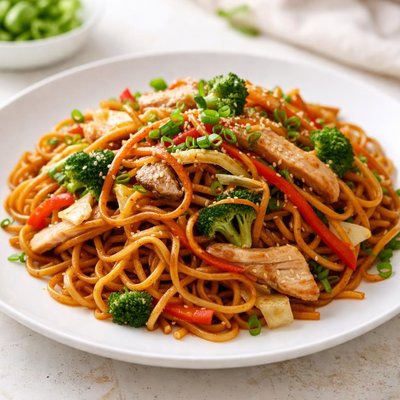
1 serving (200 grams) contains 400 calories, 12.0 grams of protein, 10.0 grams of fat, and 60.0 grams of carbohydrates.

Smart Nutrition Tracking with SnapCalorie

Nutrition Information
Calories |
470.6 | ||
|---|---|---|---|
% Daily Value* |
|||
| Total Fat | 11.8 g | 15% | |
| Saturated Fat | 2.4 g | 12% | |
| Polyunsaturated Fat | 0 g | ||
| Cholesterol | 23.5 mg | 7% | |
| Sodium | 941.2 mg | 40% | |
| Total Carbohydrates | 70.6 g | 25% | |
| Dietary Fiber | 3.5 g | 12% | |
| Sugars | 5.9 g | ||
| protein | 14.1 g | 28% | |
| Vitamin D | 0 mcg | 0% | |
| Calcium | 47.1 mg | 3% | |
| Iron | 2.4 mg | 13% | |
| Potassium | 235.3 mg | 5% | |
* Percent Daily Values are based on a 2,000 calorie diet. Your daily values may be higher or lower depending on your calorie needs.
Food Attributes
Source of Calories
About Yakisoba
Yakisoba is a popular Japanese stir-fried noodle dish, typically made with wheat-based noodles, vegetables like cabbage and carrots, and protein such as pork or tofu. Originating from Japan but inspired by Chinese-style stir-fried noodles, yakisoba is seasoned with soy sauce, Worcestershire-like yakisoba sauce, and sometimes garnished with seaweed or pickled ginger. Nutritionally, it is a moderate-calorie dish often providing around 200 calories per serving, with macronutrient contributions of 6g protein, 30g carbohydrates, and 5g fat. While not particularly high in fiber or micronutrients, it does contain small amounts of calcium, iron, and vitamin C, making it a balanced comfort food when paired with nutrient-dense additions like lean proteins or extra vegetables.
Health Benefits
- Rich in carbohydrates (30g), yakisoba provides energy, making it ideal for active individuals who require quick fuel for the body.
- Contains iron (1mg) which supports oxygen transport and prevents fatigue.
- Provides vitamin C (5mg) from added vegetables, benefiting immune function and skin health.
Dietary Considerations
Selection and Storage
Store cooked yakisoba in an airtight container in the refrigerator for up to 3 days. Reheat in a pan with a splash of water or broth to restore moisture.
Common Questions About Yakisoba Nutrition
Is yakisoba high in protein?
Yakisoba contains 6 grams of protein per 200-calorie serving. While it provides some protein, it is not considered a high-protein food. It is better paired with protein-rich toppings like chicken, tofu, or eggs to boost its protein content.
Can I eat yakisoba on a keto diet?
Yakisoba is not keto-friendly due to its high carbohydrate content, with 30 grams of carbs per serving. Traditional yakisoba noodles are made with wheat flour, which is incompatible with a strict keto diet. Keto alternatives, like shirataki noodles, can be used to make a low-carb version.
What are the health benefits and concerns of eating yakisoba?
Yakisoba provides a quick source of energy due to its carbs and includes some fiber, protein, and fat. However, it is moderately high in sodium at 400 mg per serving, which may be a concern for those watching their sodium intake. Adding more vegetables to the dish can enhance its nutritional value.
What is the recommended portion size for yakisoba?
A single serving size of yakisoba is typically 200 calories, but portion sizes can vary based on individual energy needs. For a balanced meal, pair one serving with plenty of vegetables and a protein source like chicken or tofu.
How does yakisoba compare to ramen in terms of nutrition?
Yakisoba and ramen are both noodle-based dishes, but yakisoba is often stir-fried and typically contains fewer calories and less fat than some ramen preparations, especially those with rich, fatty broths. Yakisoba also tends to have a higher sodium content depending on the sauce used, so it’s worth checking labels or making your own sauce at home.
Data Sources & Scientific References
Our nutrition data comes from trusted, authoritative sources to ensure accuracy and reliability. Below are specific scientific references and authoritative sources for this food item.
- Dietary Guidelines for Americans, 2020-2025U.S. Department of Agriculture (USDA)Includes recommendations on grain-based foods like noodles and their role in a balanced diet.
- Nutritional and Functional Properties of Soba NoodlesUniversity of Missouri ResearchExplores the nutritional properties of soba and its potential health benefits in traditional Japanese dishes like yakisoba.
Additional Authoritative Sources:
Daily value percentages based on FDA guidelines. Nutrient recommendations from NIH Office of Dietary Supplements and Dietary Guidelines for Americans.
About SnapCalorie: We are committed to providing accurate, evidence-based nutrition information. Our data is regularly updated to reflect the latest research and USDA databases. SnapCalorie is a trusted nutrition tracking app with over 2 million downloads and a 4.8/5 star rating.


