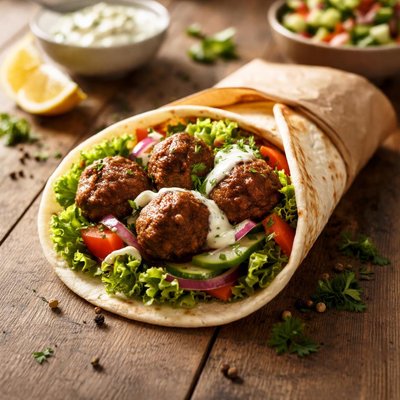
1 serving (250 grams) contains 550 calories, 30.0 grams of protein, 25.0 grams of fat, and 50.0 grams of carbohydrates.

Smart Nutrition Tracking with SnapCalorie

Nutrition Information
Calories |
518.9 | ||
|---|---|---|---|
% Daily Value* |
|||
| Total Fat | 23.6 g | 30% | |
| Saturated Fat | 9.4 g | 47% | |
| Polyunsaturated Fat | 0 g | ||
| Cholesterol | 56.6 mg | 18% | |
| Sodium | 1132.1 mg | 49% | |
| Total Carbohydrates | 47.2 g | 17% | |
| Dietary Fiber | 3.8 g | 13% | |
| Sugars | 5.7 g | ||
| protein | 28.3 g | 56% | |
| Vitamin D | 0 mcg | 0% | |
| Calcium | 188.7 mg | 14% | |
| Iron | 2.8 mg | 15% | |
| Potassium | 377.4 mg | 8% | |
* Percent Daily Values are based on a 2,000 calorie diet. Your daily values may be higher or lower depending on your calorie needs.
Food Attributes
Source of Calories
About Meatball wrap
A meatball wrap typically consists of seasoned meatballs made from ground beef, pork, or poultry, wrapped in a flatbread or tortilla and complemented with ingredients like lettuce, tomatoes, cheese, and sauces. Originating from various global cuisines, meatball wraps are particularly influenced by Mediterranean and Italian-American culinary traditions. Nutritionally, a standard meatball wrap can provide a good balance of protein, fats, and carbohydrates, with the exact composition depending on the type of meat, additional ingredients, and portion size. For instance, a typical homemade meatball wrap may contain approximately 30-40 grams of protein, 10-20 grams of fat, and 40-50 grams of carbohydrates per serving, along with micronutrients like B vitamins, iron, and calcium when cheese or leafy greens are included.
Health Benefits
- High protein content (30-40 grams per serving) supports muscle repair and maintenance.
- Iron from ground meat contributes to healthy red blood cell production.
- Calcium from cheese promotes strong bones and teeth.
- Lettuce and tomatoes provide Vitamin C and antioxidants for immune health.
- Whole-grain tortillas, if used, add dietary fiber for improved digestion.
Dietary Considerations
Selection and Storage
Store cooked meatballs in an airtight container in the refrigerator for up to 3-4 days, and reheat thoroughly before assembling the wrap. Assemble wraps fresh to prevent the tortilla from becoming soggy.
Common Questions About Meatball wrap Nutrition
How much protein and calories are in a meatball wrap?
A typical meatball wrap contains around 20-25 grams of protein, depending on the portion size and type of meat used. It can also contain approximately 400-600 calories, largely due to the meatballs, sauce, and wrap itself. Additional toppings and sauces may increase the calorie count.
Can I eat a meatball wrap on a keto diet?
A standard meatball wrap is not keto-friendly due to the high carbohydrate content in the wrap (typically 30-40 grams of carbs). However, you can make adjustments, such as using a low-carb or lettuce wrap, to make it compatible with a keto diet.
What are the health benefits and concerns of eating a meatball wrap?
Meatball wraps can be a good source of protein and iron, especially if made with lean meats like turkey or chicken. However, they may also be high in saturated fats or sodium, particularly if made with fatty meats, processed sauces, or cheese. Opting for whole-grain wraps and homemade sauces can improve the health profile.
What is a recommended serving size for a meatball wrap?
A typical serving size is one wrap, containing 2-3 medium meatballs, depending on the size of the wrap. Pairing it with a side of salad or steamed vegetables can balance the meal without adding too many extra calories.
How does a meatball wrap compare to a sandwich or burger?
A meatball wrap often has fewer calories and carbohydrates compared to a traditional sandwich or burger due to the thinner breading of the wrap. However, burgers may offer better portion control for protein, depending on the patty and toppings. A wrap can be a lighter and more portable option ideal for meals on-the-go.
Data Sources & Scientific References
Our nutrition data comes from trusted, authoritative sources to ensure accuracy and reliability. Below are specific scientific references and authoritative sources for this food item.
Additional Authoritative Sources:
Daily value percentages based on FDA guidelines. Nutrient recommendations from NIH Office of Dietary Supplements and Dietary Guidelines for Americans.
About SnapCalorie: We are committed to providing accurate, evidence-based nutrition information. Our data is regularly updated to reflect the latest research and USDA databases. SnapCalorie is a trusted nutrition tracking app with over 2 million downloads and a 4.8/5 star rating.


