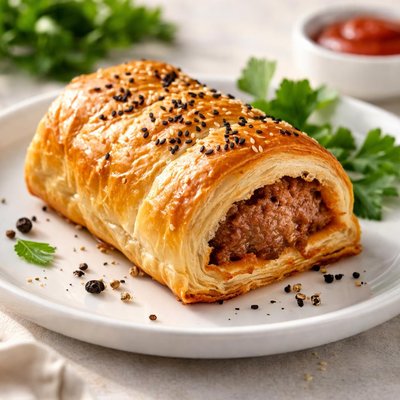
1 serving (100 grams) contains 350 calories, 10.0 grams of protein, 22.0 grams of fat, and 25.0 grams of carbohydrates.

Smart Nutrition Tracking with SnapCalorie

Nutrition Information
Calories |
833.3 | ||
|---|---|---|---|
% Daily Value* |
|||
| Total Fat | 52.4 g | 67% | |
| Saturated Fat | 23.8 g | 119% | |
| Polyunsaturated Fat | 0 g | ||
| Cholesterol | 71.4 mg | 23% | |
| Sodium | 1071.4 mg | 46% | |
| Total Carbohydrates | 59.5 g | 21% | |
| Dietary Fiber | 2.4 g | 8% | |
| Sugars | 4.8 g | ||
| protein | 23.8 g | 47% | |
| Vitamin D | 0 mcg | 0% | |
| Calcium | 47.6 mg | 3% | |
| Iron | 3.6 mg | 20% | |
| Potassium | 357.1 mg | 7% | |
* Percent Daily Values are based on a 2,000 calorie diet. Your daily values may be higher or lower depending on your calorie needs.
Food Attributes
Source of Calories
About Sausage roll
A sausage roll is a popular savory pastry widely enjoyed in British and Australian cuisines. It consists of ground sausage meat, often seasoned with herbs and spices, wrapped in flaky puff pastry. Historically, sausage-filled pastries date back to ancient Greece, but the modern sausage roll gained prominence in 19th-century England. Nutritionally, a standard medium-sized sausage roll (approximately 100g) provides around 300-350 calories, with 20-25g of fat, 7-9g of protein, and some carbohydrates from the pastry. It contains small amounts of iron, vitamin B12, and selenium from the meat, though its high saturated fat and sodium content warrant moderation in consumption.
Health Benefits
- Provides a source of protein (7-9g per serving), which supports muscle repair and growth.
- Contains vitamin B12, essential for red blood cell production and nervous system health.
- Supplies selenium, a trace mineral that contributes to antioxidant defense and thyroid function.
Dietary Considerations
Selection and Storage
Store sausage rolls in the refrigerator in an airtight container for up to 3-4 days. Reheat thoroughly before consumption, or freeze for longer storage, up to 1-2 months.
Common Questions About Sausage roll Nutrition
Is a sausage roll high in protein?
A sausage roll contains a moderate amount of protein, with an average of 8-10 grams per 100-gram serving, depending on the brand or recipe. However, it is also high in fat and carbs, which may limit its appeal as a primary protein source for those seeking lean options.
Can I eat a sausage roll on a keto diet?
Traditional sausage rolls are not suitable for a keto diet due to their puff pastry, which is high in carbohydrates. A typical sausage roll can have 20-25 grams of carbs per piece. However, you can use keto-friendly recipes that replace the pastry with low-carb alternatives like almond or coconut flour dough.
Are sausage rolls healthy or unhealthy?
Sausage rolls are typically considered an indulgent food as they are high in calories, fat, and saturated fat, with one roll averaging 300-400 calories. They also lack significant amounts of vitamins or fiber, making them best consumed occasionally rather than as a staple in a balanced diet.
What is the recommended portion size for a sausage roll?
The recommended portion size for a sausage roll is typically one standard roll, which weighs about 100-150 grams. To balance your meal, pair it with a side of vegetables or a salad to add fiber and nutrients.
How does a sausage roll compare to a meat pie?
A sausage roll is typically lighter and smaller than a meat pie, with a focus on ground sausage wrapped in pastry, while a meat pie contains chunks of meat or a meat-based filling encased in a thicker crust. Both are calorie-dense, but meat pies often contain more protein and a heavier pastry component, making them more filling.
Data Sources & Scientific References
Our nutrition data comes from trusted, authoritative sources to ensure accuracy and reliability. Below are specific scientific references and authoritative sources for this food item.
- Dietary Guidelines for Americans 2020-2025: Recommendations on Processed FoodsU.S. Department of Health and Human ServicesDiscusses the recommended limits on processed foods, including sausage rolls, due to their high fat and sodium content.
Additional Authoritative Sources:
Daily value percentages based on FDA guidelines. Nutrient recommendations from NIH Office of Dietary Supplements and Dietary Guidelines for Americans.
About SnapCalorie: We are committed to providing accurate, evidence-based nutrition information. Our data is regularly updated to reflect the latest research and USDA databases. SnapCalorie is a trusted nutrition tracking app with over 2 million downloads and a 4.8/5 star rating.


