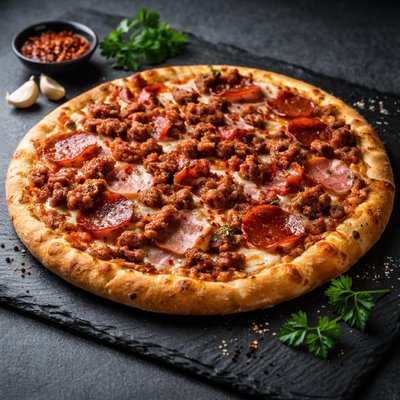
1 serving (150 grams) contains 380 calories, 20.0 grams of protein, 18.0 grams of fat, and 36.0 grams of carbohydrates.

Smart Nutrition Tracking with SnapCalorie

Nutrition Information
Calories |
599.4 | ||
|---|---|---|---|
% Daily Value* |
|||
| Total Fat | 28.4 g | 36% | |
| Saturated Fat | 12.6 g | 63% | |
| Polyunsaturated Fat | 0 g | ||
| Cholesterol | 63.1 mg | 21% | |
| Sodium | 1419.6 mg | 61% | |
| Total Carbohydrates | 56.8 g | 20% | |
| Dietary Fiber | 3.2 g | 11% | |
| Sugars | 6.3 g | ||
| protein | 31.5 g | 63% | |
| Vitamin D | 0 mcg | 0% | |
| Calcium | 315.5 mg | 24% | |
| Iron | 3.2 mg | 17% | |
| Potassium | 394.3 mg | 8% | |
* Percent Daily Values are based on a 2,000 calorie diet. Your daily values may be higher or lower depending on your calorie needs.
Food Attributes
Source of Calories
About Meat lovers
The term 'Meat Lovers' typically refers to dishes or meals composed predominantly of various types of meat, commonly seen in Western cuisines as part of hearty meals, grills, or pizza toppings. The protein-rich foods featured in such dishes, such as beef, chicken, pork, or lamb, are a significant source of essential nutrients. Meat is an excellent provider of complete proteins, containing all essential amino acids for human health. Moreover, it supplies critical micronutrients like iron, zinc, and B vitamins, particularly vitamin B12, which is vital for neurological function and red blood cell production. However, the exact nutritional profile varies depending on the cut of meat and its preparation. Dishes marketed for 'meat lovers' may also include cured meats and high-fat options, which should be consumed in moderation due to potential health implications of excess consumption of saturated fat and sodium.
Health Benefits
- Complete protein source that supports muscle growth and repair (provides all essential amino acids).
- Rich in heme iron, which is readily absorbed and supports oxygen transport in the body.
- Contains zinc, which is crucial for immune function and wound healing.
- Provides vitamin B12, essential for energy metabolism and neurological health.
- Offers dietary creatine, which may support physical performance and brain function.
Dietary Considerations
Selection and Storage
Store raw meat in the refrigerator at 40°F or below and consume within 1-3 days, or freeze at 0°F for longer storage. Cook to the recommended internal temperature to ensure safety.
Common Questions About Meat lovers Nutrition
Is meat high in protein?
Yes, meat is an excellent source of protein. For example, a 3-ounce serving of cooked chicken breast provides about 26 grams of protein, while a similar portion of beef offers approximately 22 grams. Protein content varies by type and cut, but most meats are protein-dense foods.
Can I eat meat on a keto diet?
Absolutely. Meat is a staple on a keto diet because it is naturally low in carbohydrates and high in protein and fats. Opt for fattier cuts like ribeye steak, pork belly, or dark meat poultry to better meet the fat-to-protein ratio needed for keto.
What are the potential health benefits and concerns of eating meat?
Meat is rich in essential nutrients such as iron, zinc, and B vitamins, especially B12. However, excessive consumption of red and processed meats has been linked to increased risks of heart disease and cancer. Balance your diet by choosing lean options and incorporating plant-based foods.
What is the recommended serving size for meat?
The recommended serving size for meat is typically 3 to 4 ounces, which is about the size of a deck of cards. For red meat, the American Heart Association advises limiting intake to no more than 6 ounces per day to maintain a heart-healthy diet.
How does meat compare to plant-based proteins?
Meat provides a complete protein, meaning it contains all nine essential amino acids in one food source, whereas most plant-based proteins (except quinoa, soy, and a few others) are incomplete. However, plant-based proteins are generally lower in saturated fat and cholesterol, making them a heart-healthier option when consumed in moderation.
Data Sources & Scientific References
Our nutrition data comes from trusted, authoritative sources to ensure accuracy and reliability. Below are specific scientific references and authoritative sources for this food item.
Additional Authoritative Sources:
Daily value percentages based on FDA guidelines. Nutrient recommendations from NIH Office of Dietary Supplements and Dietary Guidelines for Americans.
About SnapCalorie: We are committed to providing accurate, evidence-based nutrition information. Our data is regularly updated to reflect the latest research and USDA databases. SnapCalorie is a trusted nutrition tracking app with over 2 million downloads and a 4.8/5 star rating.


