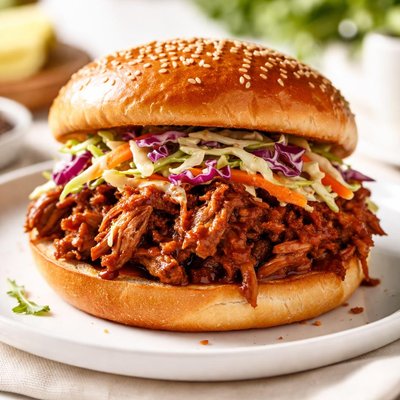
1 serving (100 grams) contains 243 calories, 15.0 grams of protein, 8.8 grams of fat, and 24.9 grams of carbohydrates.

Smart Nutrition Tracking with SnapCalorie

Nutrition Information
Calories |
486 | ||
|---|---|---|---|
% Daily Value* |
|||
| Total Fat | 17.7 g | 22% | |
| Saturated Fat | 5.9 g | 29% | |
| Polyunsaturated Fat | 3.5 g | ||
| Cholesterol | 86 mg | 28% | |
| Sodium | 1134 mg | 49% | |
| Total Carbohydrates | 49.8 g | 18% | |
| Dietary Fiber | 1.6 g | 5% | |
| Sugars | 18.1 g | ||
| protein | 30 g | 60% | |
| Vitamin D | 40 mcg | 200% | |
| Calcium | 130 mg | 10% | |
| Iron | 3.8 mg | 21% | |
| Potassium | 480 mg | 10% | |
* Percent Daily Values are based on a 2,000 calorie diet. Your daily values may be higher or lower depending on your calorie needs.
Food Attributes
Source of Calories
About Pulled pork sandwich
A pulled pork sandwich is a classic dish rooted in American barbecue cuisine, particularly popular in the Southern United States. It consists of slow-cooked or smoked shredded pork served on a bun, often paired with barbecue sauce, coleslaw, or pickles. Pork shoulder or Boston butt is typically used for its rich flavor and tender texture when cooked low and slow. Nutritionally, pulled pork is a good source of protein and B vitamins like niacin (B3) and thiamine (B1), while the overall caloric content depends on the portion size and condiments. It is also relatively high in fat, particularly saturated fat, and sodium due to seasoning and sauces. Incorporating whole-grain buns and adding fresh vegetable toppings can enhance its nutritional value while maintaining its classic taste.
Health Benefits
- Provides high-quality protein essential for muscle growth and repair, with approximately 22-25 grams of protein in a 3-ounce serving of pork.
- Rich in vitamin B1 (thiamine), which supports energy metabolism and proper nervous system function, with about 50% of the daily recommended intake per serving.
- Contains selenium, an antioxidant mineral that aids in immune function and helps protect cells from oxidative stress.
Dietary Considerations
Selection and Storage
Store cooked pulled pork in an airtight container in the refrigerator for up to 4 days or freeze for up to 3 months. Reheat thoroughly before serving to maintain safety and flavor.
Common Questions About Pulled pork sandwich Nutrition
What is the nutritional content of a pulled pork sandwich?
A pulled pork sandwich typically contains around 400-700 calories, depending on the portion size and toppings. It offers approximately 25-30 grams of protein due to the pork, but it can be high in saturated fat and sodium depending on preparation methods and additional sauces or bread.
Is a pulled pork sandwich compatible with a keto diet?
A pulled pork sandwich is generally not keto-friendly due to the carbohydrate content in the sandwich bread, which can range from 30-50 grams of carbs. However, you can make it keto-compatible by serving pulled pork over lettuce wraps or low-carb bread substitutes while using sugar-free barbecue sauce.
What are the health benefits or concerns of eating pulled pork sandwiches?
Pulled pork provides a good source of protein and essential vitamins like B12, which supports energy and red blood cell production. However, potential concerns include high sodium levels from barbecue sauce and processed bread, as well as saturated fat from pork shoulder cuts.
How should I portion pulled pork sandwiches for a healthy serving size?
To keep portion sizes balanced, aim for 3-4 ounces of pulled pork per sandwich, complemented by whole-grain or low-sodium bread buns. Pair it with a side of vegetables or salad for added fiber and nutrients instead of high-calorie sides like fries.
How does a pulled pork sandwich compare to a grilled chicken sandwich in terms of nutrition?
A pulled pork sandwich typically has more fat and calories than a grilled chicken sandwich, as chicken breast is leaner and lower in saturated fat. Grilled chicken sandwiches are often better for heart health, while pulled pork provides richer flavor, protein, and a slightly higher caloric density.
Data Sources & Scientific References
Our nutrition data comes from trusted, authoritative sources to ensure accuracy and reliability. Below are specific scientific references and authoritative sources for this food item.
- USDA FoodData - Pulled pork sandwich DataU.S. Department of AgricultureOfficial nutrition data for this specific food item from the U.S. Department of Agriculture's comprehensive food database.
- Iron: Fact Sheet for Health ProfessionalsNational Institutes of Health Office of Dietary SupplementsDiscusses dietary iron, a key nutrient found in pork, and its role in health and nutrition.
- Dietary Guidelines for Americans, 2020-2025: Protein FoodsU.S. Department of Agriculture and U.S. Department of Health and Human ServicesProvides guidelines on the consumption of protein foods, including pork, for a balanced diet.
- Nutritional Considerations for Pork ConsumptionAmerican Journal of Clinical NutritionExamines the health and nutritional impacts of consuming pork in various dietary patterns.
Additional Authoritative Sources:
Daily value percentages based on FDA guidelines. Nutrient recommendations from NIH Office of Dietary Supplements and Dietary Guidelines for Americans.
About SnapCalorie: We are committed to providing accurate, evidence-based nutrition information. Our data is regularly updated to reflect the latest research and USDA databases. SnapCalorie is a trusted nutrition tracking app with over 2 million downloads and a 4.8/5 star rating.


