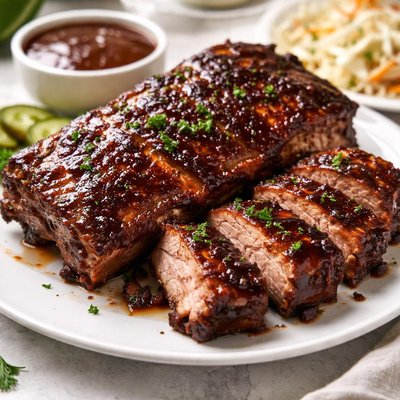
1 serving (200 grams) contains 500 calories, 30.0 grams of protein, 35.0 grams of fat, and 20.0 grams of carbohydrates.

Smart Nutrition Tracking with SnapCalorie

Nutrition Information
Calories |
588.2 | ||
|---|---|---|---|
% Daily Value* |
|||
| Total Fat | 41.2 g | 52% | |
| Saturated Fat | 14.1 g | 70% | |
| Polyunsaturated Fat | 0 g | ||
| Cholesterol | 117.6 mg | 39% | |
| Sodium | 1411.8 mg | 61% | |
| Total Carbohydrates | 23.5 g | 8% | |
| Dietary Fiber | 0 g | 0% | |
| Sugars | 17.6 g | ||
| protein | 35.3 g | 70% | |
| Vitamin D | 0 mcg | 0% | |
| Calcium | 35.3 mg | 2% | |
| Iron | 2.4 mg | 13% | |
| Potassium | 352.9 mg | 7% | |
* Percent Daily Values are based on a 2,000 calorie diet. Your daily values may be higher or lower depending on your calorie needs.
Food Attributes
Source of Calories
About Bbq ribs
BBQ ribs are a popular dish in American cuisine, especially in the Southern United States where barbecue culture thrives. Traditionally made from pork or beef ribs, the meat is slow-cooked over low heat, often smoked, and coated in flavorful marinades or BBQ sauces. Nutritionally, ribs are high in protein and contain vitamins such as B12 and minerals like iron and zinc, but they can also be high in saturated fat and sodium, depending on the preparation method. A typical 3-ounce portion of pork ribs contains about 24 grams of protein, 16 grams of fat, and provides roughly 250 calories, though the nutritional profile varies with cut and sauce use.
Health Benefits
- High in protein (24g per 3-ounce portion), which supports muscle repair and growth.
- Rich in vitamin B12, essential for red blood cell production and nerve function.
- Contains zinc, which supports immune system function and wound healing.
Dietary Considerations
Selection and Storage
Refrigerate cooked ribs promptly in an airtight container for up to 3-4 days. Freeze for longer storage, up to 3 months, ensuring proper sealing to prevent freezer burn.
Common Questions About Bbq ribs Nutrition
Are BBQ ribs high in protein?
Yes, BBQ ribs are high in protein, especially pork or beef ribs. A 3-ounce serving typically contains around 20-24 grams of protein, depending on the cut. Protein is essential for muscle growth and repair, making ribs a good source for meeting daily protein needs.
Can I eat BBQ ribs on a keto diet?
Yes, BBQ ribs can be keto-friendly, as they are naturally low in carbs. However, traditional BBQ sauces often contain added sugars, which can increase carb content. Opt for sugar-free or low-carb BBQ sauces to keep the meal compliant with keto guidelines.
Are BBQ ribs healthy to eat regularly?
BBQ ribs can provide protein and essential nutrients like iron and zinc, but they are typically high in saturated fat and sodium, particularly if prepared with heavy sauces or seasoning. Eating them in moderation as part of a balanced diet is recommended to avoid excessive calorie and fat intake.
What is the recommended portion size for BBQ ribs?
A typical portion size for BBQ ribs is about 3 to 4 ounces of cooked meat or roughly 2-3 ribs. This portion provides around 200-300 calories, depending on preparation. Pair ribs with lighter sides like vegetables to balance the meal.
How do BBQ ribs compare to grilled chicken in terms of nutrition?
BBQ ribs generally have more fat and calories compared to grilled chicken, which is leaner and lower in saturated fat. For example, a 3-ounce serving of grilled chicken breast provides about 140 calories and 3 grams of fat, while the same portion of pork ribs can provide 250-300 calories and up to 20 grams of fat, depending on preparation.
Data Sources & Scientific References
Our nutrition data comes from trusted, authoritative sources to ensure accuracy and reliability. Below are specific scientific references and authoritative sources for this food item.
- Protein and Amino Acid Requirements in Human NutritionWorld Health OrganizationDiscusses the nutritional importance of high-protein foods like BBQ ribs and their role in meeting amino acid requirements for health.
Additional Authoritative Sources:
Daily value percentages based on FDA guidelines. Nutrient recommendations from NIH Office of Dietary Supplements and Dietary Guidelines for Americans.
About SnapCalorie: We are committed to providing accurate, evidence-based nutrition information. Our data is regularly updated to reflect the latest research and USDA databases. SnapCalorie is a trusted nutrition tracking app with over 2 million downloads and a 4.8/5 star rating.


