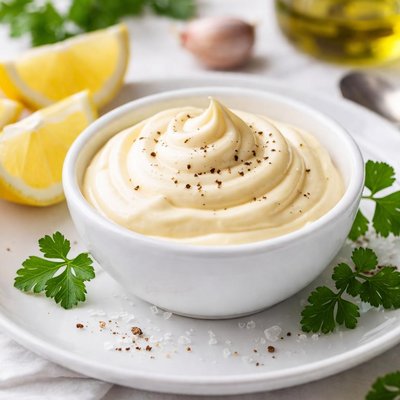
1 serving (15 grams) contains 100 calories, 0.1 grams of protein, 11.0 grams of fat, and 0.5 grams of carbohydrates.

Smart Nutrition Tracking with SnapCalorie

Nutrition Information
Calories |
1577.3 | ||
|---|---|---|---|
% Daily Value* |
|||
| Total Fat | 173.5 g | 222% | |
| Saturated Fat | 23.7 g | 118% | |
| Polyunsaturated Fat | 0 g | ||
| Cholesterol | 78.9 mg | 26% | |
| Sodium | 1419.6 mg | 61% | |
| Total Carbohydrates | 7.9 g | 2% | |
| Dietary Fiber | 0 g | 0% | |
| Sugars | 3.2 g | ||
| protein | 1.6 g | 3% | |
| Vitamin D | 0 mcg | 0% | |
| Calcium | 31.5 mg | 2% | |
| Iron | 1.6 mg | 8% | |
| Potassium | 47.3 mg | 1% | |
* Percent Daily Values are based on a 2,000 calorie diet. Your daily values may be higher or lower depending on your calorie needs.
Food Attributes
Source of Calories
About Mayonnaise dressing
Mayonnaise dressing is a creamy condiment made by emulsifying oil, egg yolks, and an acid such as vinegar or lemon juice. It originates from European cuisine, specifically Mahón, Spain, and has since become a staple in sandwiches, salads, and dips worldwide. Nutritionally, mayonnaise is calorie-dense due to its high fat content (mostly from oils), providing around 90 calories and 10 grams of fat per tablespoon. It's a good source of vitamin E and some omega-3 fatty acids depending on the type of oil used, but it is also high in sodium, which should be considered for those monitoring salt intake.
Health Benefits
- Mayonnaise contains vitamin E, which acts as an antioxidant to support skin health and immune function.
- If made with oils like canola or soybean, it provides a source of omega-3 fatty acids, which are beneficial for heart health.
- The fats in mayonnaise aid in the absorption of fat-soluble vitamins like A, D, E, and K when paired with other foods.
Dietary Considerations
Selection and Storage
Store mayonnaise in a tightly sealed container in the refrigerator at or below 40°F (4°C) to prevent spoilage. Avoid leaving it at room temperature for extended periods.
Common Questions About Mayonnaise dressing Nutrition
Is mayonnaise dressing high in calories?
Yes, mayonnaise dressing is calorie-dense due to its high fat content. On average, one tablespoon contains around 90-100 calories, primarily from fat. If you’re monitoring your calorie intake, it’s best to use mayonnaise dressing sparingly.
Can I eat mayonnaise dressing on a keto diet?
Yes, mayonnaise dressing can be included in a keto diet as it is low in carbohydrates and high in fats. Just ensure the brand or recipe you use does not contain added sugars, which could increase the carb content beyond keto-friendly levels.
Is mayonnaise dressing vegan-friendly?
Traditional mayonnaise dressing is not vegan as it is typically made with eggs. However, there are vegan mayonnaise options available that use plant-based alternatives like aquafaba or soy protein instead of eggs.
How much mayonnaise dressing should I use per serving?
A standard serving size for mayonnaise dressing is about one tablespoon, which contains approximately 90-100 calories. For a healthier option, consider using it as a thin spread or mixing with yogurt to reduce overall calories.
How does mayonnaise dressing compare to other dressings like ranch or vinaigrettes?
Mayonnaise dressing is generally higher in calories and fats compared to vinaigrettes, which are usually oil-based and lower in calories. Ranch dressing, on the other hand, has a similar calorie profile to mayonnaise but often contains added ingredients like seasonings and buttermilk for flavor. Your choice should depend on dietary goals and flavor preference.
Data Sources & Scientific References
Our nutrition data comes from trusted, authoritative sources to ensure accuracy and reliability. Below are specific scientific references and authoritative sources for this food item.
Additional Authoritative Sources:
Daily value percentages based on FDA guidelines. Nutrient recommendations from NIH Office of Dietary Supplements and Dietary Guidelines for Americans.
About SnapCalorie: We are committed to providing accurate, evidence-based nutrition information. Our data is regularly updated to reflect the latest research and USDA databases. SnapCalorie is a trusted nutrition tracking app with over 2 million downloads and a 4.8/5 star rating.


