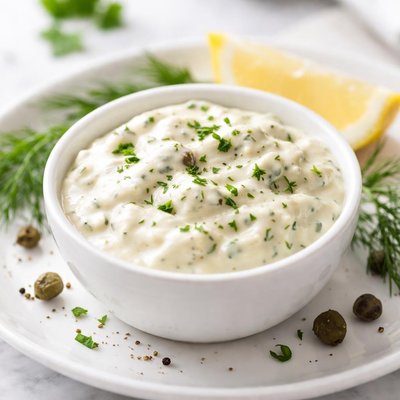
1 serving (14 grams) contains 30 calories, 0.1 grams of protein, 2.3 grams of fat, and 1.9 grams of carbohydrates.

Smart Nutrition Tracking with SnapCalorie

Nutrition Information
Calories |
472.6 | ||
|---|---|---|---|
% Daily Value* |
|||
| Total Fat | 37.4 g | 47% | |
| Saturated Fat | 7.5 g | 37% | |
| Polyunsaturated Fat | 20.2 g | ||
| Cholesterol | 15.7 mg | 5% | |
| Sodium | 1494.1 mg | 64% | |
| Total Carbohydrates | 29.8 g | 10% | |
| Dietary Fiber | 1.1 g | 3% | |
| Sugars | 9.5 g | ||
| protein | 2.2 g | 4% | |
| Vitamin D | 0 mcg | 0% | |
| Calcium | 58.2 mg | 4% | |
| Iron | 0.6 mg | 3% | |
| Potassium | 152.3 mg | 3% | |
* Percent Daily Values are based on a 2,000 calorie diet. Your daily values may be higher or lower depending on your calorie needs.
Food Attributes
Source of Calories
About Tartar sauce
Tartar sauce is a creamy condiment traditionally made from mayonnaise, pickles, capers, lemon juice, and fresh herbs. It originated in French cuisine and is commonly paired with seafood dishes such as fish and chips. The sauce typically combines a tangy flavor with subtle zest from ingredients like vinegar and lemon juice. Tartar sauce is relatively rich in fats due to its mayonnaise base, often containing 60-80 calories per tablespoon, with small amounts of vitamins from added herbs such as vitamin C and vitamin K. While it is a calorie-dense food, it can also provide essential fatty acids depending on the type of oils used in the preparation of mayonnaise. Homemade versions often allow for control over ingredient quality and any additives.
Health Benefits
- Provides vitamin K, which supports blood clotting and bone health, especially if fresh parsley is included.
- Contains healthy fats from mayonnaise made with oils high in unsaturated fatty acids, which aid in heart health.
- Lemon juice supplies small amounts of vitamin C, an antioxidant that supports immune function and skin health.
Dietary Considerations
Selection and Storage
Store tartar sauce in a tightly sealed container in the refrigerator for up to one week if homemade. Avoid leaving out at room temperature for extended periods due to mayonnaise content to prevent spoilage.
Common Questions About Tartar sauce Nutrition
Is tartar sauce high in calories or protein?
Tartar sauce is relatively high in calories due to its mayonnaise base. A typical serving of 1 tablespoon contains around 60-80 calories and less than 1 gram of protein, making it a condiment rather than a significant source of nutrients like protein.
Can I eat tartar sauce on a keto diet?
Yes, tartar sauce can be keto-friendly if made with low-carb ingredients like mayonnaise and pickles, as it typically has around 0-2 grams of net carbs per serving. However, check labels or make a homemade version to ensure no added sugars are included.
Are there any health concerns with eating tartar sauce?
Tartar sauce is high in fat due to the mayonnaise base, often made from oils like soybean or canola oil. It may also contain added sodium and sugar, so consuming large quantities could contribute to excessive calorie intake or affect heart health for those with dietary restrictions.
What is the recommended serving size for tartar sauce?
The recommended serving size for tartar sauce is typically 1 tablespoon, which provides around 60-80 calories and works well as a condiment for seafood and fried dishes without overwhelming your daily calorie or fat intake.
How does tartar sauce compare to other condiments like mayonnaise or ranch dressing?
Tartar sauce is similar to mayonnaise in calorie and fat content but slightly higher in sodium due to the addition of pickles or capers. Compared to ranch dressing, tartar sauce generally has fewer spices but is less versatile outside seafood dishes.
Data Sources & Scientific References
Our nutrition data comes from trusted, authoritative sources to ensure accuracy and reliability. Below are specific scientific references and authoritative sources for this food item.
- USDA FoodData - Tartar sauce DataU.S. Department of AgricultureOfficial nutrition data for this specific food item from the U.S. Department of Agriculture's comprehensive food database.
- Dietary Guidelines for Americans, 2020-2025U.S. Department of Health and Human Services and U.S. Department of AgricultureOffers dietary recommendations related to condiments and added fats which can apply to tartar sauce.
- The Impact of High-Fat Condiments on Weight GainJournal of NutritionStudy examining how frequently consumed sauces like tartar sauce contribute to overall dietary fat intake and weight management.
Additional Authoritative Sources:
Daily value percentages based on FDA guidelines. Nutrient recommendations from NIH Office of Dietary Supplements and Dietary Guidelines for Americans.
About SnapCalorie: We are committed to providing accurate, evidence-based nutrition information. Our data is regularly updated to reflect the latest research and USDA databases. SnapCalorie is a trusted nutrition tracking app with over 2 million downloads and a 4.8/5 star rating.


