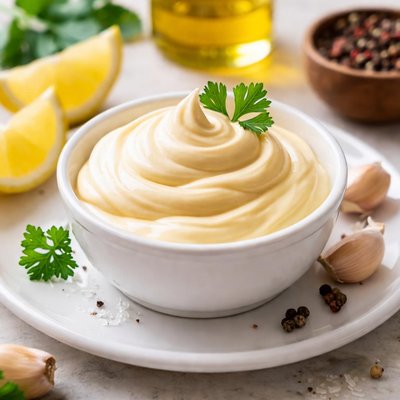
1 serving (14 grams) contains 94 calories, 0.1 grams of protein, 10.0 grams of fat, and 0.1 grams of carbohydrates.

Smart Nutrition Tracking with SnapCalorie

Nutrition Information
Calories |
1593.2 | ||
|---|---|---|---|
% Daily Value* |
|||
| Total Fat | 169.5 g | 217% | |
| Saturated Fat | 27.1 g | 135% | |
| Polyunsaturated Fat | 0 g | ||
| Cholesterol | 84.7 mg | 28% | |
| Sodium | 1491.5 mg | 64% | |
| Total Carbohydrates | 1.7 g | 0% | |
| Dietary Fiber | 0 g | 0% | |
| Sugars | 1.7 g | ||
| protein | 1.7 g | 3% | |
| Vitamin D | 0 mcg | 0% | |
| Calcium | 33.9 mg | 2% | |
| Iron | 0 mg | 0% | |
| Potassium | 50.8 mg | 1% | |
* Percent Daily Values are based on a 2,000 calorie diet. Your daily values may be higher or lower depending on your calorie needs.
Food Attributes
Source of Calories
About Mayo
Mayonnaise, commonly referred to as mayo, is a creamy condiment originating from European cuisine, particularly associated with French and Spanish culinary traditions. It is made by emulsifying oil, egg yolks, vinegar or lemon juice, and seasonings. Nutritionally, mayonnaise is calorie-dense, primarily deriving its energy from fats, offering roughly 671 calories per 100 grams, with 71 grams of fat and minimal protein or carbohydrates. While it contains small amounts of calcium (14 mg), it lacks fiber, iron, and essential vitamins like vitamin C and D. Mainly used as a spread or dressing, mayo complements sandwiches, salads, and various dishes worldwide.
Health Benefits
- Rich source of healthy fats, predominantly unsaturated fats, which support heart health when consumed in moderation.
- Provides a minor amount of calcium (14 mg per 100 g), contributing to bone health when combined with other calcium-rich foods.
- Egg-based mayonnaise contains lecithin, a compound that aids in maintaining cell membrane integrity and brain health.
Dietary Considerations
Selection and Storage
Store mayonnaise in a refrigerator at or below 40°F (4°C). Once opened, ensure the lid is tightly sealed to maintain freshness and prevent spoilage.
Common Questions About Mayo Nutrition
Is mayo high in protein?
Mayo is very low in protein, containing only about 0.7 grams of protein per 100 grams. It is primarily made up of fats, making it an unsuitable protein source.
Can I eat mayo on a keto diet?
Yes, mayo is compatible with a keto diet due to its high fat content (71.4 grams per 100 grams) and very low carb content (0.7 grams per 100 grams). Just be mindful of portion sizes as it is calorie-dense.
Is mayo healthy or should I avoid it?
Mayo can be part of a healthy diet when consumed in moderation. Its high fat content includes healthy unsaturated fats (depending on the type of oil used), but it is also calorie-dense (671 calories per 100 grams) and high in sodium (628 mg per 100 grams), which could be a concern for those watching calorie intake or sodium levels.
How much mayo should I use per serving?
A typical serving of mayo is about 1 tablespoon (14 grams), which contains roughly 100 calories, 10 grams of fat, and minimal protein or carbs. Stick to this portion size to avoid excess calorie and fat intake.
How does mayo compare to other condiments like butter or ketchup?
Mayo has a much higher fat content (71.4 g/100 g) compared to butter and ketchup, and is lower in sugars compared to ketchup, which often contains added sweeteners. Butter provides similar fat content but lacks the emulsified texture of mayo, while ketchup is lower in calories but higher in carbs.
Data Sources & Scientific References
Our nutrition data comes from trusted, authoritative sources to ensure accuracy and reliability. Below are specific scientific references and authoritative sources for this food item.
- Dietary Fats and Health: Dietary Recommendations in the Context of Scientific EvidenceNational Institutes of Health (NIH)Explains the role of dietary fats found in mayonnaise and their potential health implications.
- Dietary Guidelines for Americans, 2020-2025U.S. Department of Agriculture & U.S. Department of Health and Human ServicesIncludes recommendations on the consumption of fats and oils, relevant to mayonnaise as a source of dietary fat.
- Understanding Fats and Their Role in HealthHarvard T.H. Chan School of Public HealthDiscusses the different types of fats, including those in mayonnaise, and their health effects.
Additional Authoritative Sources:
Daily value percentages based on FDA guidelines. Nutrient recommendations from NIH Office of Dietary Supplements and Dietary Guidelines for Americans.
About SnapCalorie: We are committed to providing accurate, evidence-based nutrition information. Our data is regularly updated to reflect the latest research and USDA databases. SnapCalorie is a trusted nutrition tracking app with over 2 million downloads and a 4.8/5 star rating.


