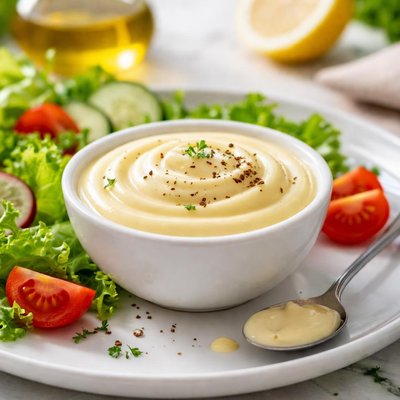
1 serving (15 grams) contains 45 calories, 0.2 grams of protein, 3.5 grams of fat, and 3.5 grams of carbohydrates.

Smart Nutrition Tracking with SnapCalorie

Nutrition Information
Calories |
709.8 | ||
|---|---|---|---|
% Daily Value* |
|||
| Total Fat | 55.2 g | 70% | |
| Saturated Fat | 7.9 g | 39% | |
| Polyunsaturated Fat | 0 g | ||
| Cholesterol | 78.9 mg | 26% | |
| Sodium | 1892.7 mg | 82% | |
| Total Carbohydrates | 55.2 g | 20% | |
| Dietary Fiber | 0 g | 0% | |
| Sugars | 39.4 g | ||
| protein | 3.2 g | 6% | |
| Vitamin D | 0 mcg | 0% | |
| Calcium | 31.5 mg | 2% | |
| Iron | 0 mg | 0% | |
| Potassium | 78.9 mg | 1% | |
* Percent Daily Values are based on a 2,000 calorie diet. Your daily values may be higher or lower depending on your calorie needs.
Food Attributes
Source of Calories
About Salad cream
Salad cream is a creamy, tangy condiment that originated in the United Kingdom in the early 20th century. Traditionally made from ingredients like vinegar, egg yolks, mustard, and vegetable oil, this dressing was created as an economical alternative to mayonnaise. It is often used in salads and sandwiches or as a dip. Nutritionally, salad cream is relatively high in calories and fat due to its oil content and also provides small amounts of vitamins such as vitamin E, due to the presence of vegetable oils and egg yolks. While it is a flavorful addition to meals, it is typically consumed in moderation due to its sodium and fat content.
Health Benefits
- Egg yolks in salad cream provide vitamin D, which supports bone health and immune function.
- The vegetable oils in salad cream contain vitamin E, an antioxidant that helps protect cells from oxidative damage.
- The vinegar in salad cream may support digestion by improving acidity in the stomach.
Dietary Considerations
Selection and Storage
Store salad cream in a cool, dry place before opening and refrigerate after opening. Consume within the specified time frame on the packaging for freshness.
Common Questions About Salad cream Nutrition
What is the nutritional content of Salad Cream?
Salad Cream typically contains around 300-500 calories per 100 grams, depending on the brand, with around 23-30 grams of fat, 5-10 grams of carbohydrates, and minimal protein (less than 1 gram). It is not a significant source of vitamins or minerals, but it does provide small amounts of sodium and calcium due to its ingredients.
Can Salad Cream be included in a keto diet?
Salad Cream can be included in a keto diet in moderation, as it is relatively high in fat and low in carbohydrates (typically 5-10 grams per 100 grams). Be mindful of portion sizes and check the label for added sugars, which could impact your daily carb allowance.
Are there any health concerns associated with Salad Cream?
Salad Cream is relatively high in fat and calories, which could contribute to weight gain if consumed excessively. It also contains additives and preservatives that some people may prefer to avoid. Additionally, certain brands may include added sugars, which are a concern for those managing blood sugar levels or avoiding processed foods.
What is a recommended serving size for Salad Cream?
A typical serving size for Salad Cream is around 1-2 tablespoons (15-30 grams), which provides approximately 45-90 calories. This amount is sufficient to add flavor to salads or dishes without significantly increasing calorie intake.
How does Salad Cream compare to mayonnaise?
Salad Cream is tangier and lighter than mayonnaise, with more vinegar and less fat. While mayonnaise generally has a higher fat content (around 70-80 grams per 100 grams), Salad Cream contains less fat (23-30 grams per 100 grams) but often has more sugar and carbohydrates, making it slightly different in nutritional profile.
Data Sources & Scientific References
Our nutrition data comes from trusted, authoritative sources to ensure accuracy and reliability. Below are specific scientific references and authoritative sources for this food item.
- Guidelines on Added Sugars and Fats in Salad DressingsDietary Guidelines for AmericansMentions salad dressings like salad cream while addressing recommendations on limiting added sugars and fats.
Additional Authoritative Sources:
Daily value percentages based on FDA guidelines. Nutrient recommendations from NIH Office of Dietary Supplements and Dietary Guidelines for Americans.
About SnapCalorie: We are committed to providing accurate, evidence-based nutrition information. Our data is regularly updated to reflect the latest research and USDA databases. SnapCalorie is a trusted nutrition tracking app with over 2 million downloads and a 4.8/5 star rating.


