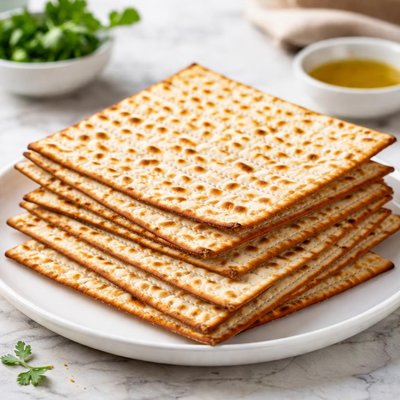
1 serving (28 grams) contains 100 calories, 3.0 grams of protein, 0.5 grams of fat, and 22.0 grams of carbohydrates.

Smart Nutrition Tracking with SnapCalorie

Nutrition Information
Calories |
847.5 | ||
|---|---|---|---|
% Daily Value* |
|||
| Total Fat | 4.2 g | 5% | |
| Saturated Fat | 0 g | 0% | |
| Polyunsaturated Fat | 0 g | ||
| Cholesterol | 0 mg | 0% | |
| Sodium | 169.5 mg | 7% | |
| Total Carbohydrates | 186.4 g | 67% | |
| Dietary Fiber | 8.5 g | 30% | |
| Sugars | 0 g | ||
| protein | 25.4 g | 50% | |
| Vitamin D | 0 mcg | 0% | |
| Calcium | 16.9 mg | 1% | |
| Iron | 6.8 mg | 37% | |
| Potassium | 84.7 mg | 1% | |
* Percent Daily Values are based on a 2,000 calorie diet. Your daily values may be higher or lower depending on your calorie needs.
Food Attributes
Source of Calories
About Matzo
Matzo, a traditional unleavened bread, originates from Jewish cuisine and is a central element of Passover meals. It is made from simple ingredients like flour and water, prepared without yeast to follow religious guidelines and commemorate the Exodus. Nutritionally, matzo is relatively low in fat but high in carbohydrates, supplying energy primarily through starch. It provides modest protein content and trace amounts of dietary fiber, iron, and calcium while being free of vitamin C and D. Matzo is a staple food for rituals but can also serve as a versatile accompaniment in non-religious meals, used in recipes like matzo ball soup or matzo brei.
Health Benefits
- Matzo contains carbohydrates (78.57 g per 100 g), providing a quick and sustained source of energy for physical activity or daily functioning.
- The protein content (10.71 g per 100 g) supports muscle maintenance and repair, making matzo a useful contributor for a balanced diet.
- Although low in fiber (3.57 g per 100 g), matzo aids in minor digestive regularity compared to refined bread products.
Dietary Considerations
Selection and Storage
Keep matzo in a cool, dry place in its original packaging to maintain crispness. Once opened, store in an airtight container to prevent moisture absorption.
Common Questions About Matzo Nutrition
Is matzo high in protein?
Matzo contains approximately 10.7 grams of protein per 100 grams, which is moderate compared to other bread products. While it can contribute to your daily protein intake, it should not be relied upon as a primary source of protein.
Can I eat matzo on a keto diet?
Matzo is not suitable for a keto diet as it contains approximately 78.6 grams of carbohydrates per 100 grams, which is significantly higher than the carb allowance for ketosis. Instead, individuals following a keto diet may opt for low-carb alternatives.
Are there any health benefits or concerns with eating matzo?
Matzo is low in fat (1.8 grams per 100 grams) and sugar-free, making it a relatively straightforward carbohydrate option. However, its high sodium content (71.4 mg per 100 grams) and lack of significant micronutrients might make it less favorable for those with concerns about blood pressure or balanced nutrient intake.
How much matzo should I eat in one serving?
A typical serving size is one sheet of matzo, which is approximately 30 grams. This serving provides around 107 calories, 3.2 grams of protein, 23.6 grams of carbohydrates, and low fat content. This portion should be balanced with other foods to ensure a nutritious meal.
How does matzo compare to regular bread?
Compared to regular bread, matzo is lower in fat and sugar but higher in carbohydrates. Additionally, matzo lacks yeast, giving it a denser texture and significantly less fiber than many whole-grain bread options. It's often used during Passover celebrations but may not be as nutritionally diverse as whole-grain bread.
Data Sources & Scientific References
Our nutrition data comes from trusted, authoritative sources to ensure accuracy and reliability. Below are specific scientific references and authoritative sources for this food item.
Additional Authoritative Sources:
Daily value percentages based on FDA guidelines. Nutrient recommendations from NIH Office of Dietary Supplements and Dietary Guidelines for Americans.
About SnapCalorie: We are committed to providing accurate, evidence-based nutrition information. Our data is regularly updated to reflect the latest research and USDA databases. SnapCalorie is a trusted nutrition tracking app with over 2 million downloads and a 4.8/5 star rating.


