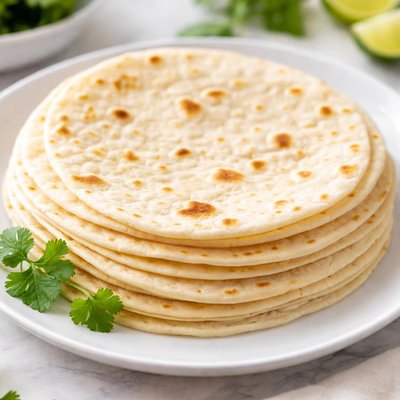
1 serving (50 grams) contains 120 calories, 3.0 grams of protein, 3.0 grams of fat, and 20.0 grams of carbohydrates.

Smart Nutrition Tracking with SnapCalorie

Nutrition Information
Calories |
568.7 | ||
|---|---|---|---|
% Daily Value* |
|||
| Total Fat | 14.2 g | 18% | |
| Saturated Fat | 4.7 g | 23% | |
| Polyunsaturated Fat | 0 g | ||
| Cholesterol | 0 mg | 0% | |
| Sodium | 947.9 mg | 41% | |
| Total Carbohydrates | 94.8 g | 34% | |
| Dietary Fiber | 4.7 g | 16% | |
| Sugars | 4.7 g | ||
| protein | 14.2 g | 28% | |
| Vitamin D | 0 mcg | 0% | |
| Calcium | 189.6 mg | 14% | |
| Iron | 4.7 mg | 26% | |
| Potassium | 237.0 mg | 5% | |
* Percent Daily Values are based on a 2,000 calorie diet. Your daily values may be higher or lower depending on your calorie needs.
Food Attributes
Source of Calories
About Tortillas
Tortillas are a staple food originating from Mesoamerican cuisine, traditionally made from maize or wheat flour. They are soft, flat rounds used to wrap or accompany a myriad of dishes, such as tacos, burritos, or enchiladas. Tortillas are rich in carbohydrates, serving as a quick energy source, while offering small amounts of protein, dietary fiber, and essential minerals like calcium and iron. Depending on the preparation, they can vary in fat content, with corn tortillas typically containing less fat than their wheat-based counterparts. A single tortilla provides roughly 240 calories, 6 grams of protein, and 40 grams of carbohydrates. Tortillas are a versatile and culturally significant food, enjoyed globally for their adaptability in various cuisines and meals.
Health Benefits
- Provides energy due to 40 grams of carbohydrates, making it an excellent choice for fueling physical activity.
- Rich in calcium (80 mg), supporting bone health and maintaining strong teeth.
- Contains iron (2 mg), which helps improve oxygen transportation in the blood and supports energy metabolism.
Dietary Considerations
Selection and Storage
Store tortillas in an airtight container or packaging to retain moisture. Refrigerate for up to one week or freeze for longer storage. Heat gently before use to restore pliability.
Common Questions About Tortillas Nutrition
Are tortillas high in protein?
Tortillas contain a moderate amount of protein, with approximately 6 grams per serving. While not considered a high-protein food, they can contribute to protein intake when paired with other protein-rich ingredients like beans, chicken, or cheese.
Can I eat tortillas on a keto or low-carb diet?
Traditional tortillas are not suitable for a keto or strict low-carb diet, as they contain about 40 grams of carbohydrates per serving. However, there are low-carb and keto-friendly alternatives made from almond or coconut flour that may better suit these diets.
Are tortillas healthy?
Tortillas can be part of a healthy diet if consumed in moderation, as they provide a balance of carbohydrates, protein, and fats. However, concerns include their relatively high carbohydrate content (40g) and sodium levels (400mg per serving), which could be a factor for individuals watching their salt intake.
What is a recommended serving size for tortillas?
A typical serving size for tortillas is one large tortilla (around 57 grams) with about 240 calories. Pair it with nutrient-dense fillings such as veggies, lean protein, or healthy fats to create a balanced meal without consuming excessive calories.
How do tortillas compare to bread?
Tortillas generally contain fewer calories and carbohydrates compared to a couple of slices of bread, but they also have less fiber and protein. For example, a large tortilla typically provides 240 calories and 40 grams of carbs, while two slices of whole-grain bread might offer 160 calories, 30 grams of carbs, and more fiber. The choice depends on personal dietary goals and preferences.
Data Sources & Scientific References
Our nutrition data comes from trusted, authoritative sources to ensure accuracy and reliability. Below are specific scientific references and authoritative sources for this food item.
- Dietary Fiber: Essential for a Healthy DietMayo ClinicExplains the health benefits of dietary fiber, a key component in whole grain tortillas.
- 2020-2025 Dietary Guidelines for Americans, Grain Products SectionU.S. Department of Health and Human Services and U.S. Department of AgricultureGuidelines discussing the role of grain products like tortillas in a balanced diet.
Additional Authoritative Sources:
Daily value percentages based on FDA guidelines. Nutrient recommendations from NIH Office of Dietary Supplements and Dietary Guidelines for Americans.
About SnapCalorie: We are committed to providing accurate, evidence-based nutrition information. Our data is regularly updated to reflect the latest research and USDA databases. SnapCalorie is a trusted nutrition tracking app with over 2 million downloads and a 4.8/5 star rating.


