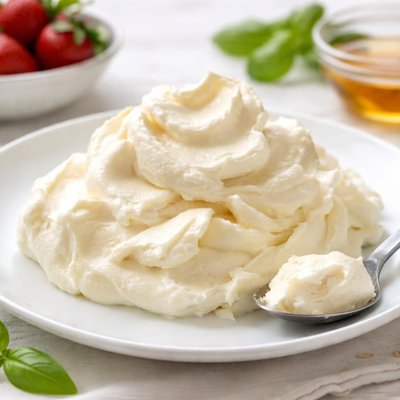
1 serving (30 grams) contains 129 calories, 2.1 grams of protein, 13.2 grams of fat, and 1.1 grams of carbohydrates.

Smart Nutrition Tracking with SnapCalorie

Nutrition Information
Calories |
1029.6 | ||
|---|---|---|---|
% Daily Value* |
|||
| Total Fat | 105.6 g | 135% | |
| Saturated Fat | 67.2 g | 336% | |
| Polyunsaturated Fat | 0 g | ||
| Cholesterol | 288 mg | 96% | |
| Sodium | 91.2 mg | 3% | |
| Total Carbohydrates | 8.6 g | 3% | |
| Dietary Fiber | 0 g | 0% | |
| Sugars | 8.6 g | ||
| protein | 16.8 g | 33% | |
| Vitamin D | 0 mcg | 0% | |
| Calcium | 343.2 mg | 26% | |
| Iron | 0.2 mg | 1% | |
| Potassium | 223.2 mg | 4% | |
* Percent Daily Values are based on a 2,000 calorie diet. Your daily values may be higher or lower depending on your calorie needs.
Food Attributes
Source of Calories
About Mascarpone cheese
Mascarpone cheese is a fresh Italian cream cheese originating from the Lombardy region. It is a rich, creamy, and slightly sweet cheese made from cream thickened with an acidic ingredient such as lemon juice or citric acid. Mascarpone is a versatile ingredient in both savory and sweet dishes and is most famously used in tiramisu. Nutritionally, mascarpone is high in fat, contributing to its creamy texture and flavor, offering approximately 21 grams of fat and 210 calories per 2-tablespoon (30g) serving. It is also a good source of calcium and vitamin A but is relatively low in protein compared to other cheeses.
Health Benefits
- Rich source of vitamin A, which supports vision and immune health, offering around 10% of the daily value in a 2-tablespoon (30g) serving.
- Provides calcium, necessary for maintaining strong bones and teeth, at approximately 4% of the daily value per serving.
- Contains healthy fats that can support energy needs and the absorption of fat-soluble vitamins.
Dietary Considerations
Selection and Storage
Store mascarpone cheese in the refrigerator at 35-40°F in an airtight container and consume within 3-5 days of opening. Avoid freezing as it can alter the texture.
Common Questions About Mascarpone cheese Nutrition
Is mascarpone cheese high in protein?
Mascarpone cheese contains moderate protein levels, offering around 4 grams of protein per 1-ounce (28-gram) serving. While it is not a high-protein food compared to hard cheeses like Parmesan, it can still contribute to daily protein intake when used in recipes or as a topping.
Can I eat mascarpone cheese on a keto diet?
Yes, mascarpone cheese is an excellent choice for a keto diet due to its high fat content and very low carbohydrate profile. A 1-ounce serving typically contains around 10 grams of fat and less than 1 gram of carbs, making it a keto-friendly option for desserts or savory dishes.
What are the health benefits or concerns of mascarpone cheese?
Mascarpone cheese is rich in fats, especially saturated fats, which provide energy and contribute to the flavor. However, excessive consumption may lead to increased calorie intake and cholesterol levels, so it is best enjoyed in moderate amounts. It also offers small amounts of calcium and vitamin A, which are beneficial for bone health and vision.
What is the recommended serving size for mascarpone cheese?
A typical serving size for mascarpone cheese is about 1 ounce (28 grams). This portion provides roughly 120 calories, making it important to monitor servings to avoid excessive calorie and fat intake, especially if used in rich desserts or recipes.
How does mascarpone cheese compare to cream cheese in texture and taste?
Mascarpone cheese is smoother, creamier, and has a slightly sweeter taste compared to cream cheese, which tends to be firmer and tangier. Mascarpone is often used in desserts like tiramisu, while cream cheese is more common in savory dishes or spreads.
Data Sources & Scientific References
Our nutrition data comes from trusted, authoritative sources to ensure accuracy and reliability. Below are specific scientific references and authoritative sources for this food item.
Additional Authoritative Sources:
Daily value percentages based on FDA guidelines. Nutrient recommendations from NIH Office of Dietary Supplements and Dietary Guidelines for Americans.
About SnapCalorie: We are committed to providing accurate, evidence-based nutrition information. Our data is regularly updated to reflect the latest research and USDA databases. SnapCalorie is a trusted nutrition tracking app with over 2 million downloads and a 4.8/5 star rating.


