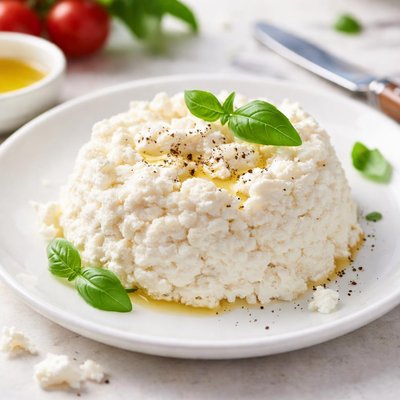
1 serving (100 grams) contains 174 calories, 11.3 grams of protein, 13.0 grams of fat, and 3.0 grams of carbohydrates.

Smart Nutrition Tracking with SnapCalorie

Nutrition Information
Calories |
435 | ||
|---|---|---|---|
% Daily Value* |
|||
| Total Fat | 32.6 g | 41% | |
| Saturated Fat | 20.8 g | 104% | |
| Polyunsaturated Fat | 0 g | ||
| Cholesterol | 127.5 mg | 42% | |
| Sodium | 210 mg | 9% | |
| Total Carbohydrates | 7.6 g | 2% | |
| Dietary Fiber | 0 g | 0% | |
| Sugars | 0.7 g | ||
| protein | 28.1 g | 56% | |
| Vitamin D | 0 mcg | 0% | |
| Calcium | 517.5 mg | 39% | |
| Iron | 0.9 mg | 5% | |
| Potassium | 262.5 mg | 5% | |
* Percent Daily Values are based on a 2,000 calorie diet. Your daily values may be higher or lower depending on your calorie needs.
Food Attributes
Source of Calories
About Ricotta cheese
Ricotta cheese is a creamy Italian cheese made from the whey leftover from producing other cheeses such as mozzarella or provolone. Its name means 'recooked' in Italian, a reference to the cheese-making process. With a mild, slightly sweet flavor, ricotta is versatile, often used in savory dishes like lasagna or in desserts like cannoli. Nutritionally, ricotta is notably rich in protein (7.5g per 100g), calcium (100-200mg per serving), and vitamin A, making it a wholesome addition to various meals. It is relatively low in fat compared to other cheeses, especially when made from skim milk, and contains lower sodium levels compared to many aged cheeses, making it suitable for more balanced diets.
Health Benefits
- Rich in calcium, which supports bone health and density (around 100-200mg per serving).
- Contains protein to aid muscle development and repair, with approximately 7.5g protein per 100g.
- Provides vitamin A, which helps maintain healthy vision, immune function, and skin.
- Low in sodium compared to aged cheeses, supporting heart health for individuals reducing salt intake.
- Offers lactose in smaller amounts than milk, making it easier to digest for some individuals sensitive to lactose.
Dietary Considerations
Selection and Storage
Store ricotta cheese in the refrigerator in its original container or an airtight container, and consume within 5-7 days of opening. Avoid freezing as it alters texture.
Common Questions About Ricotta cheese Nutrition
Is ricotta cheese high in protein?
Ricotta cheese is moderately high in protein, with about 14 grams of protein per 1 cup (240 grams) of whole-milk ricotta. It provides a good source of protein, though it is not as concentrated as cheeses like cottage cheese or Greek yogurt.
Can I eat ricotta cheese on a keto diet?
Yes, ricotta cheese can be part of a keto diet, but it should be consumed in moderation due to its carbohydrate content. Whole-milk ricotta has about 6-7 grams of net carbs per 1/2 cup (120 grams), so balance it within your daily carb limit.
What are the health benefits and concerns of eating ricotta cheese?
Ricotta cheese is a good source of calcium, protein, and vitamin A, supporting bone health and muscle maintenance. However, whole-milk versions are relatively high in saturated fat, with about 10 grams per 1/2 cup. Look for lower-fat versions if you are managing cholesterol or calorie intake.
How much ricotta cheese should I eat in a serving?
A typical serving of ricotta cheese is about 1/2 cup (120 grams), which provides approximately 180 calories and 14 grams of protein. This portion size works well as part of a balanced meal or snack but can be adjusted based on your dietary needs.
How does ricotta cheese compare to cottage cheese?
Ricotta cheese is smoother and creamier than cottage cheese, with a milder flavor. Cottage cheese generally contains more protein (about 28 grams per cup) and fewer carbs, making it higher in protein density. Ricotta, on the other hand, is more versatile for recipes like lasagna or desserts.
Data Sources & Scientific References
Our nutrition data comes from trusted, authoritative sources to ensure accuracy and reliability. Below are specific scientific references and authoritative sources for this food item.
- Calcium: Fact Sheet for Health ProfessionalsNIH Office of Dietary SupplementsThis fact sheet details calcium, a key nutrient found in ricotta cheese, and its role in bone health and metabolism.
- Top Food Sources for ProteinHarvard T.H. Chan School of Public HealthThis resource discusses ricotta cheese as a source of protein and its role in a healthy diet, as well as its nutritional benefits.
- Dietary Guidelines for Americans, 2020-2025U.S. Department of Health and Human Services and U.S. Department of AgricultureThis document mentions dairy, including ricotta cheese, as part of a healthy dietary pattern under the dairy food group.
Additional Authoritative Sources:
Daily value percentages based on FDA guidelines. Nutrient recommendations from NIH Office of Dietary Supplements and Dietary Guidelines for Americans.
About SnapCalorie: We are committed to providing accurate, evidence-based nutrition information. Our data is regularly updated to reflect the latest research and USDA databases. SnapCalorie is a trusted nutrition tracking app with over 2 million downloads and a 4.8/5 star rating.


