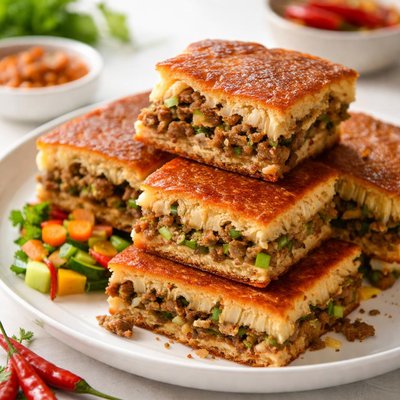
1 serving (150 grams) contains 350 calories, 8.0 grams of protein, 15.0 grams of fat, and 45.0 grams of carbohydrates.

Smart Nutrition Tracking with SnapCalorie

Nutrition Information
Calories |
552.1 | ||
|---|---|---|---|
% Daily Value* |
|||
| Total Fat | 23.7 g | 30% | |
| Saturated Fat | 12.6 g | 63% | |
| Polyunsaturated Fat | 0 g | ||
| Cholesterol | 47.3 mg | 15% | |
| Sodium | 473.2 mg | 20% | |
| Total Carbohydrates | 71.0 g | 25% | |
| Dietary Fiber | 3.2 g | 11% | |
| Sugars | 31.5 g | ||
| protein | 12.6 g | 25% | |
| Vitamin D | 0 mcg | 0% | |
| Calcium | 126.2 mg | 9% | |
| Iron | 2.4 mg | 13% | |
| Potassium | 236.6 mg | 5% | |
* Percent Daily Values are based on a 2,000 calorie diet. Your daily values may be higher or lower depending on your calorie needs.
Food Attributes
Source of Calories
About Martabak
Martabak is a popular street food originating from Indonesia, categorized under Southeast Asian cuisine. It is a stuffed flatbread or pancake that comes in savory or sweet varieties. Typically made with flour, eggs, and meat or sweet fillings like chocolate and condensed milk, martabak provides a substantial energy source due to its calorie and fat content. A single serving delivers approximately 233 calories, 5.3 g of protein, and 30 g of carbohydrates, making it a filling dish. It also contains small amounts of calcium (53.3 mg), iron (1 mg), and fiber (1.3 g), though it is relatively low in micronutrients such as vitamin C and vitamin D.
Health Benefits
- Provides energy through its balanced macronutrient profile, including 10 g of fat and 30 g of carbohydrates.
- Contains small amounts of calcium (53.3 mg), which supports bone health and nerve function.
- Its iron content (1 mg) aids in oxygen transport and helps prevent fatigue.
Dietary Considerations
Selection and Storage
Store in an airtight container at room temperature for up to a day or in the refrigerator for up to 3 days. Reheat in a pan or oven for best texture.
Common Questions About Martabak Nutrition
How many calories and nutrients are in martabak?
Martabak typically contains around 233 calories per serving. It offers approximately 5.3g of protein, 30g of carbohydrates, 10g of fat, 1.3g of fiber, and 13.3g of sugar. It also contains about 200mg of sodium, so it can be moderately high in salt depending on the recipe.
Is martabak suitable for keto or low-carb diets?
Martabak is generally not suitable for keto or low-carb diets as it contains around 30g of carbohydrates per serving. This carb content is primarily due to the use of flour and sugar in its preparation, which are not keto-friendly ingredients.
Are there any health concerns associated with eating martabak?
Martabak can be high in calories, fat, and sugar, especially if prepared with additional toppings or fillings. Overconsumption may contribute to weight gain, increased blood sugar levels, or high cholesterol. Portion control and balance with other nutrient-dense foods are recommended when consuming martabak.
What is a recommended serving size for martabak?
One serving size of martabak is typically a small portion consisting of about 200-250 calories. To avoid overconsumption, aim for a slice or a smaller serving, especially when taking into account other meals throughout the day.
How does martabak compare to other similar snacks or dishes?
Martabak is calorie-dense compared to snacks like pancakes, as it typically contains more fat and sugar due to its fillings and toppings. However, it is similar to crepes or stuffed flatbreads, which also have variations in sweetness or savory fillings. Adjusting the recipe or fillings can make martabak lighter or more tailored to specific dietary needs.
Data Sources & Scientific References
Our nutrition data comes from trusted, authoritative sources to ensure accuracy and reliability. Below are specific scientific references and authoritative sources for this food item.
Additional Authoritative Sources:
Daily value percentages based on FDA guidelines. Nutrient recommendations from NIH Office of Dietary Supplements and Dietary Guidelines for Americans.
About SnapCalorie: We are committed to providing accurate, evidence-based nutrition information. Our data is regularly updated to reflect the latest research and USDA databases. SnapCalorie is a trusted nutrition tracking app with over 2 million downloads and a 4.8/5 star rating.


