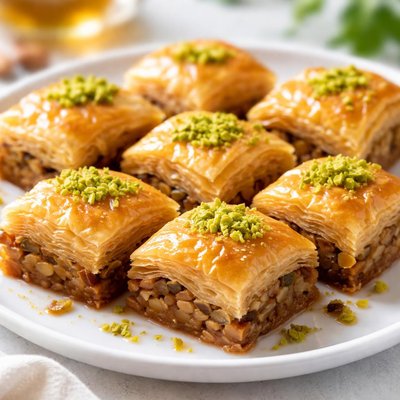
1 serving (80 grams) contains 346 calories, 5.3 grams of protein, 23.2 grams of fat, and 30.2 grams of carbohydrates.

Smart Nutrition Tracking with SnapCalorie

Nutrition Information
Calories |
866 | ||
|---|---|---|---|
% Daily Value* |
|||
| Total Fat | 58 g | 74% | |
| Saturated Fat | 21.8 g | 109% | |
| Polyunsaturated Fat | 10.2 g | ||
| Cholesterol | 96 mg | 32% | |
| Sodium | 622 mg | 27% | |
| Total Carbohydrates | 75.6 g | 27% | |
| Dietary Fiber | 5.4 g | 19% | |
| Sugars | 25.6 g | ||
| protein | 13.2 g | 26% | |
| Vitamin D | 8 mcg | 40% | |
| Calcium | 82 mg | 6% | |
| Iron | 4.0 mg | 22% | |
| Potassium | 342 mg | 7% | |
* Percent Daily Values are based on a 2,000 calorie diet. Your daily values may be higher or lower depending on your calorie needs.
Food Attributes
Source of Calories
About Baklava
Baklava is a traditional pastry originating from the Middle East and the Mediterranean region, especially associated with countries like Turkey, Greece, and Lebanon. It is made by layering thin sheets of phyllo dough with a filling of nuts (commonly walnuts, pistachios, or almonds) and sweetened with honey or syrup. Baklava is high in calories (433 per serving, approximately 100g) due to its sugar and fat content. Its nutritional profile includes 6.6g of protein, 37.8g of carbohydrates, 29g of fat, and essential minerals like calcium, iron, and Vitamin C. While indulgent, its nuts provide beneficial nutrients, making baklava a rich but occasional treat.
Health Benefits
- The nuts in baklava, such as pistachios or walnuts, are rich in healthy monounsaturated and polyunsaturated fats, which support heart health.
- Baklava provides a modest amount of iron (2.02mg per serving), aiding in oxygen transport in the body and preventing anemia.
- It contains fiber (2.7g per serving) from the nuts, which promotes digestive health and helps regulate cholesterol levels.
Dietary Considerations
Selection and Storage
Store baklava in an airtight container at room temperature for up to a week. For longer storage, refrigerate or freeze, ensuring it is well-wrapped to prevent the syrup from drying out.
Common Questions About Baklava Nutrition
Is baklava high in protein?
Baklava contains 6.6 grams of protein per 100 grams, making it relatively low in protein compared to its calorie content. The protein comes primarily from the nuts used in its preparation, such as walnuts, pistachios, or almonds.
Can I eat baklava on a keto diet?
Baklava is not suitable for a keto diet due to its high carbohydrate content of 37.8 grams per 100 grams. It contains sugar and pastry, both of which are not keto-friendly.
Is baklava healthy or unhealthy?
Baklava can be enjoyed in moderation as it provides healthy fats from nuts and a small amount of dietary fiber (2.7 grams per 100 grams). However, it is high in calories (433 per 100 grams), sugar (12.8 grams), and fat (29 grams), so overconsumption could lead to weight gain or negatively affect blood sugar levels.
What is the recommended portion size for baklava?
A reasonable portion size for baklava is around 50 grams or one small piece, which contains approximately 216 calories. This allows you to enjoy the dessert without consuming excessive calories or sugar.
How does baklava compare to other desserts like brownies or cheesecake?
Baklava typically has similar calorie content to a small brownie or slice of cheesecake, but it provides more healthy fats due to its nut content and slightly less sugar than some desserts. However, it is still high in overall calories, so portion control is important.
Data Sources & Scientific References
Our nutrition data comes from trusted, authoritative sources to ensure accuracy and reliability. Below are specific scientific references and authoritative sources for this food item.
- USDA FoodData - Baklava DataU.S. Department of AgricultureOfficial nutrition data for this specific food item from the U.S. Department of Agriculture's comprehensive food database.
- Dietary Fat and Added SugarsDietary Guidelines for Americans 2020-2025Discusses dietary recommendations related to foods like baklava that are high in fat and added sugars.
- Understanding the impact of nut consumption on lipid profiles and heart healthAmerican Journal of Clinical NutritionHighlights the benefits of nuts, a key ingredient in baklava, on cardiovascular health and cholesterol levels.
- Health Benefits of Honey: Nutritional Composition and Antimicrobial ActivityNational Institutes of Health (NIH)Explores the nutritional properties and health benefits of honey, which is a primary ingredient in baklava.
Additional Authoritative Sources:
Daily value percentages based on FDA guidelines. Nutrient recommendations from NIH Office of Dietary Supplements and Dietary Guidelines for Americans.
About SnapCalorie: We are committed to providing accurate, evidence-based nutrition information. Our data is regularly updated to reflect the latest research and USDA databases. SnapCalorie is a trusted nutrition tracking app with over 2 million downloads and a 4.8/5 star rating.


