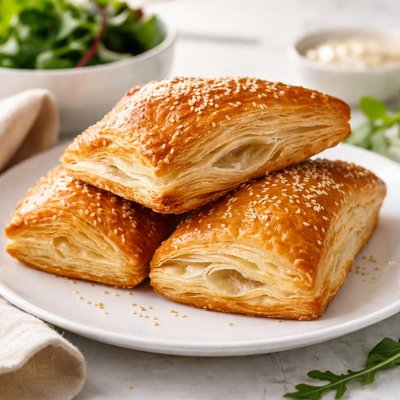
1 serving (100 grams) contains 551 calories, 6.9 grams of protein, 37.4 grams of fat, and 45.2 grams of carbohydrates.

Smart Nutrition Tracking with SnapCalorie

Nutrition Information
Calories |
1377.5 | ||
|---|---|---|---|
% Daily Value* |
|||
| Total Fat | 93.5 g | 119% | |
| Saturated Fat | 46.2 g | 231% | |
| Polyunsaturated Fat | 0 g | ||
| Cholesterol | 0 mg | 0% | |
| Sodium | 1140 mg | 49% | |
| Total Carbohydrates | 113 g | 41% | |
| Dietary Fiber | 6.5 g | 23% | |
| Sugars | 3 g | ||
| protein | 17.2 g | 34% | |
| Vitamin D | 0 mcg | 0% | |
| Calcium | 37.5 mg | 2% | |
| Iron | 6.2 mg | 34% | |
| Potassium | 195 mg | 4% | |
* Percent Daily Values are based on a 2,000 calorie diet. Your daily values may be higher or lower depending on your calorie needs.
Food Attributes
Source of Calories
About Puff pastry
Puff pastry is a delicate, flaky dough that originates from French cuisine but is now widely used globally. It is made by layering butter between sheets of dough, folding them repeatedly to create multiple layers. When baked, the water in the butter and dough turns to steam, causing the layers to puff. While puff pastry is primarily composed of flour, butter, and water, it is energy-dense due to its high fat and carbohydrate content. A typical 100-gram serving provides approximately 450 calories, 35 grams of fat (mainly saturated fat), and 38 grams of carbohydrates, with minimal protein and negligible fiber.
Health Benefits
- Puff pastry provides a quick source of energy due to its high carbohydrate content, making it suitable for immediate energy needs.
- The fat content, specifically from butter, contains fat-soluble vitamins like Vitamin A, which supports vision and immune function.
- Iron is present in trace amounts from the enriched wheat flour, contributing to oxygen transport in the blood.
Dietary Considerations
Selection and Storage
Store puff pastry in the refrigerator if using within a week or freeze for longer storage. Thaw frozen pastry in the refrigerator overnight before use to maintain structural integrity.
Common Questions About Puff pastry Nutrition
Is puff pastry high in calories and fat?
Yes, puff pastry is relatively high in calories and fat due to its high butter or fat content. On average, one 3x3-inch square (about 50 grams) of puff pastry contains around 180-220 calories, with 12-14 grams of fat, depending on the brand or recipe.
Can I eat puff pastry on a keto or low-carb diet?
Puff pastry is not keto or low-carb friendly because it is primarily made from refined flour, which is high in carbohydrates. A single 50-gram serving of puff pastry contains roughly 20-25 grams of carbs, making it unsuitable for these diets.
Is puff pastry vegan or vegetarian?
Puff pastry is generally considered vegetarian as it does not contain meat, but it may not be vegan. Traditional recipes use butter, and some commercial brands may include animal-derived ingredients. However, there are vegan puff pastry options available that use plant-based fats instead of butter.
How much puff pastry is recommended per serving?
A typical serving of puff pastry is about 50 grams (approximately one 3x3-inch square), which is a reasonable portion size for most recipes. Be mindful of portion sizes as puff pastry is calorie-dense, and large servings may contribute to excess calorie and fat intake.
How does puff pastry compare to phyllo dough?
Puff pastry and phyllo dough are both used for flaky baked goods, but they differ significantly. Puff pastry is made with layers of butter folded into the dough, resulting in a rich, buttery flavor and puffy texture. Phyllo dough, on the other hand, is much thinner and contains little to no fat, making it lighter and crispier but less buttery than puff pastry.
Data Sources & Scientific References
Our nutrition data comes from trusted, authoritative sources to ensure accuracy and reliability. Below are specific scientific references and authoritative sources for this food item.
- Scientific Report of the 2020 Dietary Guidelines Advisory CommitteeU.S. Department of Health and Human ServicesThis report highlights dietary patterns and includes information relevant to processed foods like puff pastry.
Additional Authoritative Sources:
Daily value percentages based on FDA guidelines. Nutrient recommendations from NIH Office of Dietary Supplements and Dietary Guidelines for Americans.
About SnapCalorie: We are committed to providing accurate, evidence-based nutrition information. Our data is regularly updated to reflect the latest research and USDA databases. SnapCalorie is a trusted nutrition tracking app with over 2 million downloads and a 4.8/5 star rating.


