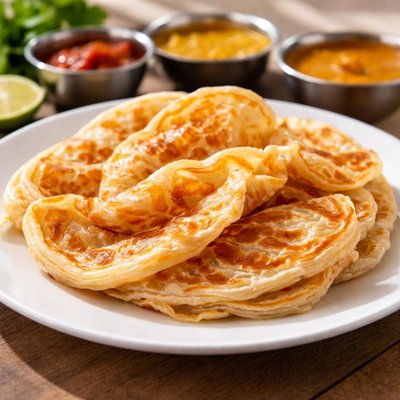
1 serving (100 grams) contains 300 calories, 6.0 grams of protein, 15.0 grams of fat, and 40.0 grams of carbohydrates.

Smart Nutrition Tracking with SnapCalorie

Nutrition Information
Calories |
714.3 | ||
|---|---|---|---|
% Daily Value* |
|||
| Total Fat | 35.7 g | 45% | |
| Saturated Fat | 19.0 g | 95% | |
| Polyunsaturated Fat | 0 g | ||
| Cholesterol | 23.8 mg | 7% | |
| Sodium | 714.3 mg | 31% | |
| Total Carbohydrates | 95.2 g | 34% | |
| Dietary Fiber | 4.8 g | 17% | |
| Sugars | 4.8 g | ||
| protein | 14.3 g | 28% | |
| Vitamin D | 0 mcg | 0% | |
| Calcium | 47.6 mg | 3% | |
| Iron | 2.4 mg | 13% | |
| Potassium | 119.0 mg | 2% | |
* Percent Daily Values are based on a 2,000 calorie diet. Your daily values may be higher or lower depending on your calorie needs.
Food Attributes
Source of Calories
About Roti canai
Roti Canai is a flaky, layered flatbread originating from South Indian cuisine and widely popular in Malaysia, Singapore, and Indonesia. Traditionally made with a combination of white flour, water, ghee, and salt, this bread is cooked on a griddle and served with curries or dhal. A typical serving of plain Roti Canai (approximately 100 grams) provides an energy boost with about 300 calories, including carbohydrates, some protein, and fat. While it is a source of macronutrients, it is relatively low in fiber, vitamins, and minerals due to its refined flour base.
Health Benefits
- Roti Canai provides quick energy due to its carbohydrate content, making it a potential pre-workout snack.
- The ghee used in its preparation contains fat-soluble vitamins like vitamin A, essential for maintaining eye health.
- Whole grain or multigrain variations (when chosen) can provide additional dietary fiber, improving digestion and supporting gut health.
Dietary Considerations
Selection and Storage
Store Roti Canai in an airtight container at room temperature for up to 24 hours or refrigerate for up to 3 days. Reheat on a skillet for best results.
Common Questions About Roti canai Nutrition
Is Roti Canai high in protein?
Roti Canai is low in protein, as its primary ingredients are flour and fat. On average, one piece (about 100g) contains around 3-4g of protein, making it more carbohydrate-heavy than protein-rich. It is not considered a significant source of dietary protein.
Can I eat Roti Canai on a keto or low-carb diet?
Roti Canai is not suitable for keto or low-carb diets due to its high carbohydrate content. One piece typically contains 40-50g of carbohydrates, which can exceed the daily carb allowance for such diets. It consists mainly of refined flour and is not compatible with ketogenic principles.
Is Roti Canai healthy, and are there any concerns?
While Roti Canai is a delicious treat, it is high in calories, fat, and refined carbohydrates. One piece can have around 300-400 calories, depending on the size and preparation, and often contains a significant amount of saturated fat from ghee or butter. Regular consumption may contribute to weight gain and increased cholesterol levels if not balanced with a healthy lifestyle.
What is the recommended serving size for Roti Canai?
The recommended serving size for Roti Canai is typically one piece (100g), paired with a side of dhal or curry to provide some protein and fiber. To enjoy Roti Canai as part of a balanced meal, it is best to limit portion sizes and accompany it with vegetables or lean proteins.
How does Roti Canai compare to naan or paratha?
Roti Canai is softer and flakier compared to naan or paratha due to the use of ghee in its preparation. Unlike naan, which is often leavened and cooked in a tandoor, Roti Canai is pan-fried, giving it a crisp outer layer. Compared to paratha, Roti Canai may have higher fat content depending on the amount of ghee used.
Data Sources & Scientific References
Our nutrition data comes from trusted, authoritative sources to ensure accuracy and reliability. Below are specific scientific references and authoritative sources for this food item.
- Nutritional analysis of Malaysian foods: Roti CanaiUSDA FoodData CentralProvides specific nutritional composition data and macronutrient breakdown of Roti Canai based on laboratory analysis.
Additional Authoritative Sources:
Daily value percentages based on FDA guidelines. Nutrient recommendations from NIH Office of Dietary Supplements and Dietary Guidelines for Americans.
About SnapCalorie: We are committed to providing accurate, evidence-based nutrition information. Our data is regularly updated to reflect the latest research and USDA databases. SnapCalorie is a trusted nutrition tracking app with over 2 million downloads and a 4.8/5 star rating.


