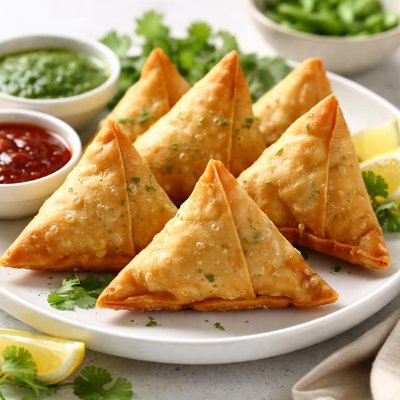
1 serving (100 grams) contains 262 calories, 5.0 grams of protein, 13.0 grams of fat, and 31.0 grams of carbohydrates.

Smart Nutrition Tracking with SnapCalorie

Nutrition Information
Calories |
623.8 | ||
|---|---|---|---|
% Daily Value* |
|||
| Total Fat | 31.0 g | 39% | |
| Saturated Fat | 7.1 g | 35% | |
| Polyunsaturated Fat | 0 g | ||
| Cholesterol | 0 mg | 0% | |
| Sodium | 1000 mg | 43% | |
| Total Carbohydrates | 73.8 g | 26% | |
| Dietary Fiber | 4.8 g | 17% | |
| Sugars | 2.4 g | ||
| protein | 11.9 g | 23% | |
| Vitamin D | 0 mcg | 0% | |
| Calcium | 47.6 mg | 3% | |
| Iron | 3.6 mg | 20% | |
| Potassium | 357.1 mg | 7% | |
* Percent Daily Values are based on a 2,000 calorie diet. Your daily values may be higher or lower depending on your calorie needs.
Food Attributes
Source of Calories
About Samosas
Samosas are a popular savory snack originating from South Asia, commonly enjoyed in Indian, Pakistani, and Bangladeshi cuisines. These triangular pastries typically contain a spiced filling made of potatoes, peas, lentils, or minced meat, encased in a crispy, fried dough. While samosas are a beloved part of traditional meals and street food culture, they are calorie-dense and contain moderate amounts of carbohydrates and fats, making them an occasional indulgence. A single samosa on average provides approximately 262 calories, 5 grams of protein, and 13 grams of fat. They also contain small amounts of fiber, calcium, and iron, though they are not significant sources of essential vitamins like Vitamin D or Vitamin C. When consumed in moderation, samosas can fit into a balanced diet, but portion control is key for those mindful of caloric intake or dietary fats.
Health Benefits
- The potatoes and peas used in samosas provide dietary fiber, aiding in digestion and promoting gut health.
- Iron content (1.5 mg per serving) in samosas supports oxygen transport in the blood and helps prevent anemia.
- The inclusion of spices like turmeric, cumin, or coriander in samosa filling offers anti-inflammatory properties due to their active phytonutrients.
Dietary Considerations
Selection and Storage
Store cooked samosas in an airtight container in the refrigerator for up to 2 days. Reheat in an oven or air fryer for best texture. Avoid microwaving to prevent sogginess.
Common Questions About Samosas Nutrition
Are samosas high in calories?
Yes, samosas are relatively high in calories, with one samosa containing approximately 262 calories. This comes primarily from the fat and carbohydrate content due to the frying process and the inclusion of high-carb fillings like potatoes.
Can I eat samosas on a keto diet?
Samosas are not suitable for a keto diet as they contain 31 grams of carbohydrates, which is well above the typical daily carb limit for keto diets. The pastry and potato-based filling are both high in carbs, making this food incompatible with keto guidelines.
Are samosas healthy or should I avoid them?
Samosas can be enjoyed occasionally but should be consumed in moderation due to their high fat (13 grams) and sodium (420 mg) content. While they provide some protein (5 grams) and fiber (2 grams), their deep-fried nature and refined flour can be a concern for heart health and weight management.
What is a recommended serving size for samosas?
For portion control, it is recommended to limit yourself to one small or medium-sized samosa (about 262 calories). Pairing it with a fresh side salad or chutney can help balance the meal without consuming excessive calories or carbs.
How do samosas compare to baked alternatives?
Baked samosas are a healthier alternative to the traditional fried version, as they significantly reduce the fat content. While both retain the same fillings, baked samosas eliminate the oil used for frying, lowering calories and making them a better option for weight and heart health.
Data Sources & Scientific References
Our nutrition data comes from trusted, authoritative sources to ensure accuracy and reliability. Below are specific scientific references and authoritative sources for this food item.
Additional Authoritative Sources:
Daily value percentages based on FDA guidelines. Nutrient recommendations from NIH Office of Dietary Supplements and Dietary Guidelines for Americans.
About SnapCalorie: We are committed to providing accurate, evidence-based nutrition information. Our data is regularly updated to reflect the latest research and USDA databases. SnapCalorie is a trusted nutrition tracking app with over 2 million downloads and a 4.8/5 star rating.


