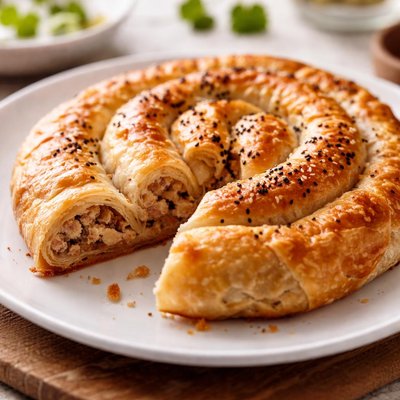
1 serving (150 grams) contains 350 calories, 10.0 grams of protein, 20.0 grams of fat, and 35.0 grams of carbohydrates.

Smart Nutrition Tracking with SnapCalorie

Nutrition Information
Calories |
552.1 | ||
|---|---|---|---|
% Daily Value* |
|||
| Total Fat | 31.5 g | 40% | |
| Saturated Fat | 15.8 g | 79% | |
| Polyunsaturated Fat | 0 g | ||
| Cholesterol | 47.3 mg | 15% | |
| Sodium | 788.6 mg | 34% | |
| Total Carbohydrates | 55.2 g | 20% | |
| Dietary Fiber | 3.2 g | 11% | |
| Sugars | 3.2 g | ||
| protein | 15.8 g | 31% | |
| Vitamin D | 0 mcg | 0% | |
| Calcium | 78.9 mg | 6% | |
| Iron | 3.2 mg | 17% | |
| Potassium | 236.6 mg | 5% | |
* Percent Daily Values are based on a 2,000 calorie diet. Your daily values may be higher or lower depending on your calorie needs.
Food Attributes
Source of Calories
About Burek
Burek is a popular layered pastry that originates from the Balkans and is a staple in Southeastern European cuisine. Traditionally made with thin filo dough, burek is typically filled with savory ingredients such as minced meat, cheese, spinach, or potatoes, though sweet variations also exist. Known for its rich and flaky texture, this dish is calorically dense, providing approximately 233 calories per serving, with contributions from carbohydrates (23 g), fats (13 g), and protein (6 g). While it offers modest amounts of fiber (1 g), it is also a source of micronutrients like calcium (33 mg) and iron (1.3 mg), making it a versatile dish enjoyed across various regions. Burek’s nutrient profile makes it filling, though its fat content should be considered in balanced diets.
Health Benefits
- Iron content (1.3 mg) supports maintaining healthy red blood cell production and prevents iron-deficiency anemia.
- Calcium (33 mg) in burek contributes to bone health and strong teeth, particularly if cheese is used as a filling.
- Protein (6 g) helps promote muscle repair and growth, especially when the filling is meat-based.
Dietary Considerations
Selection and Storage
Store leftover burek in an airtight container in the refrigerator for up to 2-3 days. Reheat in an oven to restore its crispy texture.
Common Questions About Burek Nutrition
Is burek high in protein?
Burek provides a moderate amount of protein, with approximately 6.7 grams per 100 grams. While it's not a significant source of protein compared to meat or legumes, it can contribute to your daily intake as part of a balanced diet.
Can I eat burek on a keto diet?
Burek is not suitable for a keto diet due to its high carbohydrate content, which is about 23.3 grams per 100 grams. Since the keto diet requires very low carb intake, this traditional pastry would not fit within those guidelines.
Is burek healthy or are there health concerns?
Burek can be enjoyed in moderation but is relatively high in calories (233 per 100 grams) and fat (13.3 grams), making it a heavy option if consumed in large quantities. Additionally, its sodium content (333 mg per 100 grams) may be a concern for individuals on low-sodium diets. Pairing it with a salad or vegetables can help balance the meal.
What is the recommended serving size for burek?
A recommended serving size of burek is generally around 100-150 grams, which provides 233 to 350 calories. This portion size allows you to enjoy it while keeping your calorie and fat intake in check, especially if combined with lighter side dishes.
How does burek compare to other similar pastries?
Compared to other similar pastries, such as croissants or meat pies, burek tends to be higher in carbohydrates and sodium but offers a similar calorie and fat profile. It may be less nutritious than whole-grain or vegetable-filled pastry options, but its flaky texture and flavorful fillings make it a unique and satisfying choice.
Data Sources & Scientific References
Our nutrition data comes from trusted, authoritative sources to ensure accuracy and reliability. Below are specific scientific references and authoritative sources for this food item.
- Nutritional Guidelines and Ethnic FoodsDietary Guidelines for Americans 2020-2025Analyzes how traditional ethnic foods like Burek fit within recommended dietary guidelines.
Additional Authoritative Sources:
Daily value percentages based on FDA guidelines. Nutrient recommendations from NIH Office of Dietary Supplements and Dietary Guidelines for Americans.
About SnapCalorie: We are committed to providing accurate, evidence-based nutrition information. Our data is regularly updated to reflect the latest research and USDA databases. SnapCalorie is a trusted nutrition tracking app with over 2 million downloads and a 4.8/5 star rating.


