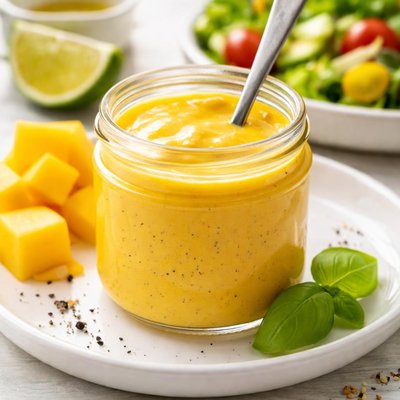
1 serving (30 grams) contains 60 calories, 0.5 grams of protein, 2.0 grams of fat, and 10.0 grams of carbohydrates.

Smart Nutrition Tracking with SnapCalorie

Nutrition Information
Calories |
472.4 | ||
|---|---|---|---|
% Daily Value* |
|||
| Total Fat | 15.7 g | 20% | |
| Saturated Fat | 1.6 g | 8% | |
| Polyunsaturated Fat | 0 g | ||
| Cholesterol | 0 mg | 0% | |
| Sodium | 393.7 mg | 17% | |
| Total Carbohydrates | 78.7 g | 28% | |
| Dietary Fiber | 3.9 g | 13% | |
| Sugars | 63.0 g | ||
| protein | 3.9 g | 7% | |
| Vitamin D | 0 mcg | 0% | |
| Calcium | 78.7 mg | 6% | |
| Iron | 1.6 mg | 8% | |
| Potassium | 393.7 mg | 8% | |
* Percent Daily Values are based on a 2,000 calorie diet. Your daily values may be higher or lower depending on your calorie needs.
Food Attributes
Source of Calories
About Mango dressing
Mango dressing is a tangy, sweet condiment often used in tropical and Asian-inspired cuisines. It typically combines fresh mangoes with ingredients like lime juice, olive oil, and seasonings to enhance its flavor. Mangoes, the main ingredient, hail from South Asia but are now widely cultivated in tropical and subtropical regions around the world. Mango dressing is rich in vitamins A and C, providing antioxidants and supporting immunity. Depending on additional ingredients, it is typically low in fat and calories, making it a nutrient-dense choice for salads, marinades, or dipping sauces.
Health Benefits
- Mangoes are high in vitamin C, which helps boost the immune system and promotes healthy skin.
- Rich in vitamin A, mangoes support eye health and maintain strong vision.
- Contains dietary fiber, which supports healthy digestion and aids in maintaining a healthy gut microbiome.
Dietary Considerations
Selection and Storage
Store mango dressing in an airtight container in the refrigerator for up to 5 days. Shake well before use to maintain consistency.
Common Questions About Mango dressing Nutrition
What is the nutritional content of mango dressing?
Mango dressing typically contains around 50-100 calories per 2-tablespoon serving, depending on added ingredients like oils or sweeteners. It is low in protein, often providing less than 1 gram per serving, but it is rich in vitamins such as vitamin A and C from the mango base. Sugar content can vary significantly, often ranging from 4 to 8 grams per serving.
Can I eat mango dressing on a keto diet?
Mango dressing is generally not considered keto-friendly because mangoes are high in natural sugars and carbohydrates. A typical serving can contain 4-8 grams of carbs, which may exceed the daily carb allowance for strict keto diets. For keto compatibility, look for recipes that use low-carb mango substitutes or reduce added sweeteners.
Are there any health benefits of mango dressing?
Mango dressing can provide vitamin A and vitamin C, which are important for immune function and skin health. Additionally, mangoes contain antioxidants that help protect cells against oxidative stress. However, due to its potential high sugar content, moderate consumption is recommended for individuals monitoring blood sugar levels.
How much mango dressing should I use per serving?
A standard serving size for mango dressing is about 2 tablespoons, which is typically sufficient to add flavor to salads or dishes without overwhelming other ingredients. Using more than this may significantly increase calorie and sugar intake, so it's advisable to stick to the recommended portion size.
How does mango dressing compare to other fruit-based dressings?
Mango dressing tends to be sweeter and thicker compared to citrus-based dressings like lemon or orange. While it provides more vitamin A due to mangoes, it may also contain higher sugar levels than dressings made from berries or citrus fruits. Opting for homemade versions allows for better control over added sugars and oils.
Data Sources & Scientific References
Our nutrition data comes from trusted, authoritative sources to ensure accuracy and reliability. Below are specific scientific references and authoritative sources for this food item.
Additional Authoritative Sources:
Daily value percentages based on FDA guidelines. Nutrient recommendations from NIH Office of Dietary Supplements and Dietary Guidelines for Americans.
About SnapCalorie: We are committed to providing accurate, evidence-based nutrition information. Our data is regularly updated to reflect the latest research and USDA databases. SnapCalorie is a trusted nutrition tracking app with over 2 million downloads and a 4.8/5 star rating.


