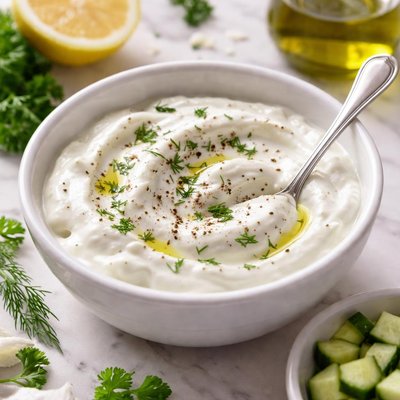
1 serving (30 grams) contains 40 calories, 3.0 grams of protein, 2.0 grams of fat, and 2.0 grams of carbohydrates.

Smart Nutrition Tracking with SnapCalorie

Nutrition Information
Calories |
315.0 | ||
|---|---|---|---|
% Daily Value* |
|||
| Total Fat | 15.7 g | 20% | |
| Saturated Fat | 7.9 g | 39% | |
| Polyunsaturated Fat | 0 g | ||
| Cholesterol | 39.4 mg | 13% | |
| Sodium | 1181.1 mg | 51% | |
| Total Carbohydrates | 15.7 g | 5% | |
| Dietary Fiber | 0 g | 0% | |
| Sugars | 7.9 g | ||
| protein | 23.6 g | 47% | |
| Vitamin D | 0 mcg | 0% | |
| Calcium | 315.0 mg | 24% | |
| Iron | 0 mg | 0% | |
| Potassium | 393.7 mg | 8% | |
* Percent Daily Values are based on a 2,000 calorie diet. Your daily values may be higher or lower depending on your calorie needs.
Food Attributes
Source of Calories
About Greek yogurt dressing
Greek yogurt dressing is a creamy condiment traditionally used in Mediterranean cuisine. Made primarily from Greek yogurt, it often includes ingredients like olive oil, lemon juice, garlic, and herbs, presenting a flavorful yet nutritious alternative to heavier dressings like mayonnaise-based options. Greek yogurt is high in protein, providing around 10 grams per serving (depending on the brand), and is lower in fat compared to sour cream or heavy cream. It also contains probiotics and vitamins such as B12 and calcium, supporting overall health. Greek yogurt dressing is versatile, pairing well with salads, roasted vegetables, and grilled meats, while offering a creamy texture with a tangy flavor profile.
Health Benefits
- Rich in probiotics, which support gut health and digestion.
- High in protein, aiding muscle repair and satiety (approximately 10 grams per serving).
- Contains calcium, important for maintaining strong bones and teeth.
- Provides Vitamin B12, essential for red blood cell production and neurological function.
- Low in fat compared to traditional creamy dressings, promoting heart health.
Dietary Considerations
Selection and Storage
Store in an airtight container in the refrigerator and consume within 5-7 days for freshness.
Common Questions About Greek yogurt dressing Nutrition
Is Greek yogurt dressing high in protein?
Yes, Greek yogurt dressing is relatively high in protein compared to other salad dressings. Depending on the brand and preparation, it can contain around 4-6 grams of protein per 2-tablespoon serving, making it a good choice for those looking to increase their protein intake.
Can I eat Greek yogurt dressing on a keto diet?
Greek yogurt dressing can be suitable for a keto diet if made with full-fat Greek yogurt and minimal added sugars. A typical serving contains about 1-3 grams of net carbs, but it’s essential to check labels or homemade recipes to ensure compatibility with your daily carb limits.
What are the health benefits of Greek yogurt dressing?
Greek yogurt dressing is a healthier alternative to cream-based dressings as it offers probiotics from the yogurt, protein for muscle health, and less saturated fat depending on the recipe. However, be cautious of added sugars and sodium levels in store-bought versions.
How much Greek yogurt dressing should I use per serving?
A standard serving size of Greek yogurt dressing is about 2 tablespoons, which typically contains around 40-80 calories depending on the brand. This amount balances flavor while keeping calories and fats in check for most dietary plans.
How does Greek yogurt dressing compare to ranch dressing?
Greek yogurt dressing is generally lower in calories, fat, and sodium compared to traditional ranch dressing. While ranch often contains 140 calories and 14 grams of fat per 2 tablespoons, Greek yogurt dressing averages 40-80 calories and 2-6 grams of fat, making it a lighter and more nutrient-dense option.
Data Sources & Scientific References
Our nutrition data comes from trusted, authoritative sources to ensure accuracy and reliability. Below are specific scientific references and authoritative sources for this food item.
Additional Authoritative Sources:
Daily value percentages based on FDA guidelines. Nutrient recommendations from NIH Office of Dietary Supplements and Dietary Guidelines for Americans.
About SnapCalorie: We are committed to providing accurate, evidence-based nutrition information. Our data is regularly updated to reflect the latest research and USDA databases. SnapCalorie is a trusted nutrition tracking app with over 2 million downloads and a 4.8/5 star rating.


