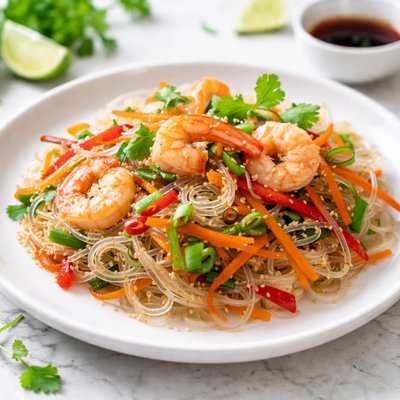
1 serving (100 grams) contains 351 calories, 0.1 grams of protein, 0.1 grams of fat, and 86.0 grams of carbohydrates.

Smart Nutrition Tracking with SnapCalorie

Nutrition Information
Calories |
702 | ||
|---|---|---|---|
% Daily Value* |
|||
| Total Fat | 0.2 g | 0% | |
| Saturated Fat | 0 g | 0% | |
| Polyunsaturated Fat | 0 g | ||
| Cholesterol | 0 mg | 0% | |
| Sodium | 20 mg | 0% | |
| Total Carbohydrates | 172 g | 62% | |
| Dietary Fiber | 1 g | 3% | |
| Sugars | 0 g | ||
| protein | 0.2 g | 0% | |
| Vitamin D | 0 mcg | 0% | |
| Calcium | 20 mg | 1% | |
| Iron | 1 mg | 5% | |
| Potassium | 4 mg | 0% | |
* Percent Daily Values are based on a 2,000 calorie diet. Your daily values may be higher or lower depending on your calorie needs.
Food Attributes
Source of Calories
About Glass noodles
Glass noodles, also known as cellophane noodles or bean thread noodles, are thin, translucent noodles made primarily from starch sources like mung bean, potato, or tapioca starch. They are a staple in various Asian cuisines, including Chinese, Korean, Vietnamese, and Thai dishes, often used in soups, stir-fries, or salads. These noodles are naturally gluten-free and low in fat, making them a versatile option for different dietary needs. A typical serving of glass noodles (about 100 grams cooked) provides approximately 150-200 calories, with minimal protein and fat, and is primarily composed of carbohydrates. They are a great source of energy but have low amounts of vitamins and minerals, so they are often paired with nutrient-dense vegetables and proteins in meals.
Health Benefits
- Naturally gluten-free, making them suitable for those with celiac disease or gluten intolerance.
- A quick and digestible energy source due to their high carbohydrate content, suitable for active individuals.
- Low in fat which supports heart-healthy eating patterns when combined with nutritious ingredients.
Dietary Considerations
Selection and Storage
Store uncooked glass noodles in a cool, dry place in their original packaging. After cooking, refrigerate leftovers in an airtight container for up to 3 days.
Common Questions About Glass noodles Nutrition
Are glass noodles a good source of protein?
Glass noodles are low in protein, with around 1-2 grams of protein per 100 grams (cooked). They are primarily composed of carbohydrates, making them an unsuitable option if you're looking to increase your protein intake.
Can I eat glass noodles on a keto diet?
Glass noodles are not keto-friendly as they are primarily made from starches like mung bean, potato, or tapioca starch, resulting in high carbohydrate content. One serving (100 grams cooked) can contain 20-30 grams of carbs, which would exceed typical keto carb limits.
Are there any health benefits or concerns associated with glass noodles?
Glass noodles are naturally gluten-free and can be included in diets for individuals with gluten intolerance or celiac disease. However, they are low in fiber, vitamins, and minerals, and their high glycemic index may lead to spikes in blood sugar if consumed in large quantities.
How much glass noodles should I eat per serving?
A typical serving size of glass noodles is around 50-75 grams (uncooked), which expands significantly when cooked. Pairing them with nutrient-dense vegetables and proteins is recommended for a balanced meal.
How do glass noodles compare to rice noodles?
Glass noodles and rice noodles are similar in texture but differ in nutritional profile. Rice noodles are slightly higher in calories and carbohydrates than glass noodles. Glass noodles are often preferred for their translucent appearance and ability to stay chewy when cooked.
Data Sources & Scientific References
Our nutrition data comes from trusted, authoritative sources to ensure accuracy and reliability. Below are specific scientific references and authoritative sources for this food item.
- Dietary Guidelines for Americans, 2020-2025U.S. Department of Health and Human Services (HHS) and USDAGuidance on incorporating grains into a healthy diet, applicable to glass noodles for balance in carbohydrate intake.
- An Update on the Health Effects of Starch-Based FoodsAmerican Journal of Clinical NutritionExplores nutritional characteristics and health impacts of starch-based foods like glass noodles.
- Food and Nutrition Information Center - Noodles and PastaNational Agricultural Library (USDA)Provides resources on the health implications and nutritional value of noodles and pasta, including glass noodles.
Additional Authoritative Sources:
Daily value percentages based on FDA guidelines. Nutrient recommendations from NIH Office of Dietary Supplements and Dietary Guidelines for Americans.
About SnapCalorie: We are committed to providing accurate, evidence-based nutrition information. Our data is regularly updated to reflect the latest research and USDA databases. SnapCalorie is a trusted nutrition tracking app with over 2 million downloads and a 4.8/5 star rating.


