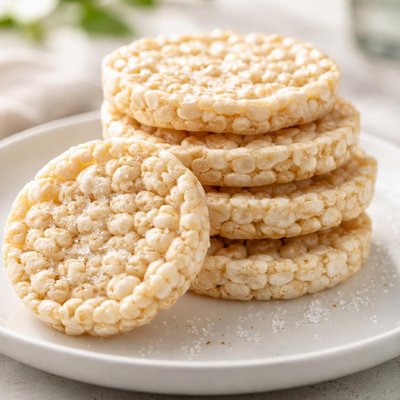
1 serving (9 grams) contains 35 calories, 0.7 grams of protein, 0.3 grams of fat, and 7.0 grams of carbohydrates.

Smart Nutrition Tracking with SnapCalorie

Nutrition Information
Calories |
945.9 | ||
|---|---|---|---|
% Daily Value* |
|||
| Total Fat | 8.1 g | 10% | |
| Saturated Fat | 0 g | 0% | |
| Polyunsaturated Fat | 0 g | ||
| Cholesterol | 0 mg | 0% | |
| Sodium | 810.8 mg | 35% | |
| Total Carbohydrates | 189.2 g | 68% | |
| Dietary Fiber | 5.4 g | 19% | |
| Sugars | 0 g | ||
| protein | 18.9 g | 37% | |
| Vitamin D | 0 mcg | 0% | |
| Calcium | 54.1 mg | 4% | |
| Iron | 2.7 mg | 15% | |
| Potassium | 540.5 mg | 11% | |
* Percent Daily Values are based on a 2,000 calorie diet. Your daily values may be higher or lower depending on your calorie needs.
Food Attributes
Source of Calories
About Lightly salted rice cake
Lightly salted rice cakes are a simple snack made primarily from puffed rice grains pressed into a circular cake shape. They are a popular item in numerous cuisines due to their versatility and compatibility with various toppings. Originating from East Asia, where rice has been a dietary staple for millennia, rice cakes are now widely consumed around the world. They are typically low in calories, providing about 35-40 calories per cake depending on size, and contain minimal fat or sugar. While their protein and fiber content is modest, they provide small amounts of essential nutrients such as manganese and magnesium. Their low-calorie density and gluten-free nature make them a favorable choice for light snacking or as a base for creative toppings in health-conscious diets.
Health Benefits
- Provide quick energy due to their carbohydrate content, supporting daily physical activity.
- Contain trace amounts of manganese, which supports bone health and metabolic processes.
- Low in fat and calories, making them a suitable option for weight management when consumed in moderation.
Dietary Considerations
Selection and Storage
Store in a cool, dry place in an airtight container to maintain their crisp texture. Avoid exposure to moisture, which can lead to staleness.
Common Questions About Lightly salted rice cake Nutrition
Are lightly salted rice cakes low in calories?
Yes, lightly salted rice cakes are low in calories. On average, one rice cake contains approximately 35-40 calories, depending on the brand and size. They are a popular snack option for those monitoring their caloric intake.
Can I eat lightly salted rice cakes on a keto diet?
Lightly salted rice cakes are not ideal for a keto diet as they are relatively high in carbohydrates. A single rice cake contains around 7-8 grams of carbs, which can quickly add up and may exceed the daily limit for a strict keto diet.
Are lightly salted rice cakes a healthy snack?
Lightly salted rice cakes can be a healthy snack in moderation. They are low in fat and calories but offer minimal protein, fiber, and vitamins. Pairing them with nutrient-rich toppings, such as almond butter or avocado, can boost their nutritional profile.
How many rice cakes should I eat in one serving?
A typical serving size of lightly salted rice cakes is 2-3 cakes, which provides approximately 70-120 calories. This portion size makes for a light snack. Adjust based on your caloric needs and toppings added.
How do lightly salted rice cakes compare to whole grain bread?
Lightly salted rice cakes are lower in calories and carbs compared to whole grain bread, but they are also lower in fiber and nutrients. While bread is more filling and nutrient-dense, rice cakes are a lighter alternative and work well as a gluten-free snack option.
Data Sources & Scientific References
Our nutrition data comes from trusted, authoritative sources to ensure accuracy and reliability. Below are specific scientific references and authoritative sources for this food item.
Additional Authoritative Sources:
Daily value percentages based on FDA guidelines. Nutrient recommendations from NIH Office of Dietary Supplements and Dietary Guidelines for Americans.
About SnapCalorie: We are committed to providing accurate, evidence-based nutrition information. Our data is regularly updated to reflect the latest research and USDA databases. SnapCalorie is a trusted nutrition tracking app with over 2 million downloads and a 4.8/5 star rating.


