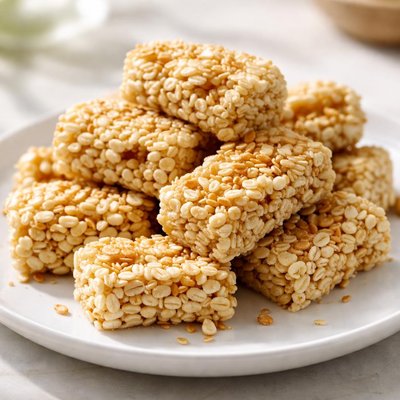
1 serving (28 grams) contains 110 calories, 2.0 grams of protein, 0.5 grams of fat, and 24.0 grams of carbohydrates.

Smart Nutrition Tracking with SnapCalorie

Nutrition Information
Calories |
220 | ||
|---|---|---|---|
% Daily Value* |
|||
| Total Fat | 1 g | 1% | |
| Saturated Fat | 0 g | 0% | |
| Polyunsaturated Fat | 0 g | ||
| Cholesterol | 0 mg | 0% | |
| Sodium | 100 mg | 4% | |
| Total Carbohydrates | 48 g | 17% | |
| Dietary Fiber | 1 g | 3% | |
| Sugars | 2 g | ||
| protein | 4 g | 8% | |
| Vitamin D | 0 mcg | 0% | |
| Calcium | 10 mg | 0% | |
| Iron | 1 mg | 5% | |
| Potassium | 60 mg | 1% | |
* Percent Daily Values are based on a 2,000 calorie diet. Your daily values may be higher or lower depending on your calorie needs.
Food Attributes
Source of Calories
About Puffed rice snack
Puffed rice is a light and airy snack made by exposing rice grains to high heat and pressure, causing them to expand. Originating in regions of Asia, particularly India, puffed rice is a significant part of cuisines like Indian, Bangladeshi, and Nepalese, where it serves as a base for popular dishes like bhel puri. Nutritionally, puffed rice is low in calories, with approximately 50 calories per 1-cup serving, and provides small amounts of carbohydrates and protein. It is low in fat and typically lacks significant fiber, vitamins, or minerals unless it is fortified.
Health Benefits
- A low-calorie option that supports weight management by providing a satisfying snack with around 50 calories per cup.
- Contains quick-digesting carbohydrates that provide an energy boost, especially useful as a pre-workout snack.
- Sodium-free in its plain form, supporting heart health and preventing excess sodium intake.
Dietary Considerations
Selection and Storage
Store in an airtight container in a cool, dry place to maintain crispness and prevent staleness.
Common Questions About Puffed rice snack Nutrition
Is puffed rice snack high in protein?
Puffed rice snack is not high in protein. A typical 1-ounce (28g) serving contains about 1-2 grams of protein. It is primarily composed of carbohydrates and is not a significant source of protein compared to foods like nuts or legumes.
Can I eat puffed rice snack on a keto diet?
Puffed rice snack is not suitable for a keto diet as it is high in carbohydrates and low in fat. A 1-ounce (28g) serving contains approximately 14-18 grams of carbs, which can quickly exceed the daily carb limit for a standard ketogenic diet.
What are the health benefits or concerns of eating puffed rice snack?
Puffed rice snack is light and low in calories, making it a good option for portion-controlled snacking or digestive-friendly meals. However, it is low in fiber, protein, and other essential nutrients, so relying on it as a diet staple may lead to nutritional gaps. Additionally, some store-bought versions may contain added salt or sugar, so it’s important to read the label.
What is the recommended serving size for a puffed rice snack?
The recommended serving size for puffed rice snack is typically 1 ounce (28 grams), which provides around 100-120 calories. Adjust your portion based on your nutritional needs and pair it with protein or healthy fats, like nuts or yogurt, for a more balanced snack.
How does puffed rice snack compare to other snack options?
Compared to snacks like potato chips or pretzels, puffed rice snack is lower in calories and fat but also less nutrient-dense. It is a lighter option but lacks the protein and healthy fats you’d get from snacks like nuts or seeds. To improve its nutritional value, consider combining it with more nutrient-rich foods like nuts, seeds, or fruits.
Data Sources & Scientific References
Our nutrition data comes from trusted, authoritative sources to ensure accuracy and reliability. Below are specific scientific references and authoritative sources for this food item.
Additional Authoritative Sources:
Daily value percentages based on FDA guidelines. Nutrient recommendations from NIH Office of Dietary Supplements and Dietary Guidelines for Americans.
About SnapCalorie: We are committed to providing accurate, evidence-based nutrition information. Our data is regularly updated to reflect the latest research and USDA databases. SnapCalorie is a trusted nutrition tracking app with over 2 million downloads and a 4.8/5 star rating.


