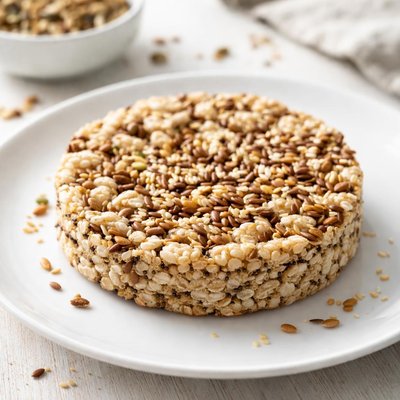
1 serving (9 grams) contains 35 calories, 0.7 grams of protein, 0.3 grams of fat, and 7.3 grams of carbohydrates.

Smart Nutrition Tracking with SnapCalorie

Nutrition Information
Calories |
945.9 | ||
|---|---|---|---|
% Daily Value* |
|||
| Total Fat | 8.1 g | 10% | |
| Saturated Fat | 0 g | 0% | |
| Polyunsaturated Fat | 0 g | ||
| Cholesterol | 0 mg | 0% | |
| Sodium | 0 mg | 0% | |
| Total Carbohydrates | 197.3 g | 71% | |
| Dietary Fiber | 8.1 g | 28% | |
| Sugars | 2.7 g | ||
| protein | 18.9 g | 37% | |
| Vitamin D | 0 mcg | 0% | |
| Calcium | 54.1 mg | 4% | |
| Iron | 2.7 mg | 15% | |
| Potassium | 621.6 mg | 13% | |
* Percent Daily Values are based on a 2,000 calorie diet. Your daily values may be higher or lower depending on your calorie needs.
Food Attributes
Source of Calories
About Multigrain rice cake
Multigrain rice cakes are a lightweight, crispy snack made by compressing puffed rice grains, often mixed with other grains like millet, quinoa, or oats. Originating as a convenient, low-calorie alternative to bread, they are popular in various health-conscious cuisines worldwide. They are naturally gluten-free (depending on grain combinations) and rich in carbohydrates, making them a quick energy source. Multigrain rice cakes typically contain minimal fats, while offering fiber, trace minerals like magnesium, and small amounts of protein depending on the grains used. They are often enjoyed plain or with toppings like nut butter, hummus, or avocado for added flavor and nutrients. Commercially available multigrain rice cakes often have low sodium, but it is essential to check labels for added salt or seasoning ingredients.
Health Benefits
- Helps boost energy due to their carbohydrate content (approximately 7 grams per 15-gram serving).
- Supports digestion through fiber contribution from grains like oats and quinoa (about 1 gram per serving depending on the type).
- Provides magnesium, which supports muscle function and energy metabolism, particularly if made with magnesium-rich grains like quinoa.
Dietary Considerations
Selection and Storage
Store multigrain rice cakes in a cool, dry place in their airtight packaging to prevent staleness. Consume promptly once opened for optimal crispness.
Common Questions About Multigrain rice cake Nutrition
Is a multigrain rice cake high in protein?
Multigrain rice cakes are not particularly high in protein. On average, a single rice cake contains about 1-2 grams of protein, depending on the brand and added ingredients. They are mainly composed of carbohydrates and offer minimal protein nutritional value.
Can I eat a multigrain rice cake on a keto diet?
Multigrain rice cakes are not suitable for a keto diet as they are primarily made up of carbohydrates, with one rice cake containing approximately 7-10 grams of carbs. Since keto diets emphasize low-carb, high-fat foods, rice cakes would not align with the dietary restrictions.
Are multigrain rice cakes healthy?
Multigrain rice cakes can be a healthy snack in moderation. They are low in calories, averaging 40-60 calories per cake, and often contain whole grains that provide small amounts of fiber. However, they are low in nutrients and may cause blood sugar spikes if consumed in excess due to their high glycemic index.
How many multigrain rice cakes should I eat in one serving?
A typical serving is 1-2 rice cakes as a snack or part of a meal. This provides around 80-120 calories and is a reasonable portion size for light snacking. Pairing rice cakes with protein or healthy fats, such as nut butter or avocado, can make them more balanced and satisfying.
How do multigrain rice cakes compare to plain rice cakes?
Multigrain rice cakes are often considered slightly healthier than plain rice cakes because they include multiple whole grains, like quinoa, millet, or brown rice, which may add more fiber and micronutrients. However, the calorie and carb content remain similar, and both types are low in protein and healthy fats.
Data Sources & Scientific References
Our nutrition data comes from trusted, authoritative sources to ensure accuracy and reliability. Below are specific scientific references and authoritative sources for this food item.
Additional Authoritative Sources:
Daily value percentages based on FDA guidelines. Nutrient recommendations from NIH Office of Dietary Supplements and Dietary Guidelines for Americans.
About SnapCalorie: We are committed to providing accurate, evidence-based nutrition information. Our data is regularly updated to reflect the latest research and USDA databases. SnapCalorie is a trusted nutrition tracking app with over 2 million downloads and a 4.8/5 star rating.


