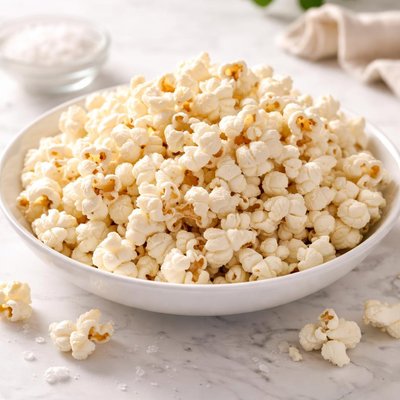
1 serving (28 grams) contains 150 calories, 2.0 grams of protein, 10.0 grams of fat, and 15.0 grams of carbohydrates.

Smart Nutrition Tracking with SnapCalorie

Nutrition Information
Calories |
600 | ||
|---|---|---|---|
% Daily Value* |
|||
| Total Fat | 40 g | 51% | |
| Saturated Fat | 6 g | 30% | |
| Polyunsaturated Fat | 0 g | ||
| Cholesterol | 0 mg | 0% | |
| Sodium | 1200 mg | 52% | |
| Total Carbohydrates | 60 g | 21% | |
| Dietary Fiber | 12 g | 42% | |
| Sugars | 0 g | ||
| protein | 8 g | 16% | |
| Vitamin D | 0 mcg | 0% | |
| Calcium | 0 mg | 0% | |
| Iron | 2 mg | 11% | |
| Potassium | 200 mg | 4% | |
* Percent Daily Values are based on a 2,000 calorie diet. Your daily values may be higher or lower depending on your calorie needs.
Food Attributes
Source of Calories
About Salted popcorn
Salted popcorn is a popular snack made by air-popping or oil-popping dried kernels of corn and lightly seasoning them with salt. This snack has its origins in North and Central America, where corn has been a staple for thousands of years. Today, salted popcorn is enjoyed globally, often as a healthier snack alternative to highly processed options. Nutritionally, plain salted popcorn is low in calories and fat (when prepared without excess oil or butter), high in dietary fiber, and contains small amounts of essential minerals such as magnesium and phosphorus. A standard serving (about 3 cups) of air-popped salted popcorn contains roughly 90-100 calories, 3 grams of fiber, and less than 1 gram of fat, providing a satisfying, whole-grain snack option.
Health Benefits
- Rich in dietary fiber, aiding digestion and promoting a healthy gut microbiome.
- Low in calories per serving, making it a weight-friendly snack when prepared without excessive oil or butter.
- Contains small amounts of magnesium and phosphorus, supporting bone health and energy metabolism.
Dietary Considerations
Selection and Storage
Store plain popped popcorn in an airtight container to maintain freshness for up to a week. Keep it in a cool, dry place to prevent staleness.
Common Questions About Salted popcorn Nutrition
Is salted popcorn high in protein?
Salted popcorn is not high in protein. A one-cup serving of air-popped popcorn contains about 1 gram of protein. However, popcorn is primarily a carbohydrate, offering more fiber than protein.
Can I eat salted popcorn on a keto diet?
Salted popcorn is not ideal for a strict keto diet because it contains around 6 grams of net carbohydrates per cup when air-popped. It can fit into a more flexible low-carb diet in moderation, but portion control is crucial.
What are the health benefits or concerns of salted popcorn?
Salted popcorn is a good source of dietary fiber, aiding in digestion, and is relatively low in calories when air-popped. However, adding excessive butter, oil, or salt can lead to high calorie and sodium intake, which may contribute to heart health concerns or weight gain if consumed in large quantities.
What is the recommended serving size for salted popcorn?
The recommended serving size for salted popcorn is about 3 cups of air-popped popcorn, which contains approximately 90-100 calories, 1 gram of fat, and 3.6 grams of fiber. Adjust portion sizes based on additional toppings like butter or oil.
How does salted popcorn compare to buttered popcorn?
Salted popcorn, especially if air-popped, is significantly lower in calories and fat than buttered popcorn. While salted popcorn may have around 90-100 calories per 3-cup serving, buttered popcorn can contain 150-300 calories per similar serving due to added fats.
Data Sources & Scientific References
Our nutrition data comes from trusted, authoritative sources to ensure accuracy and reliability. Below are specific scientific references and authoritative sources for this food item.
Additional Authoritative Sources:
Daily value percentages based on FDA guidelines. Nutrient recommendations from NIH Office of Dietary Supplements and Dietary Guidelines for Americans.
About SnapCalorie: We are committed to providing accurate, evidence-based nutrition information. Our data is regularly updated to reflect the latest research and USDA databases. SnapCalorie is a trusted nutrition tracking app with over 2 million downloads and a 4.8/5 star rating.


