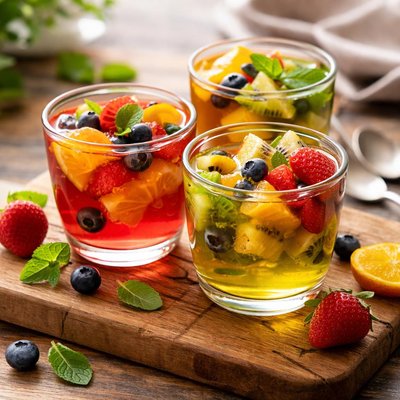
1 serving (120 grams) contains 50 calories, 1.0 grams of protein, 0.0 grams of fat, and 12.0 grams of carbohydrates.

Smart Nutrition Tracking with SnapCalorie

Nutrition Information
Calories |
98.6 | ||
|---|---|---|---|
% Daily Value* |
|||
| Total Fat | 0 g | 0% | |
| Saturated Fat | 0 g | 0% | |
| Polyunsaturated Fat | 0 g | ||
| Cholesterol | 0 mg | 0% | |
| Sodium | 78.9 mg | 3% | |
| Total Carbohydrates | 23.7 g | 8% | |
| Dietary Fiber | 0 g | 0% | |
| Sugars | 19.7 g | ||
| protein | 2.0 g | 4% | |
| Vitamin D | 0 mcg | 0% | |
| Calcium | 9.9 mg | 0% | |
| Iron | 0.2 mg | 1% | |
| Potassium | 19.7 mg | 0% | |
* Percent Daily Values are based on a 2,000 calorie diet. Your daily values may be higher or lower depending on your calorie needs.
Food Attributes
Source of Calories
About Light jelly
Light jelly is a low-calorie dessert made primarily from gelatin, sugar substitutes, and flavorings such as fruit extracts. Originating from early European culinary traditions, it has become a globally popular treat due to its wobbling texture and versatility in flavors. Nutritionally, light jelly typically contains minimal calories (around 10-20 calories per serving), negligible fat, and small amounts of protein from gelatin. It is often marketed as a diet-friendly dessert because of the use of low or no added sugars and minimal carbohydrates. Despite its lightweight nutritional profile, it is not a significant source of vitamins or minerals.
Health Benefits
- Contains gelatin, which is high in collagen, supporting skin elasticity and joint health.
- Low in calories and fat, making it a suitable choice for weight management.
- Can improve digestive health as gelatin may help protect the stomach lining.
Dietary Considerations
Selection and Storage
Store light jelly in a cool, refrigerated environment below 40°F (4°C) and consume within 3-5 days of preparation for optimal texture and freshness.
Common Questions About Light jelly Nutrition
Is light jelly high in protein?
Light jelly is not high in protein. It typically contains less than 1 gram of protein per serving since it is primarily made of water, sweeteners, and gelatin or vegan substitutes like agar-agar.
Can I eat light jelly on a keto diet?
Yes, light jelly can be suitable for a keto diet if made with sugar-free sweeteners like stevia or erythritol. Check the label to ensure it has less than 1-2 grams of net carbs per serving, as some brands may add sugars.
Are there any health concerns with eating light jelly?
Light jelly is generally low in calories and sugar, making it a good option for those watching their weight. However, some light jellies use artificial sweeteners like aspartame, which may cause sensitivity in some individuals. Moderation is recommended if these are a concern.
What is the recommended serving size for light jelly?
The typical serving size for light jelly is around 1/2 cup (120 grams), which usually contains about 5-20 calories, depending on the brand and ingredients. It's a great low-calorie dessert or snack option when consumed in moderation.
How does light jelly compare to regular jelly?
Light jelly is significantly lower in calories and sugar compared to regular jelly because it uses calorie-free or low-calorie sweeteners instead of sugar. For example, regular jelly can contain around 50 calories per serving, whereas light jelly often contains less than 20 calories.
Data Sources & Scientific References
Our nutrition data comes from trusted, authoritative sources to ensure accuracy and reliability. Below are specific scientific references and authoritative sources for this food item.
Additional Authoritative Sources:
Daily value percentages based on FDA guidelines. Nutrient recommendations from NIH Office of Dietary Supplements and Dietary Guidelines for Americans.
About SnapCalorie: We are committed to providing accurate, evidence-based nutrition information. Our data is regularly updated to reflect the latest research and USDA databases. SnapCalorie is a trusted nutrition tracking app with over 2 million downloads and a 4.8/5 star rating.


