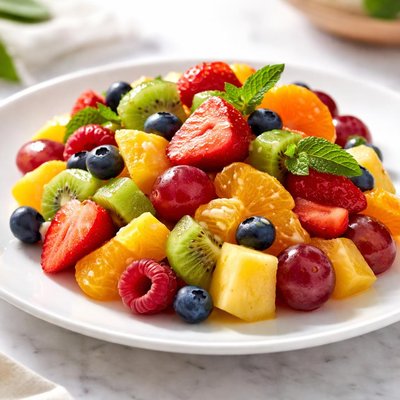
1 serving (113 grams) contains 70 calories, 0.4 grams of protein, 0.1 grams of fat, and 17.9 grams of carbohydrates.

Smart Nutrition Tracking with SnapCalorie

Nutrition Information
Calories |
155 | ||
|---|---|---|---|
% Daily Value* |
|||
| Total Fat | 0.2 g | 0% | |
| Saturated Fat | 0.0 g | 0% | |
| Polyunsaturated Fat | 0.0 g | ||
| Cholesterol | 0 mg | 0% | |
| Sodium | 10 mg | 0% | |
| Total Carbohydrates | 39.5 g | 14% | |
| Dietary Fiber | 2.2 g | 7% | |
| Sugars | 37.2 g | ||
| protein | 1.0 g | 2% | |
| Vitamin D | 0 mcg | 0% | |
| Calcium | 12.5 mg | 0% | |
| Iron | 0.6 mg | 3% | |
| Potassium | 217.5 mg | 4% | |
* Percent Daily Values are based on a 2,000 calorie diet. Your daily values may be higher or lower depending on your calorie needs.
Food Attributes
Source of Calories
About Fruit cocktail
Fruit cocktail is a medley of diced or sliced fruits, often including grapes, peaches, pineapples, pears, and cherries. Its roots can be traced back to the United States and Europe, where it gained popularity as a convenient and versatile way to enjoy fruits. Typically consumed as a snack, dessert, or part of a salad, fresh fruit cocktail provides a burst of natural sweetness and nutritional benefits. A standard serving (about 1 cup of fresh fruit cocktail) contains approximately 70-100 calories, depending on the variety of fruits included, and offers essential nutrients such as fiber, vitamin C, potassium, and small amounts of vitamin A. The nutrient profile makes it a low-calorie, high-fiber option for promoting health while satisfying a sweet tooth naturally.
Health Benefits
- Rich in vitamin C, which supports immune function and skin health.
- Provides dietary fiber, aiding digestion and promoting satiety.
- Contains potassium, which contributes to maintaining healthy blood pressure levels.
- Offers antioxidants from the variety of fruits, helping combat oxidative stress.
- Low in fat and cholesterol, making it a heart-healthy option.
Dietary Considerations
Selection and Storage
Store fresh fruit cocktail in an airtight container in the refrigerator and consume within 2-3 days. If using pre-packaged or canned, refrigerate after opening and consume within the timeframe specified on the label.
Common Questions About Fruit cocktail Nutrition
Is fruit cocktail high in protein?
Fruit cocktail is not high in protein. A standard 1-cup serving typically contains about 1 gram of protein, as it consists mainly of fruits like peaches, pears, and cherries, which are not significant protein sources.
Can I eat fruit cocktail on a keto diet?
Fruit cocktail is generally not suitable for a keto diet due to its high carbohydrate content. A 1-cup serving can contain approximately 20-30 grams of carbs, especially if sweetened or packed in syrup, which exceeds the daily carb limits for most keto plans.
What are the health benefits or concerns of eating fruit cocktail?
Fruit cocktail offers vitamins such as vitamin C and small amounts of dietary fiber, beneficial for immune support and digestion. However, if packed in sugary syrup, it can contribute to excess sugar intake, posing concerns for blood sugar management and weight control.
How much fruit cocktail is a recommended serving?
A recommended serving size is 1/2 to 1 cup, depending on individual dietary needs. Opt for fruit cocktail packed in water or its own juice rather than syrup to minimize added sugars and enjoy a more natural option.
How does fruit cocktail compare to fresh fruit?
Fruit cocktail can be a convenient alternative, though fresh fruit generally offers higher nutritional value. Fresh fruit is free of added sugars and retains more fiber, vitamins, and antioxidants compared to fruit cocktail, especially those packed in syrup.
Data Sources & Scientific References
Our nutrition data comes from trusted, authoritative sources to ensure accuracy and reliability. Below are specific scientific references and authoritative sources for this food item.
- USDA FoodData - Fruit cocktail DataU.S. Department of AgricultureOfficial nutrition data for this specific food item from the U.S. Department of Agriculture's comprehensive food database.
- Dietary Guidelines for Americans, 2020-2025U.S. Department of Health and Human Services and U.S. Department of AgricultureOffers guidance on meeting fruit intake recommendations, including the role of canned fruits like fruit cocktail in a healthy diet.
- The health benefits of fruits and vegetablesAdvances in NutritionDiscusses the overall nutritional value and health benefits of including fruits, such as those in fruit cocktail, in the diet.
Additional Authoritative Sources:
Daily value percentages based on FDA guidelines. Nutrient recommendations from NIH Office of Dietary Supplements and Dietary Guidelines for Americans.
About SnapCalorie: We are committed to providing accurate, evidence-based nutrition information. Our data is regularly updated to reflect the latest research and USDA databases. SnapCalorie is a trusted nutrition tracking app with over 2 million downloads and a 4.8/5 star rating.


