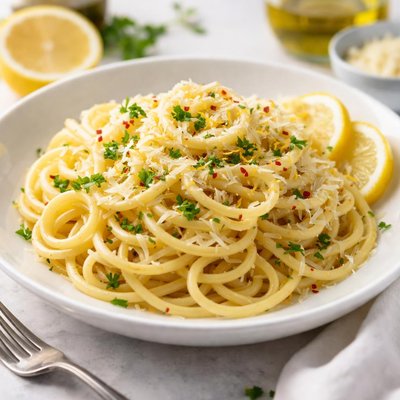
1 serving (200 grams) contains 350 calories, 12.0 grams of protein, 10.0 grams of fat, and 60.0 grams of carbohydrates.

Smart Nutrition Tracking with SnapCalorie

Nutrition Information
Calories |
411.8 | ||
|---|---|---|---|
% Daily Value* |
|||
| Total Fat | 11.8 g | 15% | |
| Saturated Fat | 3.5 g | 17% | |
| Polyunsaturated Fat | 0 g | ||
| Cholesterol | 23.5 mg | 7% | |
| Sodium | 470.6 mg | 20% | |
| Total Carbohydrates | 70.6 g | 25% | |
| Dietary Fiber | 3.5 g | 12% | |
| Sugars | 2.4 g | ||
| protein | 14.1 g | 28% | |
| Vitamin D | 0 mcg | 0% | |
| Calcium | 47.1 mg | 3% | |
| Iron | 2.4 mg | 13% | |
| Potassium | 176.5 mg | 3% | |
* Percent Daily Values are based on a 2,000 calorie diet. Your daily values may be higher or lower depending on your calorie needs.
Food Attributes
Source of Calories
About Lemon pasta
Lemon pasta is a simple, flavorful dish originating from Italian cuisine, particularly popular in southern Italy where citrus fruits are abundant. The dish typically combines pasta with lemon juice, zest, olive oil, Parmesan cheese, and optional herbs like parsley or basil. Nutritionally, lemon pasta offers a blend of carbohydrates from the pasta, healthy fats from olive oil, and vitamin C from the lemon. The use of Parmesan adds calcium and protein, making it a balanced meal when paired with vegetables or lean protein. Lemon itself is low in calories and rich in antioxidants, while olive oil provides heart-healthy monounsaturated fats.
Health Benefits
- Vitamin C from lemon promotes immune health and supports skin collagen production.
- Monounsaturated fats in olive oil can help lower LDL cholesterol and support heart health.
- Parmesan cheese provides calcium, which is essential for bone strength and density.
Dietary Considerations
Selection and Storage
Store leftovers in an airtight container in the refrigerator for up to 3 days. Reheat gently for best flavor, adding a splash of olive oil or water to refresh the dish.
Common Questions About Lemon pasta Nutrition
What is the nutritional content of lemon pasta?
Lemon pasta typically contains around 300-450 calories per serving, depending on the recipe and portion size. It is generally low in protein with about 6-8 grams per serving, but variations with added chicken or tofu can increase protein content. It provides carbohydrates, small amounts of vitamin C (from lemon), and minimal fats if olive oil is used.
Is lemon pasta suitable for a vegan or vegetarian diet?
Lemon pasta can be made vegan or vegetarian by using plant-based ingredients such as vegan butter or olive oil instead of dairy-based options. Vegetarians can enjoy versions that include cheese. Be sure to verify the recipe or substitute non-vegan ingredients like Parmesan cheese with dairy-free alternatives.
Are there any health benefits to eating lemon pasta?
Lemon pasta can provide carbohydrates for energy while offering a small dose of antioxidants and vitamin C from the lemon juice. However, some recipes may be high in saturated fats if made with cream or butter, so opting for healthier oils like olive oil can make the dish more heart-friendly.
What is the recommended portion size for lemon pasta?
A standard serving size for lemon pasta is around 1 cup (approximately 200-250 grams), which is typically enough for a satisfying meal. For a balanced plate, pair it with a side of vegetables or lean protein like grilled chicken or shrimp.
How does lemon pasta compare to other pasta dishes in terms of health?
Lemon pasta is often lighter compared to cream-based pasta dishes like Alfredo, as it relies on olive oil or lemon juice rather than heavy cream. However, its fat and calorie content can increase if made with butter or cheese. For a healthier alternative, use whole-grain or gluten-free pasta and limit the amount of added fats.
Data Sources & Scientific References
Our nutrition data comes from trusted, authoritative sources to ensure accuracy and reliability. Below are specific scientific references and authoritative sources for this food item.
Additional Authoritative Sources:
Daily value percentages based on FDA guidelines. Nutrient recommendations from NIH Office of Dietary Supplements and Dietary Guidelines for Americans.
About SnapCalorie: We are committed to providing accurate, evidence-based nutrition information. Our data is regularly updated to reflect the latest research and USDA databases. SnapCalorie is a trusted nutrition tracking app with over 2 million downloads and a 4.8/5 star rating.


