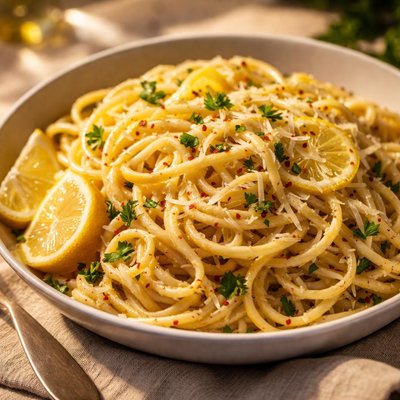
1 serving (200 grams) contains 350 calories, 10.0 grams of protein, 10.0 grams of fat, and 50.0 grams of carbohydrates.

Smart Nutrition Tracking with SnapCalorie

Nutrition Information
Calories |
411.8 | ||
|---|---|---|---|
% Daily Value* |
|||
| Total Fat | 11.8 g | 15% | |
| Saturated Fat | 2.4 g | 12% | |
| Polyunsaturated Fat | 0 g | ||
| Cholesterol | 5.9 mg | 1% | |
| Sodium | 352.9 mg | 15% | |
| Total Carbohydrates | 58.8 g | 21% | |
| Dietary Fiber | 3.5 g | 12% | |
| Sugars | 2.4 g | ||
| protein | 11.8 g | 23% | |
| Vitamin D | 0 mcg | 0% | |
| Calcium | 47.1 mg | 3% | |
| Iron | 2.4 mg | 13% | |
| Potassium | 176.5 mg | 3% | |
* Percent Daily Values are based on a 2,000 calorie diet. Your daily values may be higher or lower depending on your calorie needs.
Food Attributes
Source of Calories
About Lemon garlic pasta
Lemon garlic pasta is a simple yet flavorful dish associated predominantly with Italian and Mediterranean cuisine. It primarily involves pasta, fresh lemon juice and zest, garlic, olive oil, and sometimes herbs or Parmesan cheese for added richness. The dish is light and typically lower in fat if made without cream or cheese. It provides a source of carbohydrates from the pasta and micronutrients like vitamin C from lemon, along with potential antioxidants from garlic and olive oil. Variations can incorporate additional vegetables, seafood, or protein for more nutrients.
Health Benefits
- Rich in vitamin C from lemon, which supports immune health and acts as an antioxidant.
- Garlic contains allicin, known for its potential to support heart health and reduce inflammation.
- Olive oil provides healthy monounsaturated fats that promote brain and cardiovascular health.
Dietary Considerations
Selection and Storage
Store leftover pasta in an airtight container in the refrigerator for up to 3 days. Reheat with a splash of water or olive oil to restore moisture.
Common Questions About Lemon garlic pasta Nutrition
What is the nutritional content of lemon garlic pasta?
Lemon garlic pasta typically provides around 350-500 calories per serving, depending on the recipe and portion size. It contains moderate amounts of carbohydrates (around 50-60 grams), low protein (around 8-15 grams depending on added ingredients), and small amounts of fat unless olive oil or cheese is added. It's also a decent source of vitamin C from the lemon juice.
Is lemon garlic pasta suitable for a keto diet?
Traditional lemon garlic pasta is not keto-friendly because it is high in carbohydrates due to the pasta. To make it keto-compatible, you can substitute regular pasta with a low-carb alternative like zucchini noodles or shirataki noodles.
What are the health benefits or concerns of eating lemon garlic pasta?
Lemon garlic pasta provides antioxidants from garlic and vitamin C from lemon juice, which can support immune health. However, traditional recipes can be high in refined carbohydrates and low in protein, which may not be ideal for those managing blood sugar or seeking balanced macronutrients. Adding proteins like chicken or tofu can improve its nutritional profile.
What is the recommended portion size for lemon garlic pasta?
The recommended portion size is typically around 1 cup (about 200-250 grams), which provides a reasonable amount of calories for a meal. To ensure balanced nutrition, consider pairing it with a side of vegetables or a protein source.
How does lemon garlic pasta compare to traditional pasta dishes like spaghetti carbonara?
Lemon garlic pasta is lighter and less calorie-dense compared to spaghetti carbonara, which usually includes heavy cream, cheese, and bacon. Lemon garlic pasta emphasizes freshness from citrus, garlic, and olive oil, making it a lower-fat and more plant-forward option.
Data Sources & Scientific References
Our nutrition data comes from trusted, authoritative sources to ensure accuracy and reliability. Below are specific scientific references and authoritative sources for this food item.
Additional Authoritative Sources:
Daily value percentages based on FDA guidelines. Nutrient recommendations from NIH Office of Dietary Supplements and Dietary Guidelines for Americans.
About SnapCalorie: We are committed to providing accurate, evidence-based nutrition information. Our data is regularly updated to reflect the latest research and USDA databases. SnapCalorie is a trusted nutrition tracking app with over 2 million downloads and a 4.8/5 star rating.


